

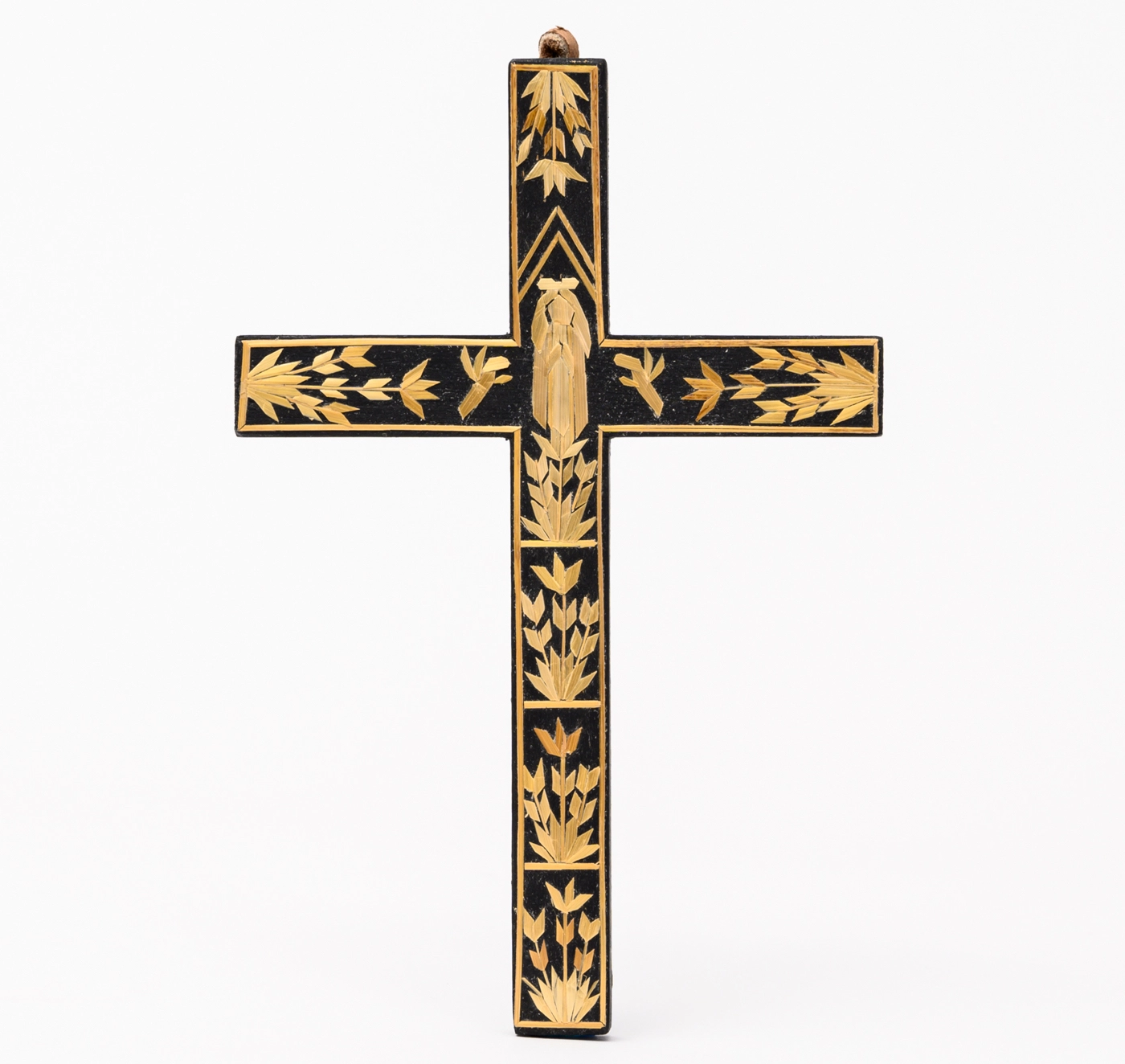
Straw-decorated Cross
Ties that bind: relationships forged during Festivals often endure
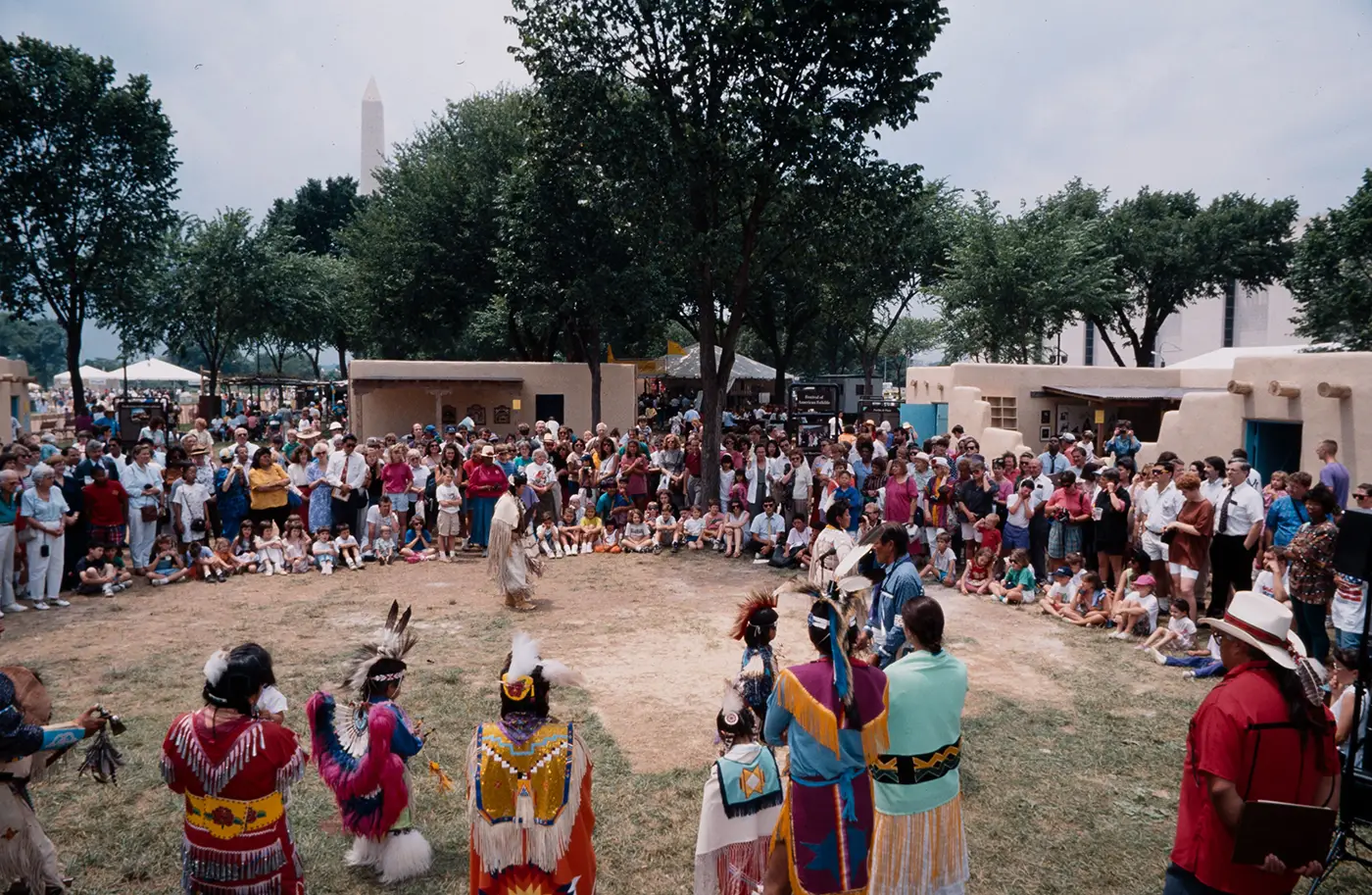
The 1992 New Mexico program was part of the Festival’s broader focus on the Sesquicentennial—five hundred years of entwined American and world history presented through the lens of four distinct programs. To build a setting that would capture the cultural mix of influences that continue to shape New Mexico, the production team created an open plaza surrounded by adobe buildings and a church, shaded craft workspaces, a Navajo sheep camp, and a crowd-drawing rodeo arena and horse-shoeing station in the central grass plot across from the Museum of American History.
-
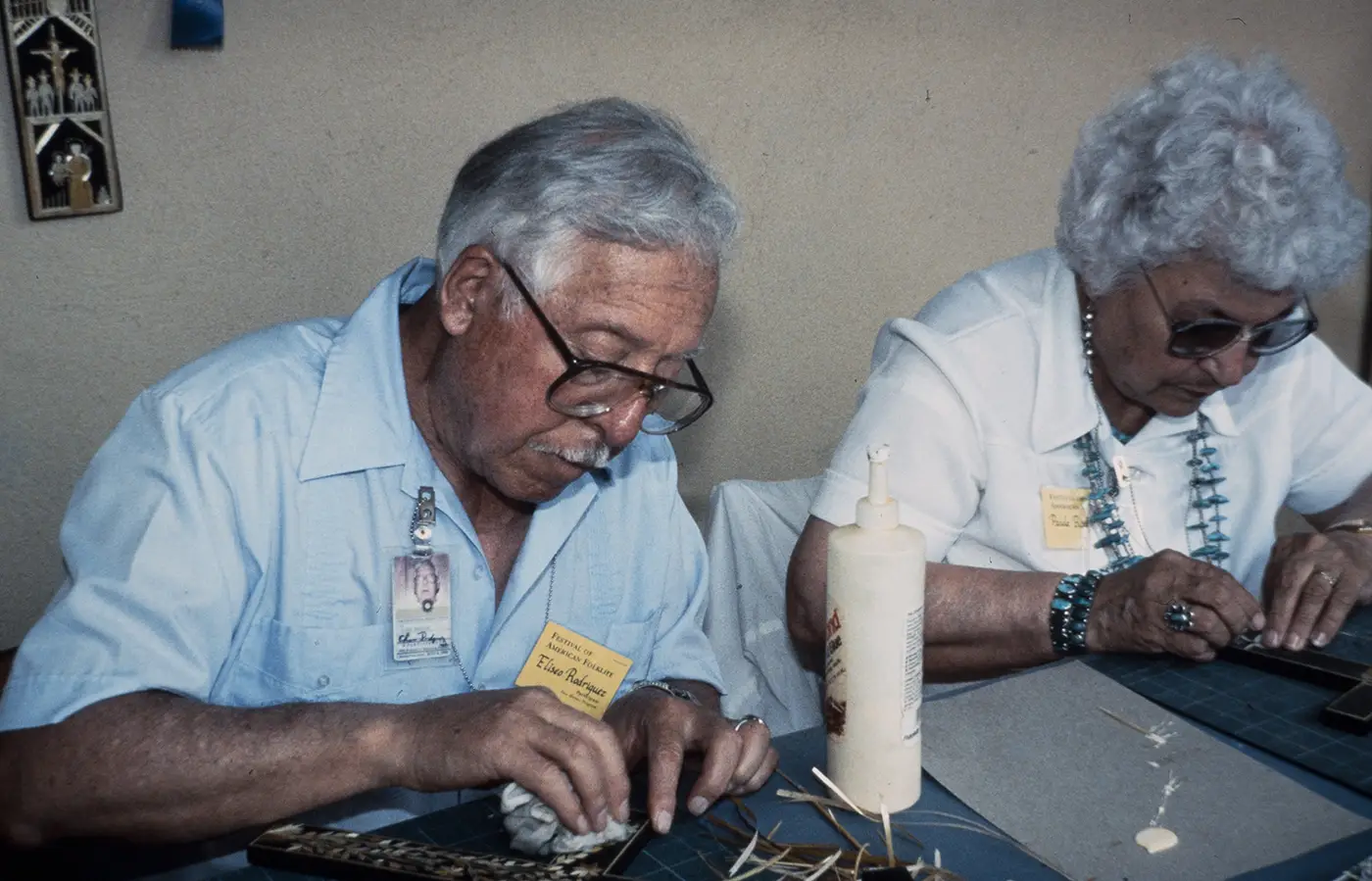
The adobe plaza and workshop interiors. Behind the Rodriguez’s worktable was an array of their award-winning crosses. Photos by Jeff Tinsley, Ralph Rinzler Folklife Archives -

-
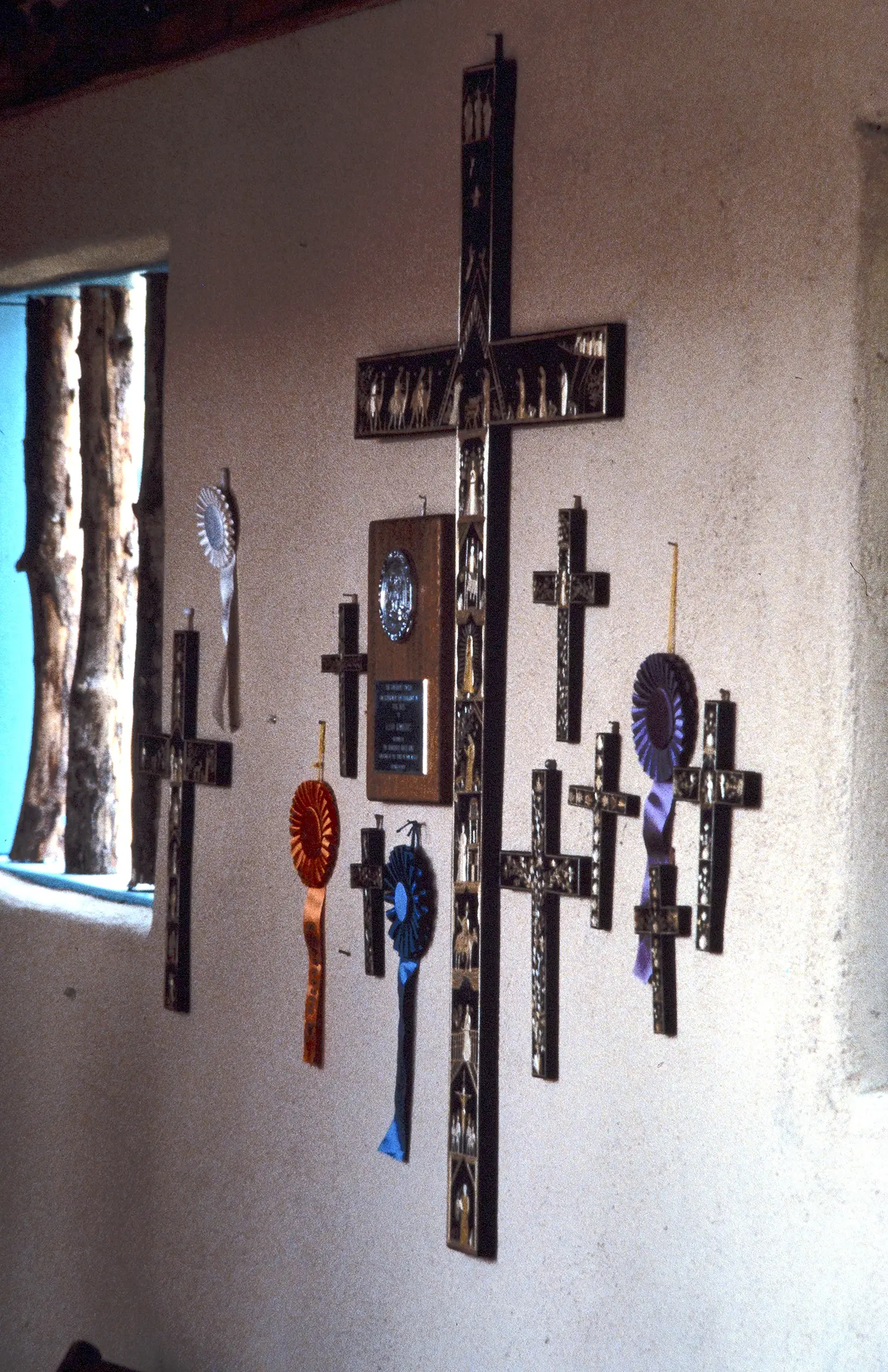
Paula and Eliseo Rodriguez joined other Hispanic artists in the large adobe building off the main plaza, where they demonstrated and discuss pieced-straw appliqué—a form of marquetry tied to the sixteenth-century Spanish colonists who came to the northern Rio Grande Valley in search of gold. The artform is used to decorate religious objects such as crosses and church niches—conveying an appearance of gold—and had all but disappeared by the early twentieth century.
-
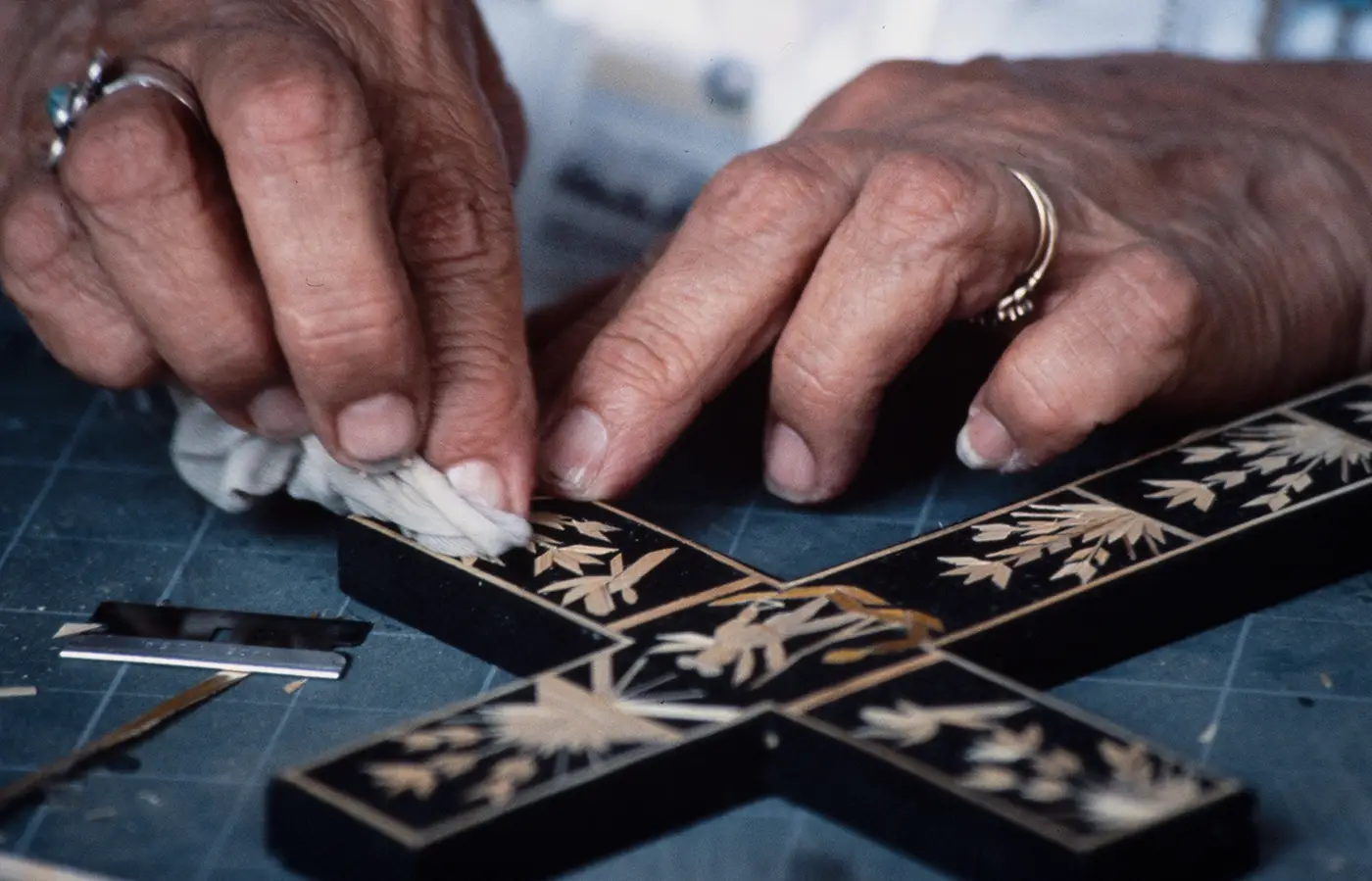
Paula Rodriguez applying straw appliqué at the 1992 New Mexico program. Ralph Rinzler Folklife Archives -
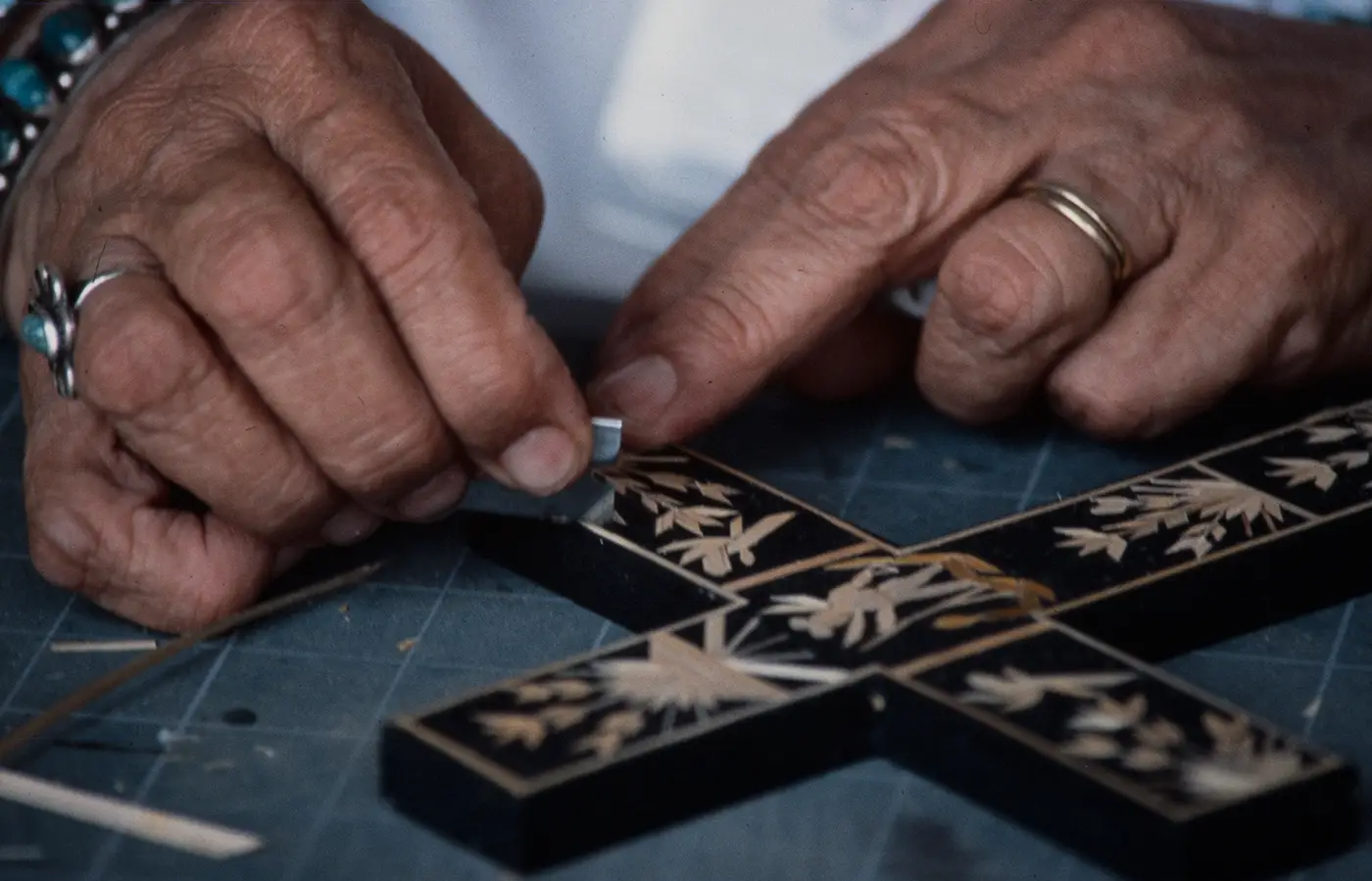
In 1938, Eliseo studied and learned the inlay technique of straw appliqué as an employee of the WPA Federal Arts Project. Together with his wife Paula they refined their skills and taught others in their family, slowly reviving the craft. In the late 1960s, a conservator at the Museum of International Folk Art encountered their work and invited them to exhibit at Santa Fe’s Spanish Market in 1970, sparking a revival that continues today. In 2004, the Rodriguezes received a National Heritage Fellowship from the National Endowment for the Arts, acknowledging their role in revitalizing the waning tradition.
-
 Ralph Rinzler Folklife Archives
When the New Mexico program was restaged in 1993 in Las Cruces, New Mexico, it became one of many state-themed programs to travel back to home communities. The night before the opening was the fiftieth wedding anniversary of Eliseo and Paula Rodriguez. Festival staff were invited to the private celebration, where the Rodriguez’s presented the cross to then-Center director Richard Kurin. Today, the gift remains a symbol of professional relationships forged through hard work turning personal.
