

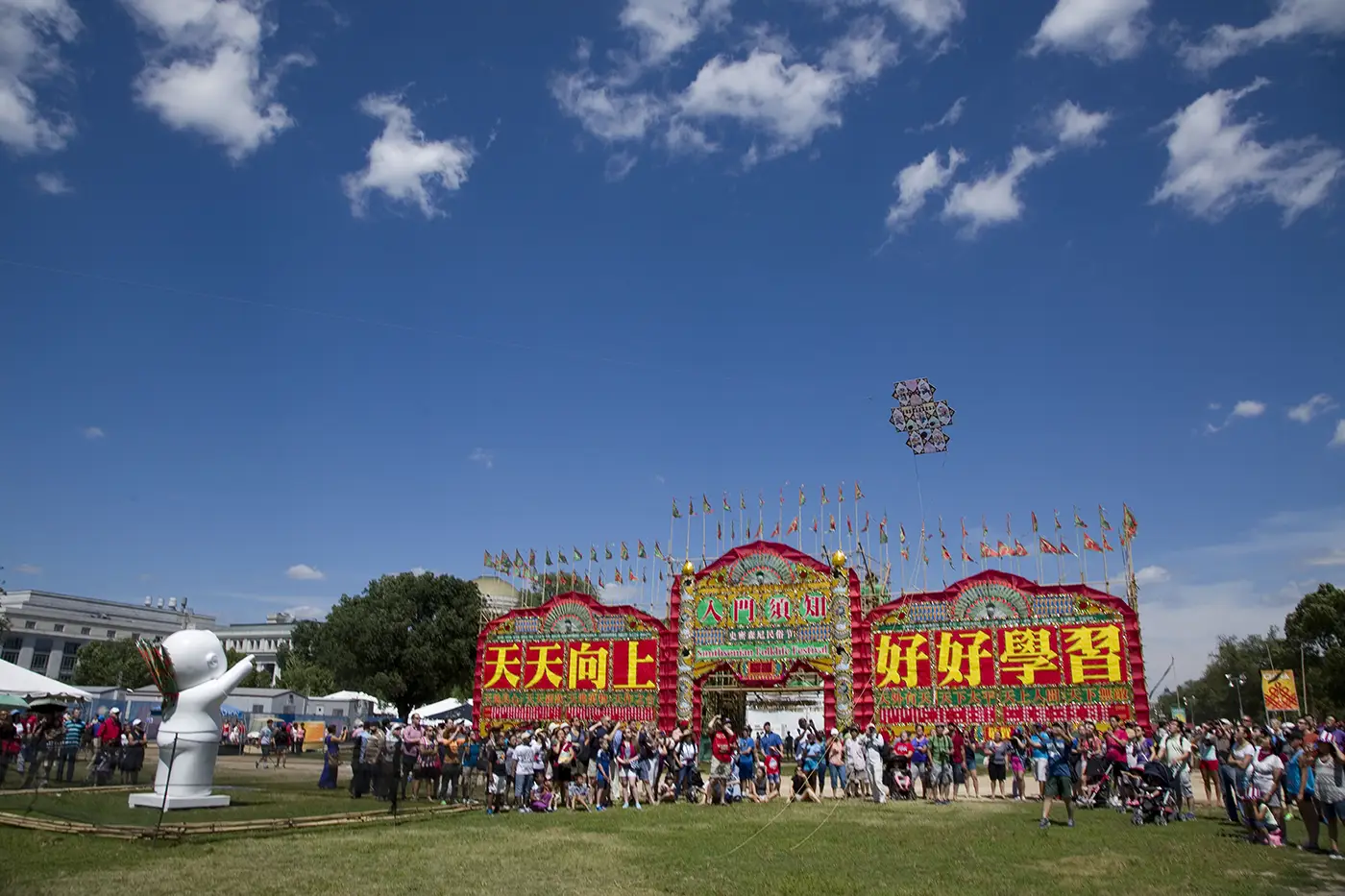
Flower Plaque
Drawing on the skills of scaffold workers and theater builders to create a celebratory gateway
The Tian Tian Xiang Shang Gateway was a flower plaque, a traditional Chinese bamboo structure built for festive and memorial events, such as weddings, anniversaries, and business openings. Lightweight and modular, flower plaques are ephemeral and their materials reusable. Large-scale examples are most common in southern China, especially in Hong Kong.
This installation embodied the intersections of traditional and contemporary arts, vernacular knowledge and scientific engineering. Hong Kong-based artist Danny Yung and his studio, Zuni Icosahedron, produced the structure in collaboration with master builder Choi Wing Kei.
Yung is a pioneering artist known for experimental work in visual and performing arts. His flower plaque design included traditional motifs and elements, such as the names of all hundred-plus program participants, along with congratulatory text and greetings. As a creative mash-up, the installation reinterpreted a phrase associated with Mao Zedong, invited contributions from 32 other artists, and incorporated 1,400 bamboo wind chimes, creating a sound dimension innovative for flower plaques.
-
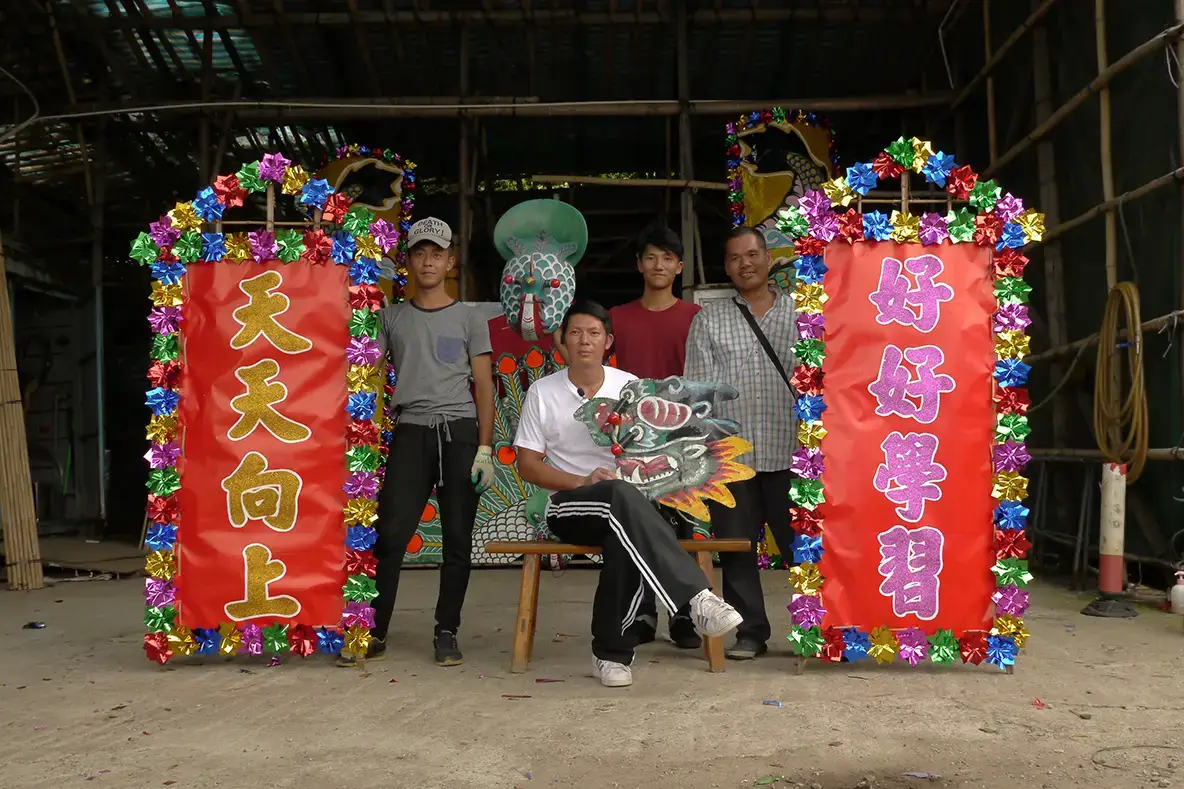
Master builder Choi Wing Kei, seated with his team (L to R) Sit Kar Lok, Kan Chung Chi, and Chau Kai Ho. Photo by Michael Moennich, Ralph Rinzler Folklife Archives -
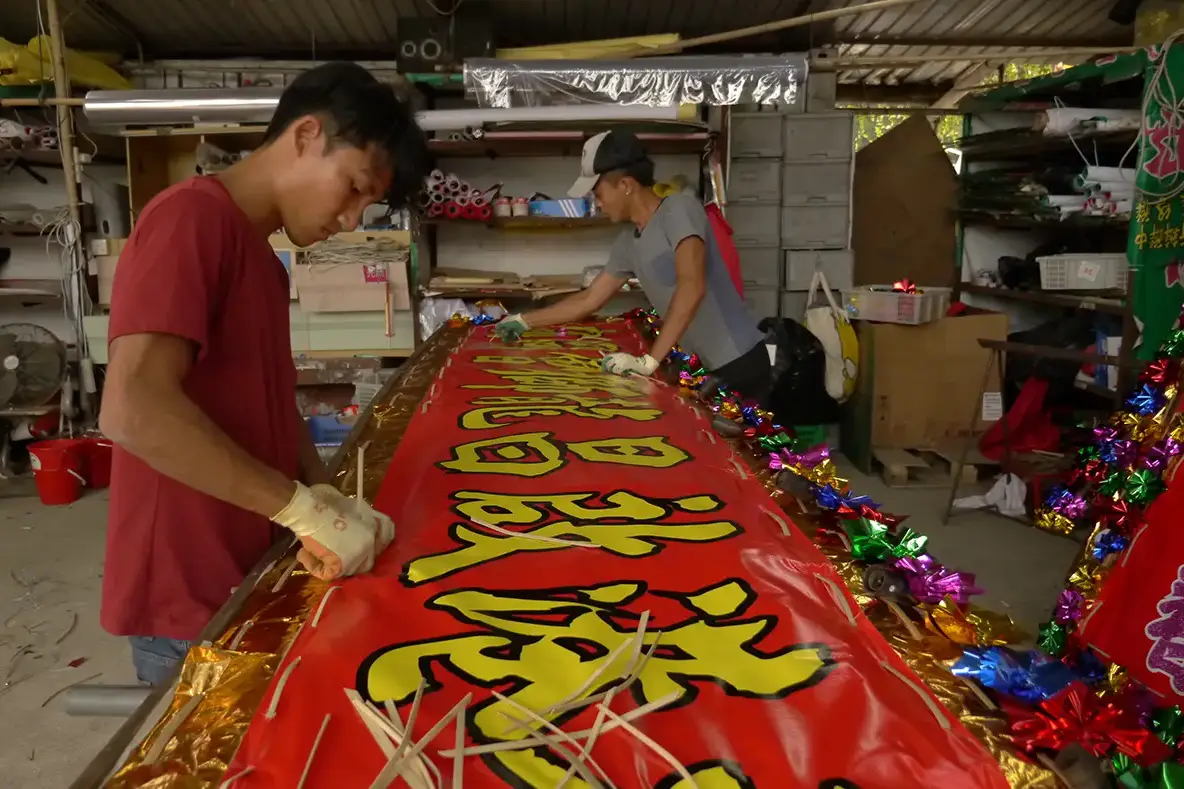
Kan Chung Chi (foreground) and Chau Kai Ho use long, thin strips of bamboo to attach a banner to one of the decorative panels. Photo by Michael Moennich, Ralph Rinzler Folklife Archives -
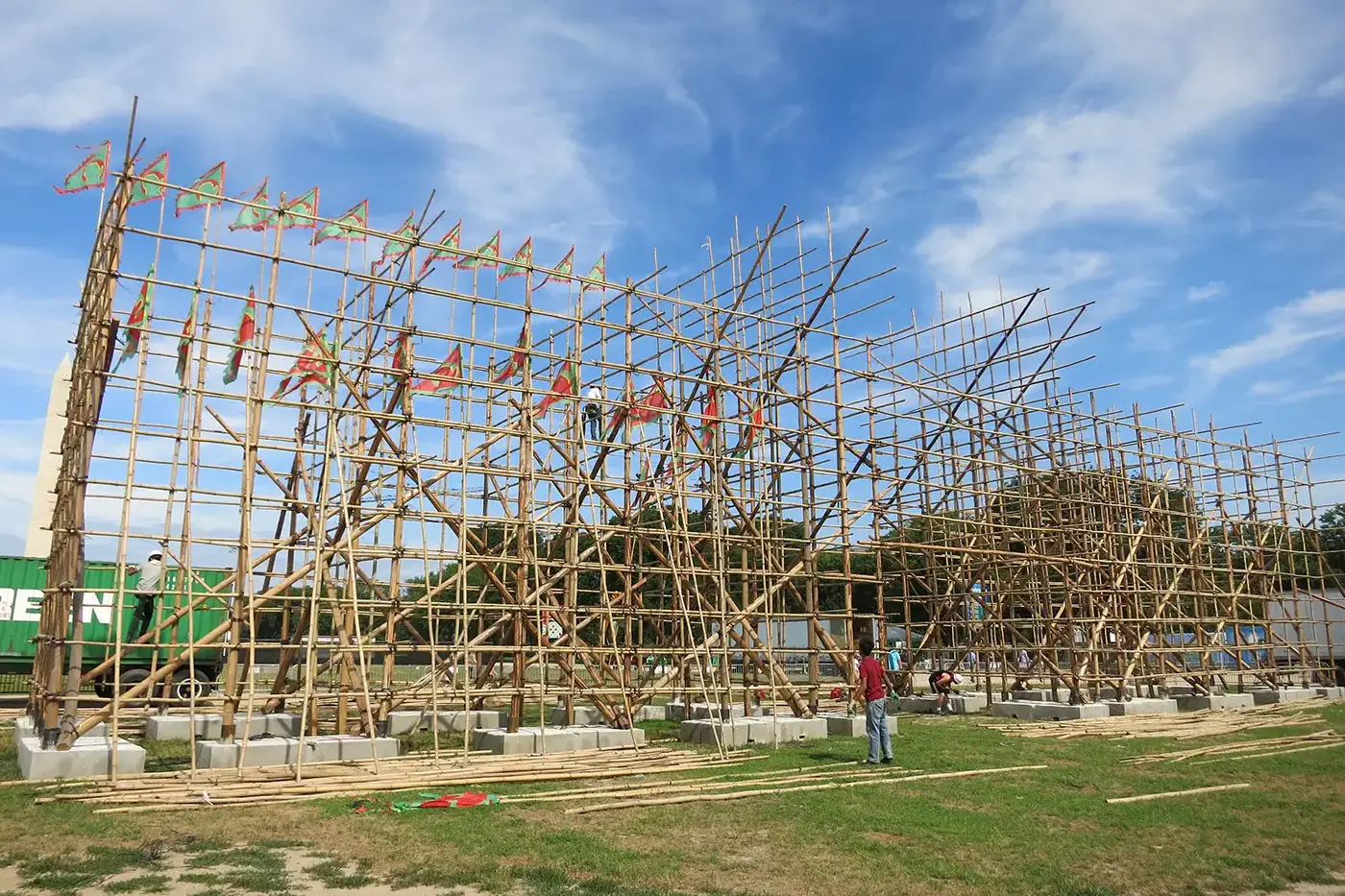
The structure in progress on the third day of installation, June 20, 2014. Kan Chung Chi directs the placement of poles from the ground. Photo by Sojin Kim, Smithsonian -
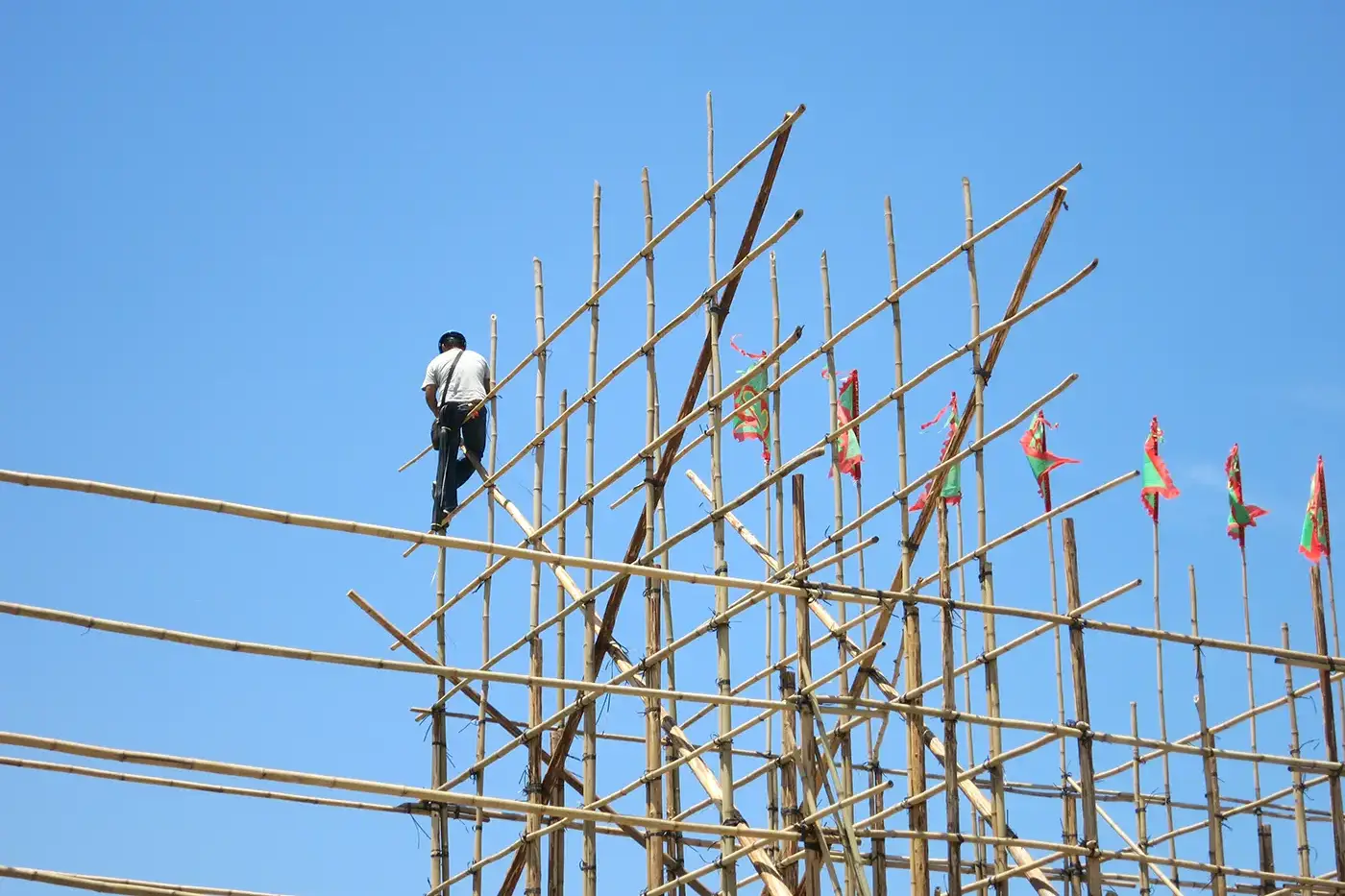
Sit Kar Lok starts lashes together the poles of a new level on the third day of installation. Photo by Sojin Kim, Smithsonian -
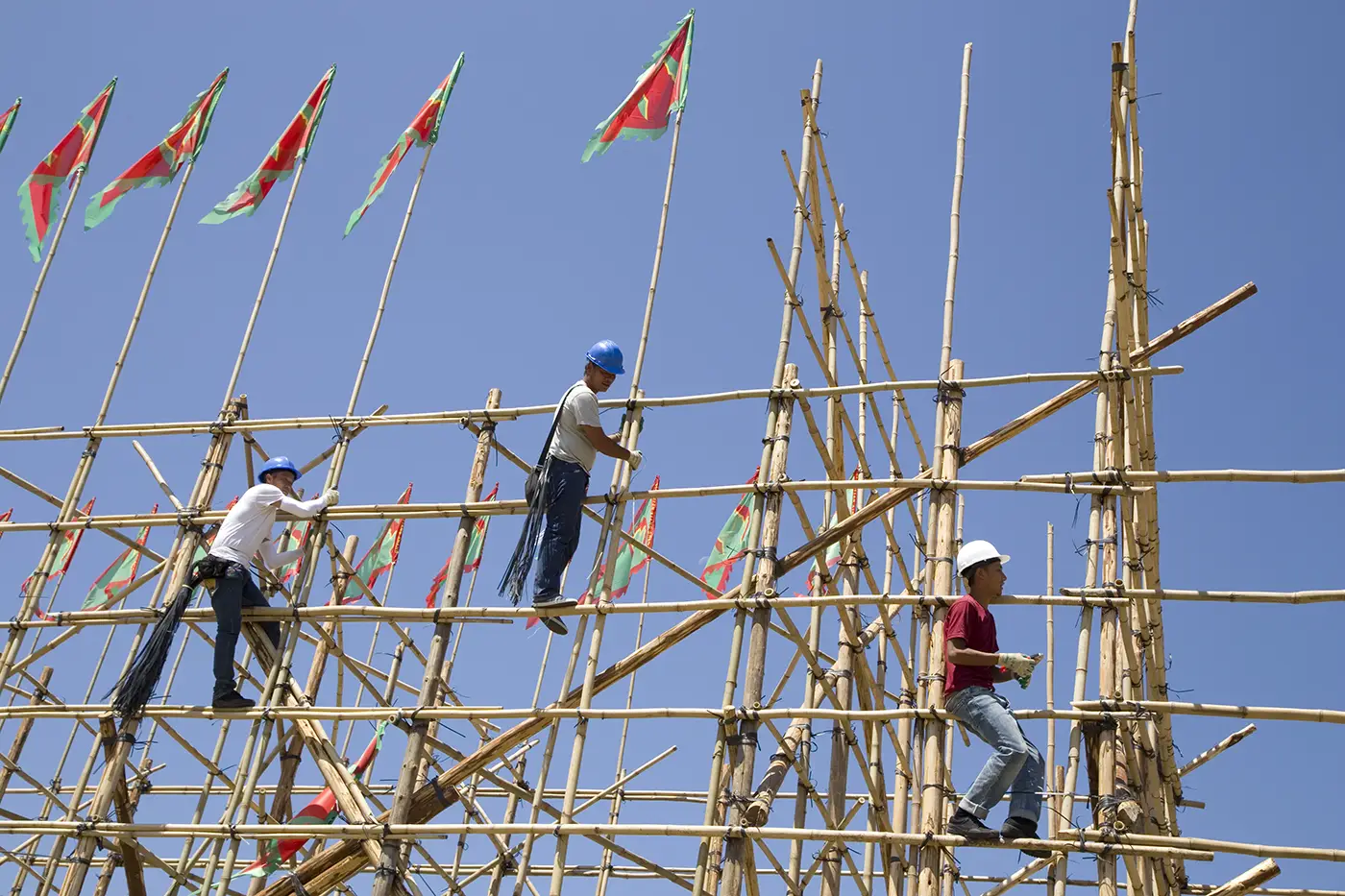
(L to R) Nai Tsun Lam, Sit Kar Lok, and Kan Chung Chi survey the progress on another part of the structure on the third day of installation. Photo by Heather Caverhill, Ralph Rinzler Folklife Archives -
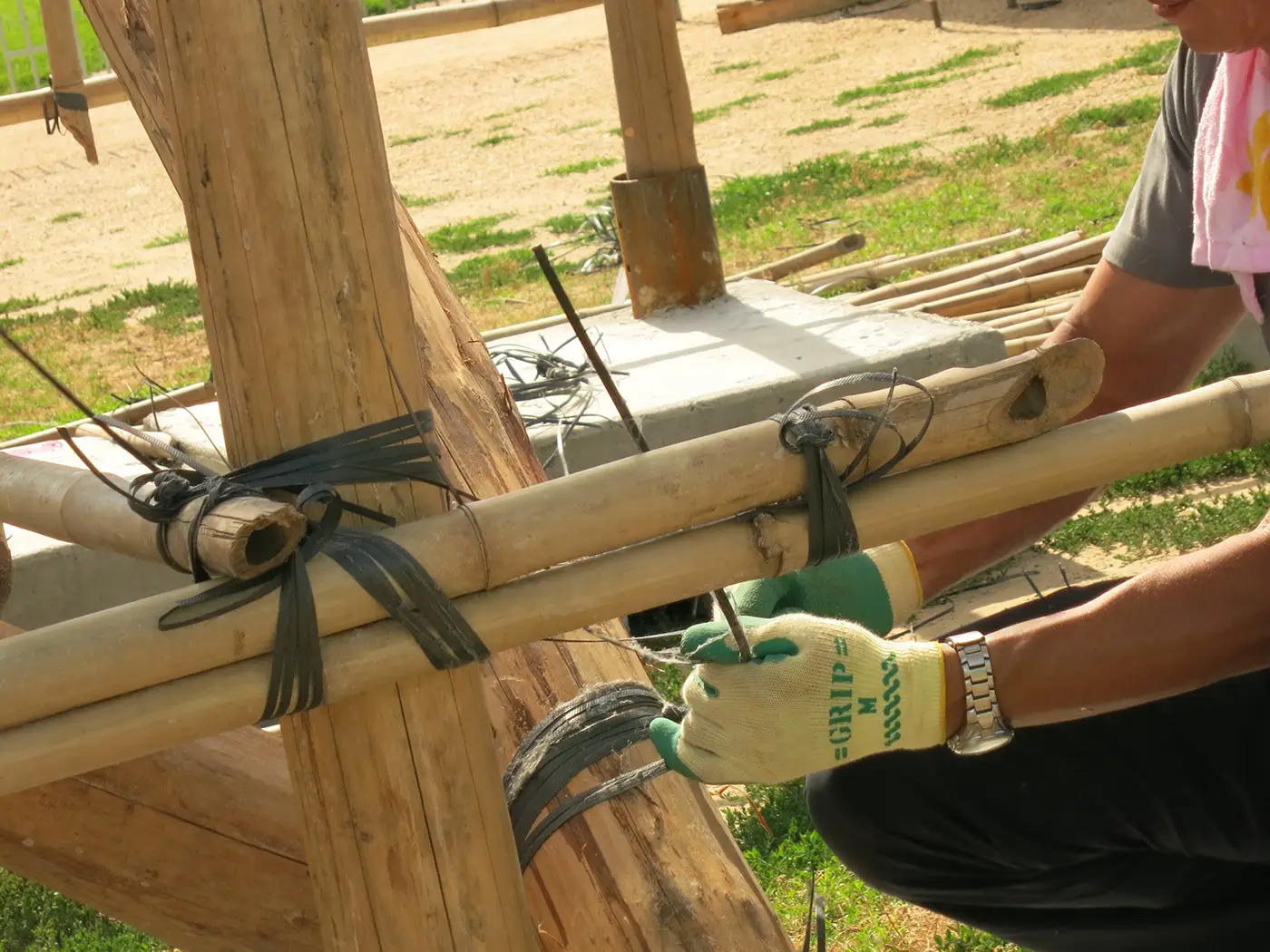
Choi Wing Kei secures a tie at the base of the structure on the third day of installation. Photo by Sojin Kim, Smithsonian -
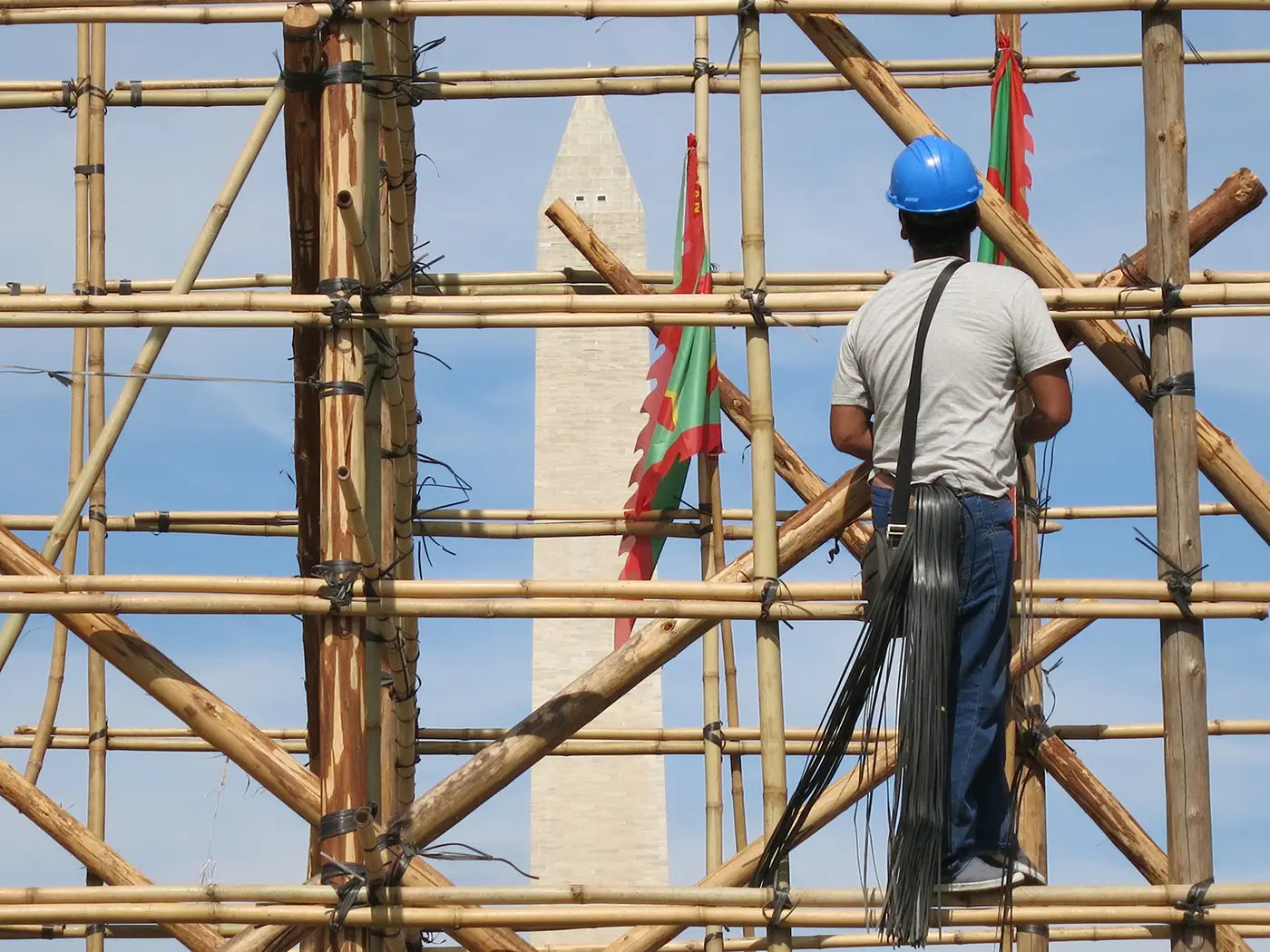
Sit Kar Lok, the most experienced craftsman on the team, takes a break while taking in the view of the Washington Monument during the third day of installation. Suspended from his waist are the nylon ties, pre-cut in 7’ lengths, that are used to lash the poles together. Photo by Sojin Kim, Smithsonian -

Danny Yung (left) and master craftsman Choi Wing Kei survey the structure in progress on the fifth day of installation, June 22, 2014. Photo by Sojin Kim, Smithsonian -
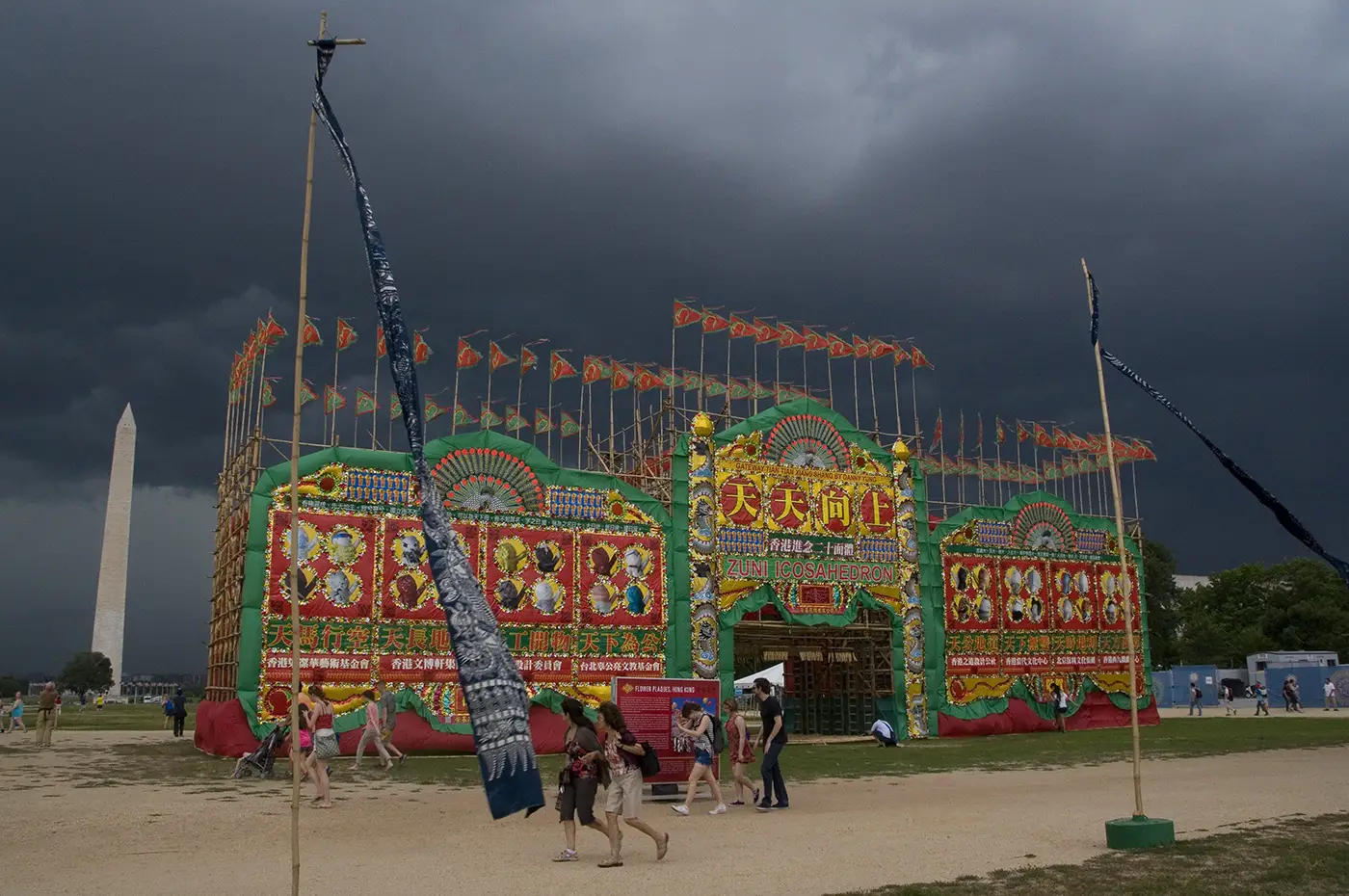
The Tian Tian Xiang Shan Gateway on the National Mall as a storm blows in. Visible in the foreground are batik banners made by another China program participant, Yang Wenbin of Guizhou. Photo by Heather Caverhill, Ralph Rinzler Folklife Archives -
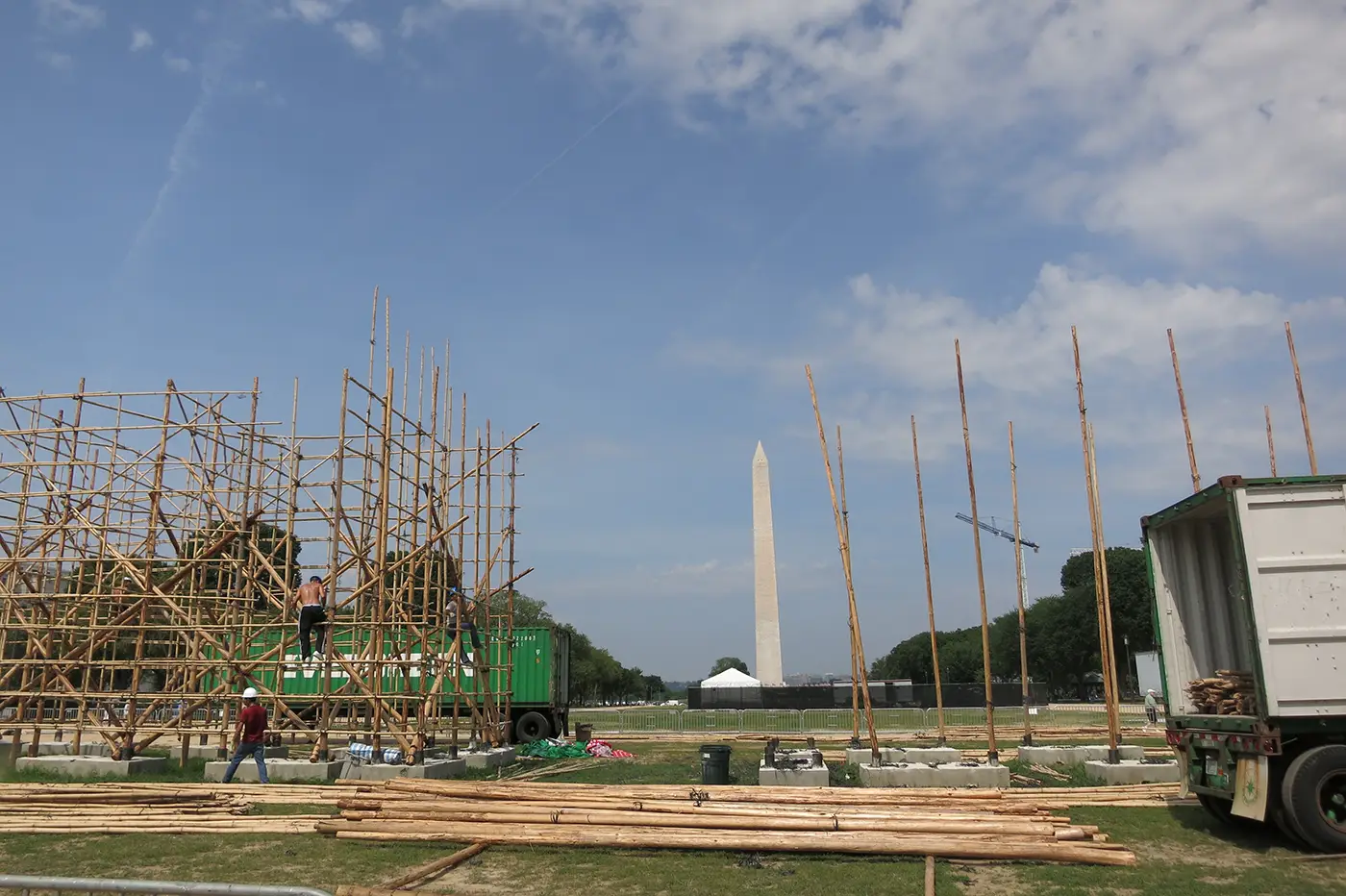
The flower plaque is taken apart after the Festival and will be repacked to ship back to China. Photo by Sojin Kim, Smithsonian -
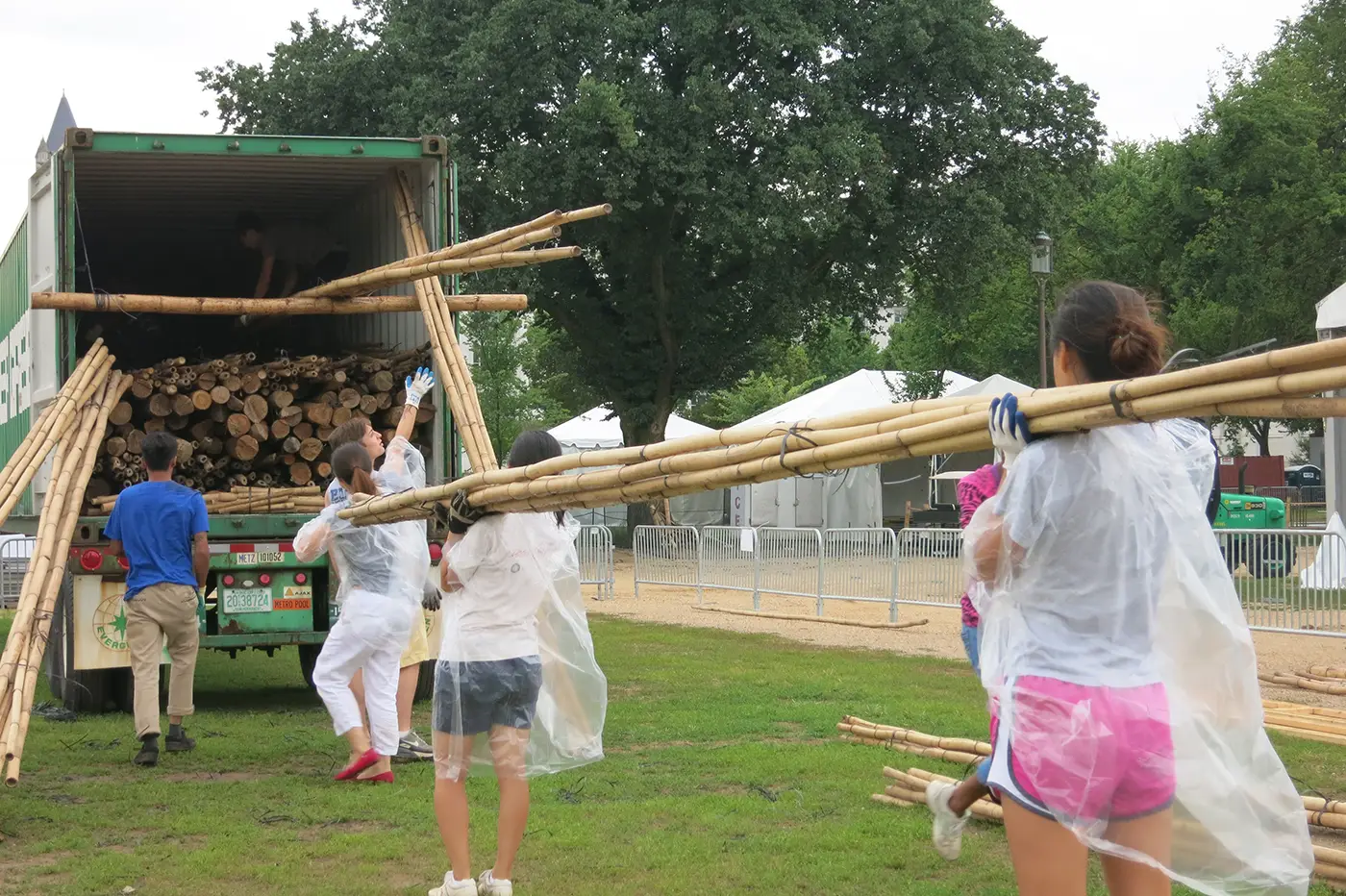
On a rainy day, China program team members Jing Li, Joan Hua, and Danielle Wu assist in loading the materials into a shipping container. Photo by Sojin Kim, Smithsonian -
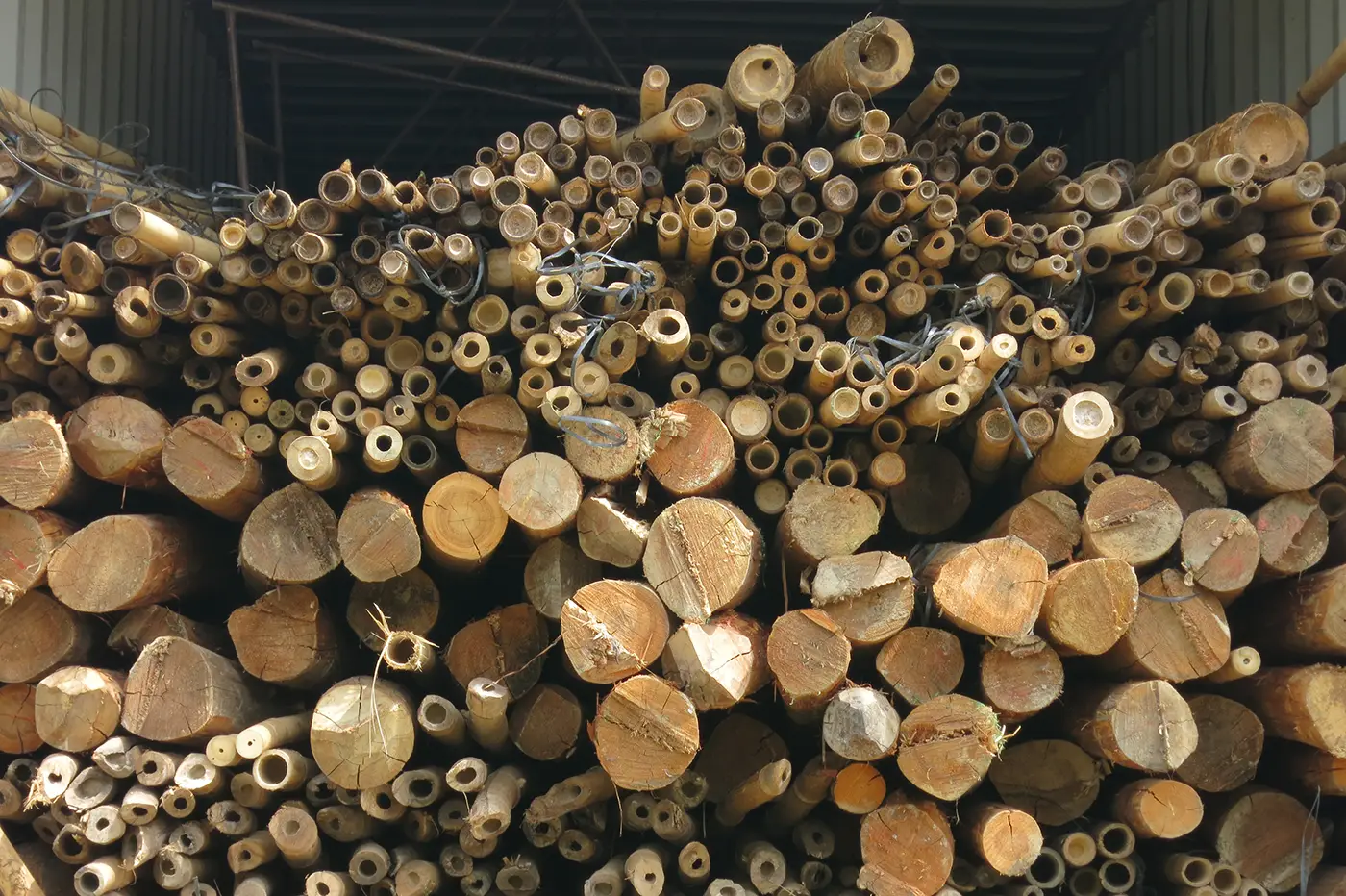
Bamboo and lumber are loaded into a sea container for their return to Hong Kong. The U.S. Department of Agriculture required that the materials be fumigated before arrival and that every bit leave the Mall and the country after its installation. Photo by Sojin Kim, Smithsonian
Choi began learning bamboo construction from his father when he was thirteen years old. His business is one of a handful in Hong Kong with the skills to work in all aspects of bamboo structure building, including scaffolding, ritual structures, and temporary theaters. He welcomed the opportunity to try something new for the Festival, collaborate with a contemporary artist, and build outside of Hong Kong under different construction requirements.
Preparing for the installation, Yung and Choi consulted with our production staff as well as Smithsonian engineers and fire safety officers, making changes to the structure, design, and materials as needed. A week before opening day, Choi and his team of four unloaded ten tons of bamboo and lumber from shipping containers. With no rigging or electric tools, they built the structure length by length, expertly lashing together the poles with nylon ties, extending it vertically as they climbed. After the Festival, in the same way, but in reverse, they took it down, repacking the materials for return to Hong Kong and use in their next project.
