

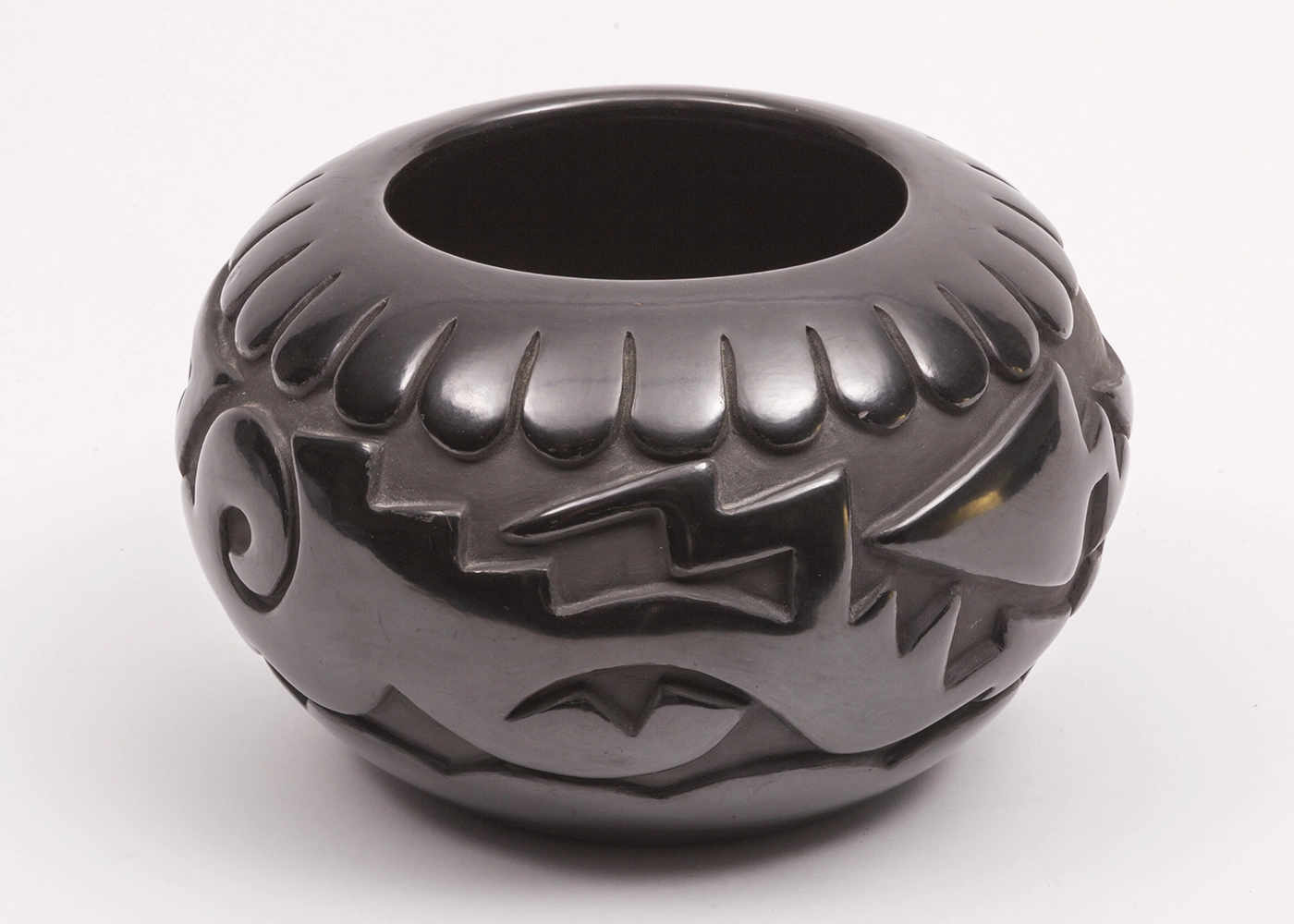
Santa Clara Bowl
“My mother taught me how to make pottery. Now I teach my children how to make pottery. My granddaughter, she makes pottery. We start from the beginning, making a bowl—that’s how we learn.”
Before the people, there was the land
Born in 1916, Santa Clara potter Madeline Naranjo made her first trip out of New Mexico in 1992 to participate in the Smithsonian Folklife Festival. Her specialty was carved, hand-built pottery, polished and fired black. She traveled to Washington with her daughter Frances, also a potter, and Tessie Naranjo (unrelated), who facilitated their presentations in Washington and wrote about Pueblo pottery for the program book.
-
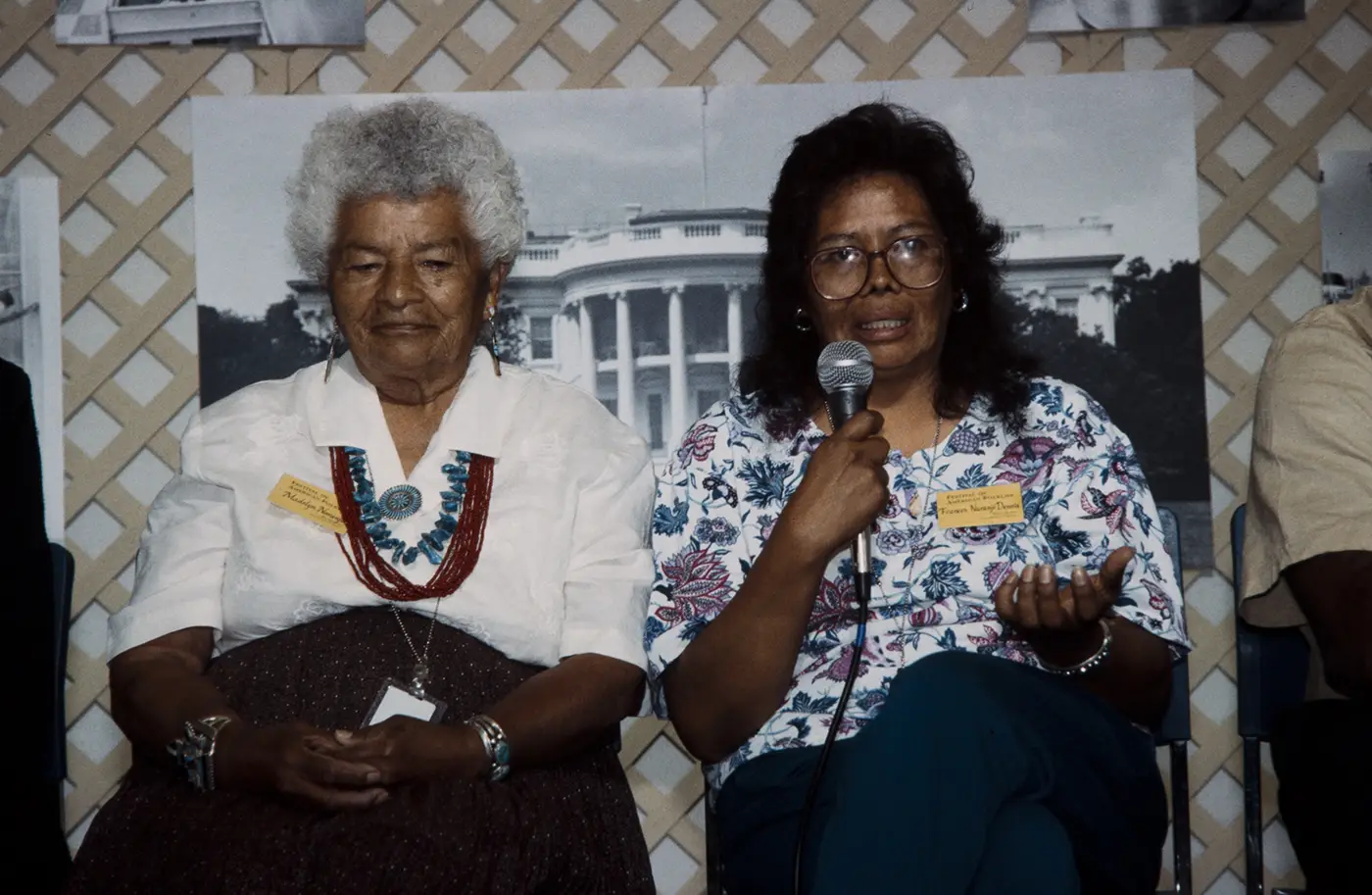
Madeline Naranjo and her daughter Frances Naranjo Dennis on the narrative stage. Photo by Richard Strauss, Ralph Rinzler Folklife Archives
The 1992 Folklife Festival commemorated the Columbus Centenary, providing an opportunity for visitors to reflect on the myriad forces that shaped life in the Americas over the preceding 500 years. For the New Mexico program, Native Americans, descendants of early Hispanic settlers, and later immigrants came together to discuss the complex underpinnings of New Mexico’s regional culture and land-based lifeways. Santa Clara Pueblo pottery was one of the featured traditional arts, set up in a large plaza surrounded by adobe structures.
-
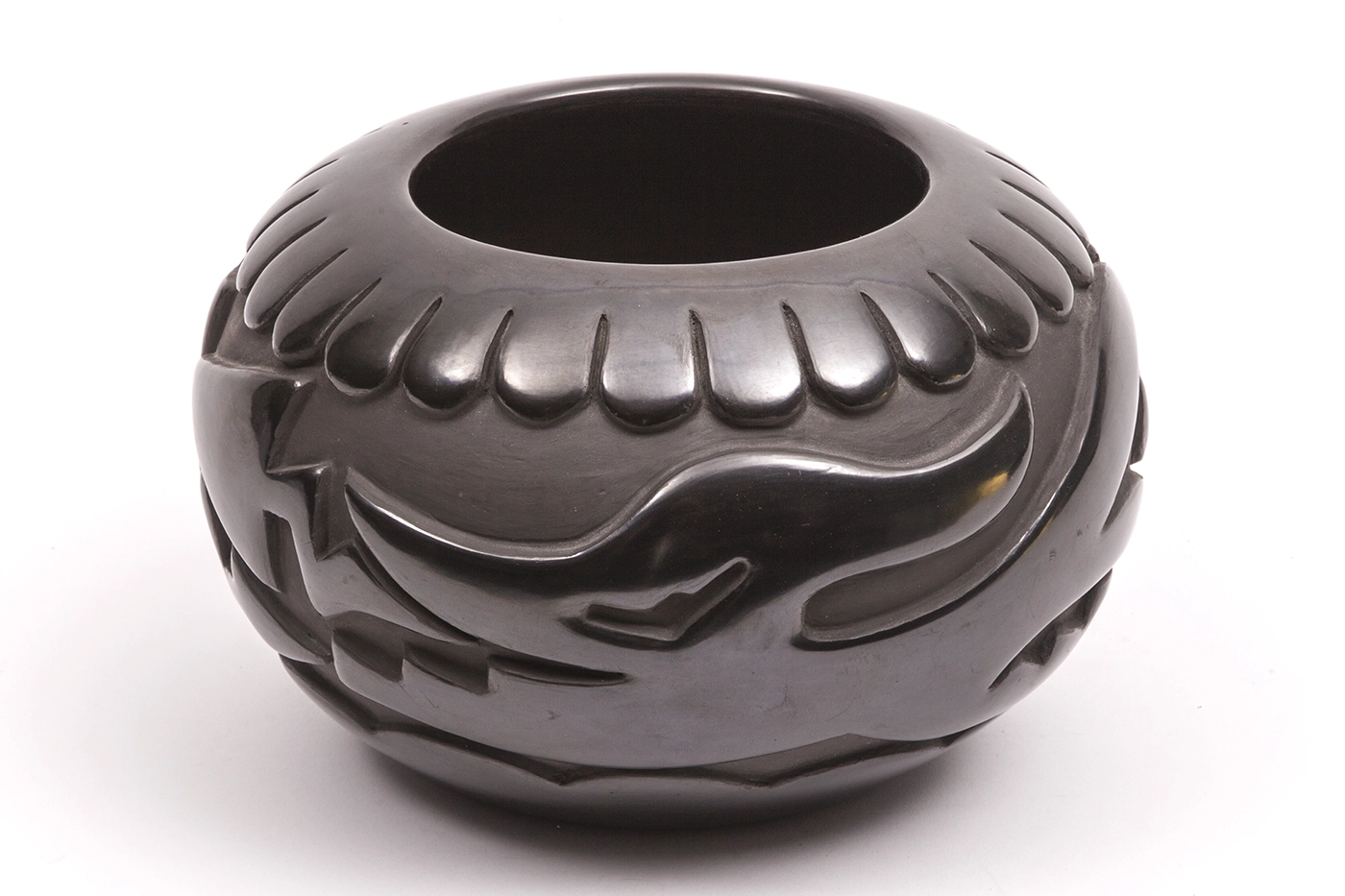
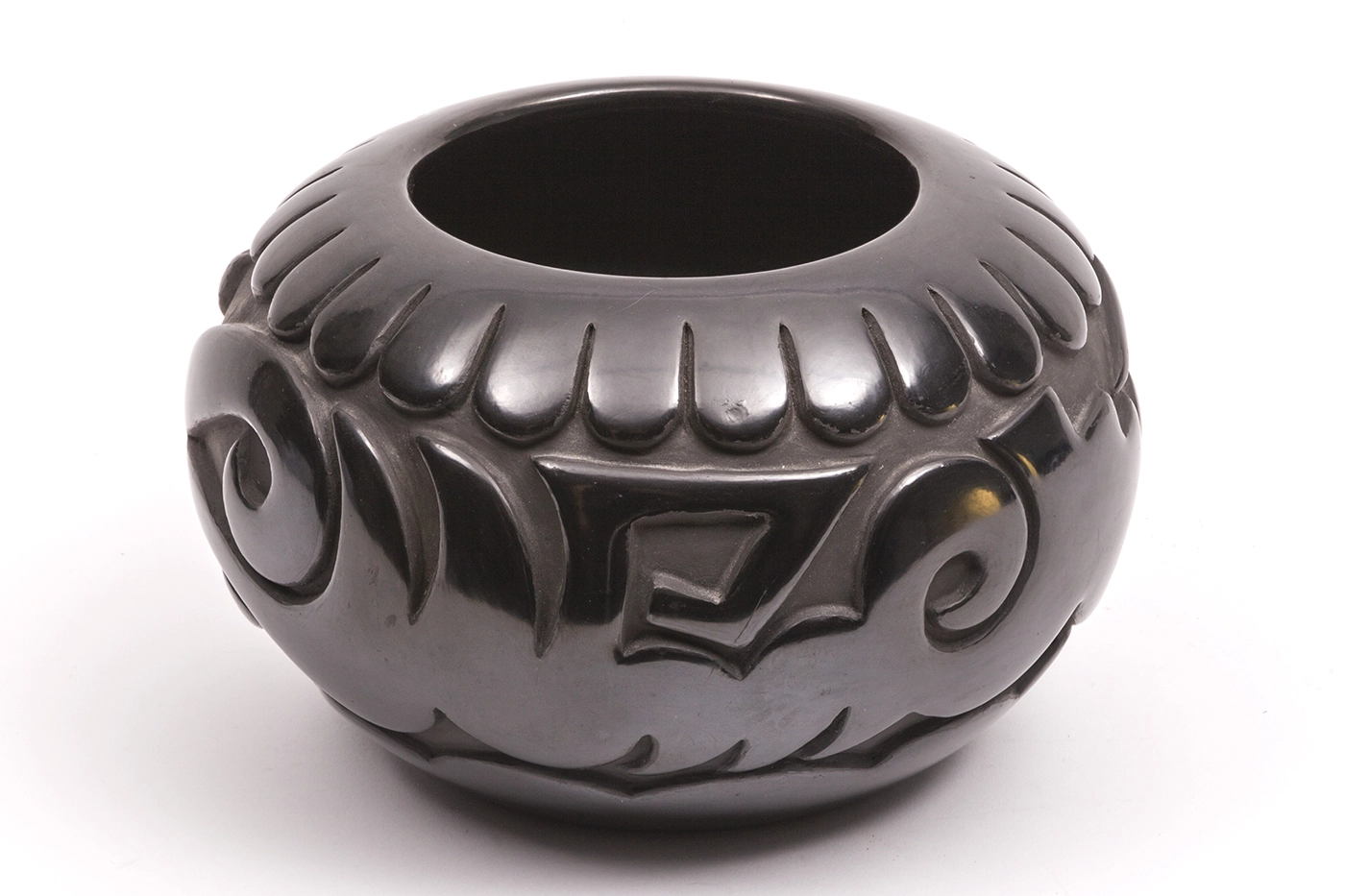
Clockwise rotation of the water serpent bowl. Photos by Zvonimir Bebek, Ralph Rinzler Folklife Archives -

-
-
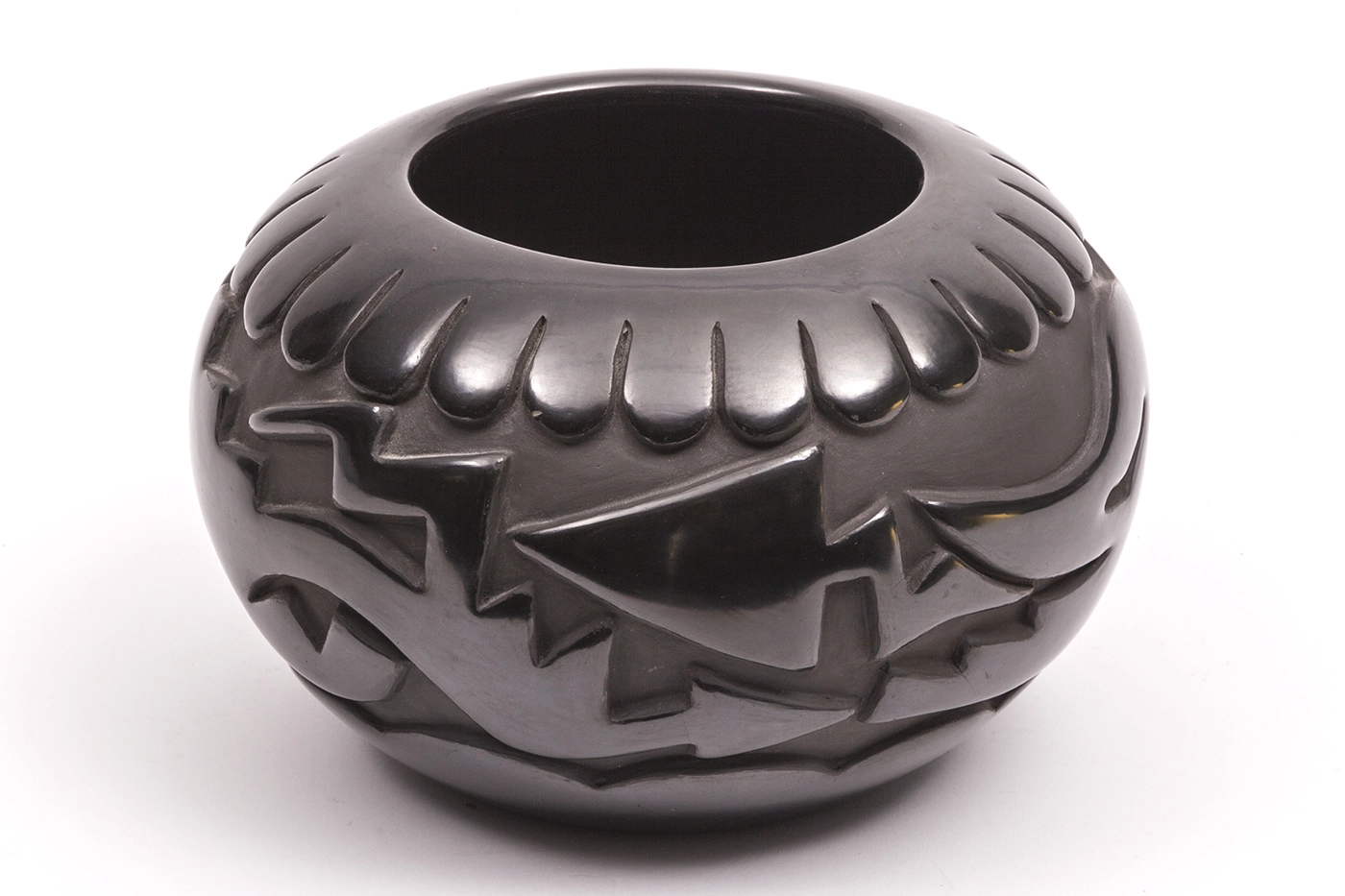
Naranjo’s horned water serpent bowl holds stories within stories. One speaks to the continuity of Pueblo culture. Another is carved into the surface of the bowl: Avanyu, the horned water serpent that is both feared and respected. Shooting lightning bolts from his mouth, he can cause torrential flooding or bring gentle, drought-relieving rains.
-
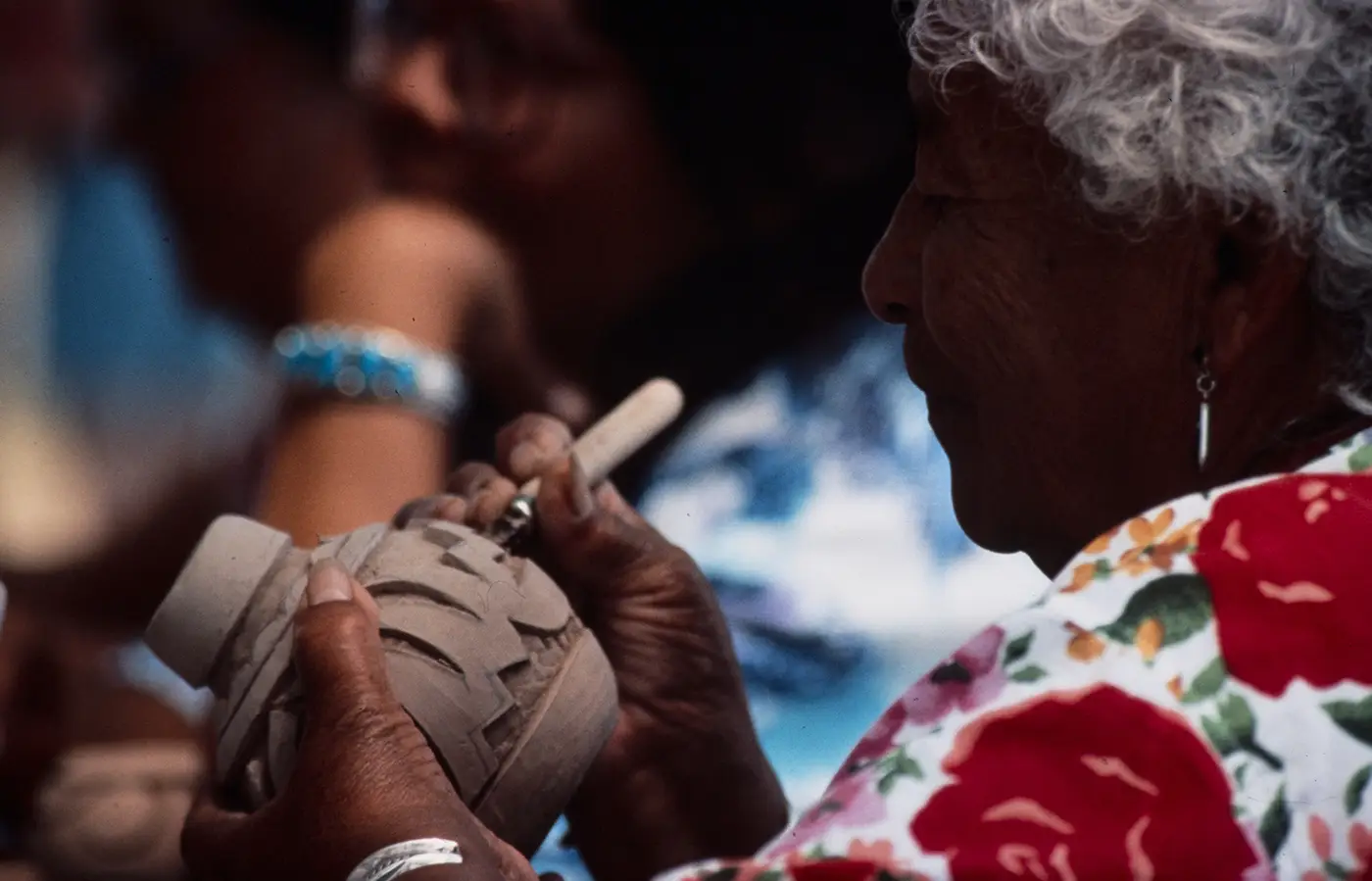
Madeline Naranjo finishes a carved jar at the 1992 Festival. Ralph Rinzler Folklife Archives -

“Pottery-making is more than the simple creation of an object from earth. It speaks to a feeling that we are of the earth, that the pot and the person are one…. Generations of Pueblo mothers have taught their children the making and meaning of pottery. In all the 19 Pueblo communities in New Mexico, this connection with clay has been repeated and taught generation after generation.”
