


Cambodian Cookstove
Appropriate technology, if ever there were
Using an ancient technique of shaping pots with a paddle and anvil, women in the villages of Kampong Chhnang, an hour’s drive northwest of the capital, Phnom Penh, took advantage of the rich clay deposits nearby to develop a craft industry that gained a reputation throughout Cambodia and beyond. The potter holds a rounded wooden anvil in one hand, inside the emerging pot or stove, and strikes the clay with a flat wooden paddle to thin and shape the wall—a technique encountered throughout Native North America, Africa, and Asia. The ware is fired in the open at low temperatures, using rice straw as fuel, to produce durable but affordable goods. The cookstove is designed to hold the round-bottomed pot in place and to allow coal or firewood to be easily fed underneath.
-
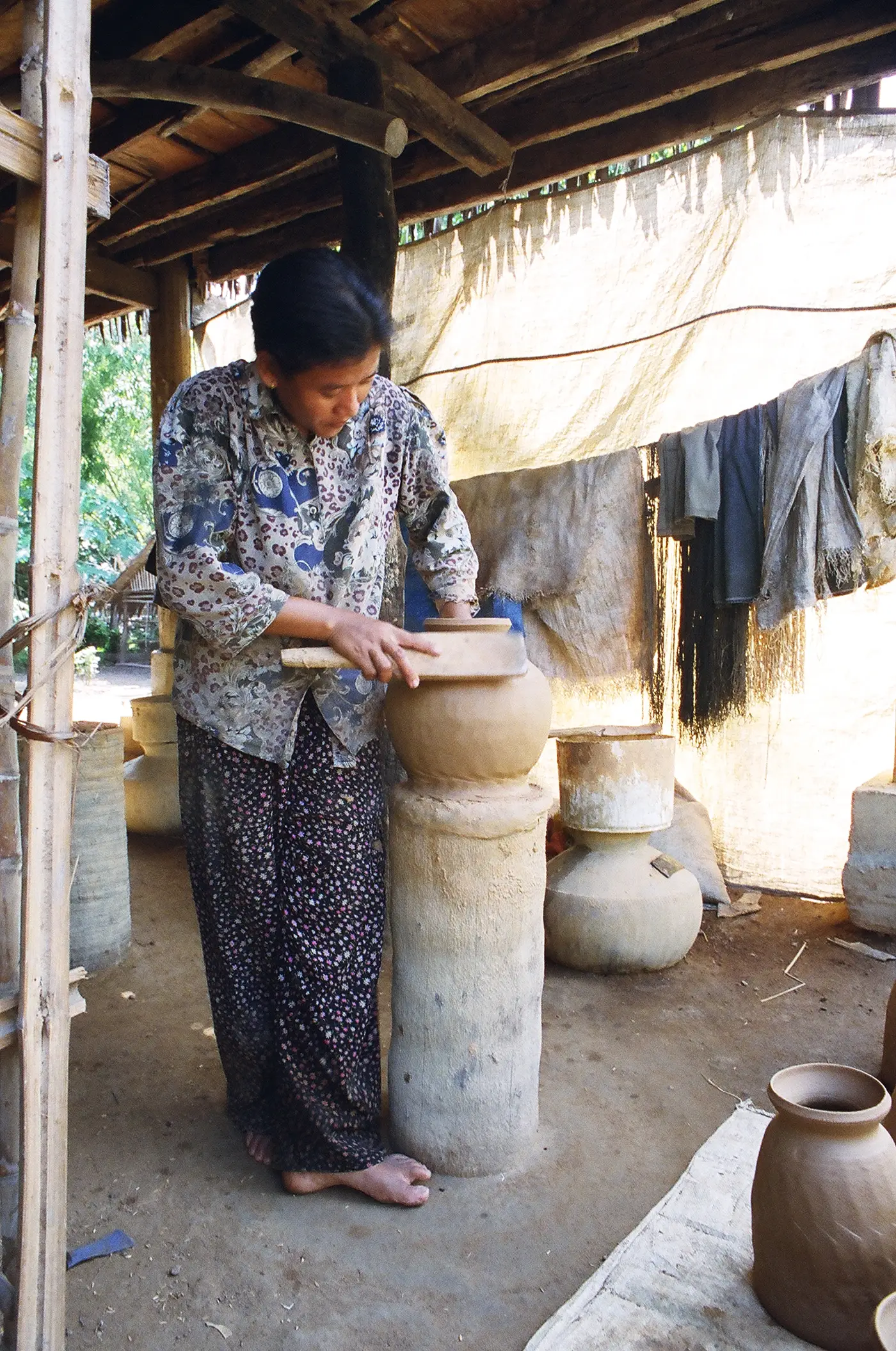
With the anvil in her left hand and paddle in her right, the potter first shapes the top of the cooking pot, shown here on a vertical stand. Fieldwork photo, October 2005, Ralph Rinzler Folklife Archives -
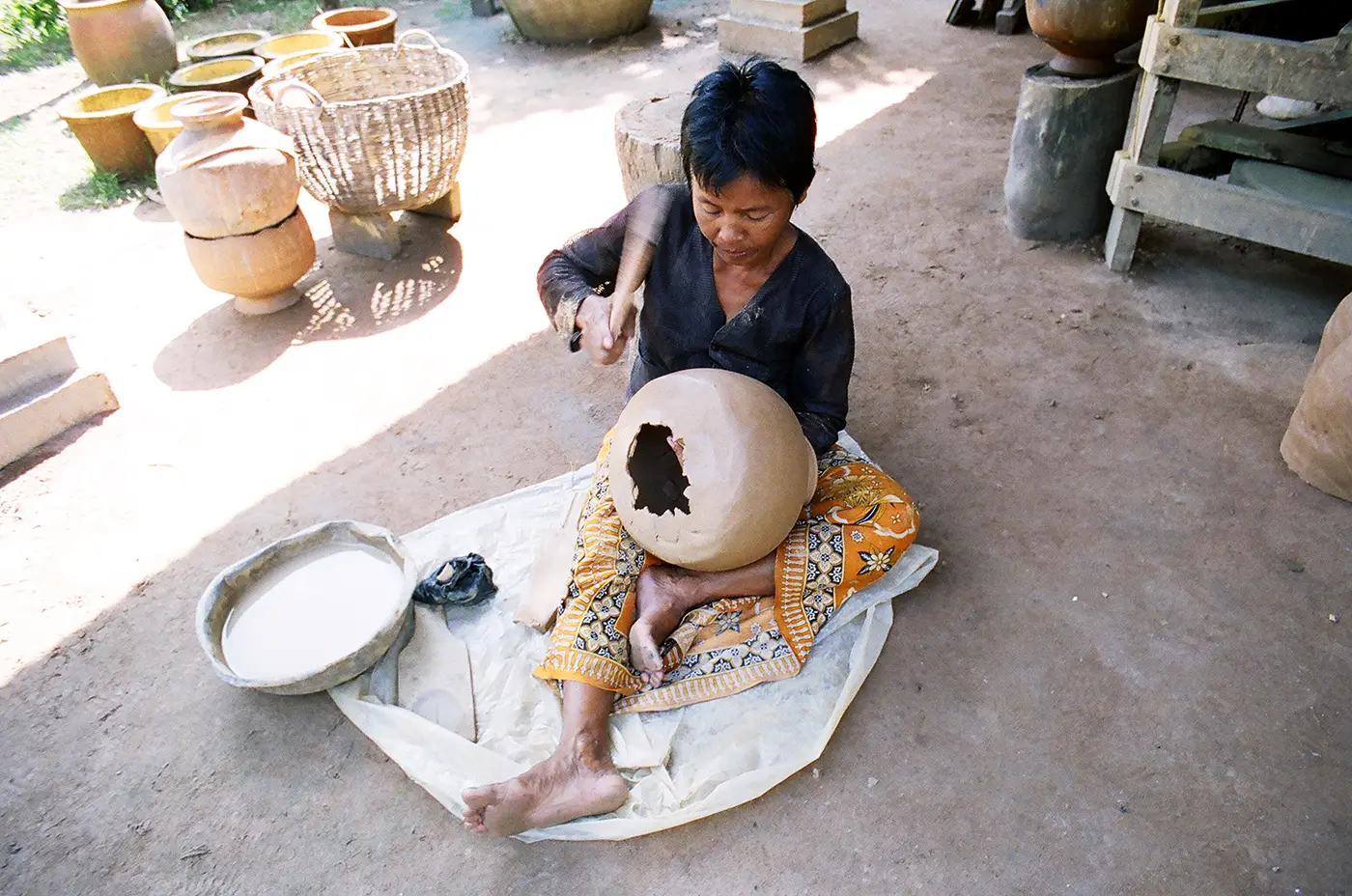
The rounded bottom can be shaped only after the body of the pot has been removed from the stand. Fieldwork photo, October 2005, Ralph Rinzler Folklife Archives -

With her work almost finished, the potter closes the rounded bottom of the pot. Fieldwork photo, October 2005, Ralph Rinzler Folklife Archives
The pottery villages have been the target of international development assistance since 1998, with a German aid organization introducing foot-kicked potter’s wheels to supplement the paddle-and-anvil method. The artisans quickly realized that the German design did not fit their body types, and they adapted the wheels to better accommodate their size and working habits. They also made an important decision as a community: before beginning to learn the techniques of throwing pots on the wheel, young village girls must first master the age-old paddle and anvil. German aid continues under various projects in this and other villages.
-

The cookstove is well-designed to hold pots, be they metal with flat bottoms or earthenware with rounded bottoms. The sheltered space under her stilt house provides the potter a comfortable workshop to build pots and dry them before firing. Fieldwork photo, October 2005, Ralph Rinzler Folklife Archives
While women are the pottery producers, it is their husbands and brothers who carry the goods to market, setting out on selling trips that might take them to the farthest corners of Cambodia or beyond. Some enterprising families now take pots to buyers on trucks, but the ware is usually first loaded onto a cart drawn by horse or ox before several cartloads are consolidated onto a truck. The vendors who set out from the village to sell pots return weeks later with news of the outside world, ideas for new products, and feedback from customers so that ongoing production can respond to market demands.
-

Earthenware is characterized by being fired at low temperatures, as in this open-air burn. Photo by Cynthia Vidaurri, October 2005. Ralph Rinzler Folklife Archives -

Rice straw is an abundant resource, providing fodder for livestock as well as fuel for firing pots. Photo by Cynthia Vidaurri, October 2005. Ralph Rinzler Folklife Archives -
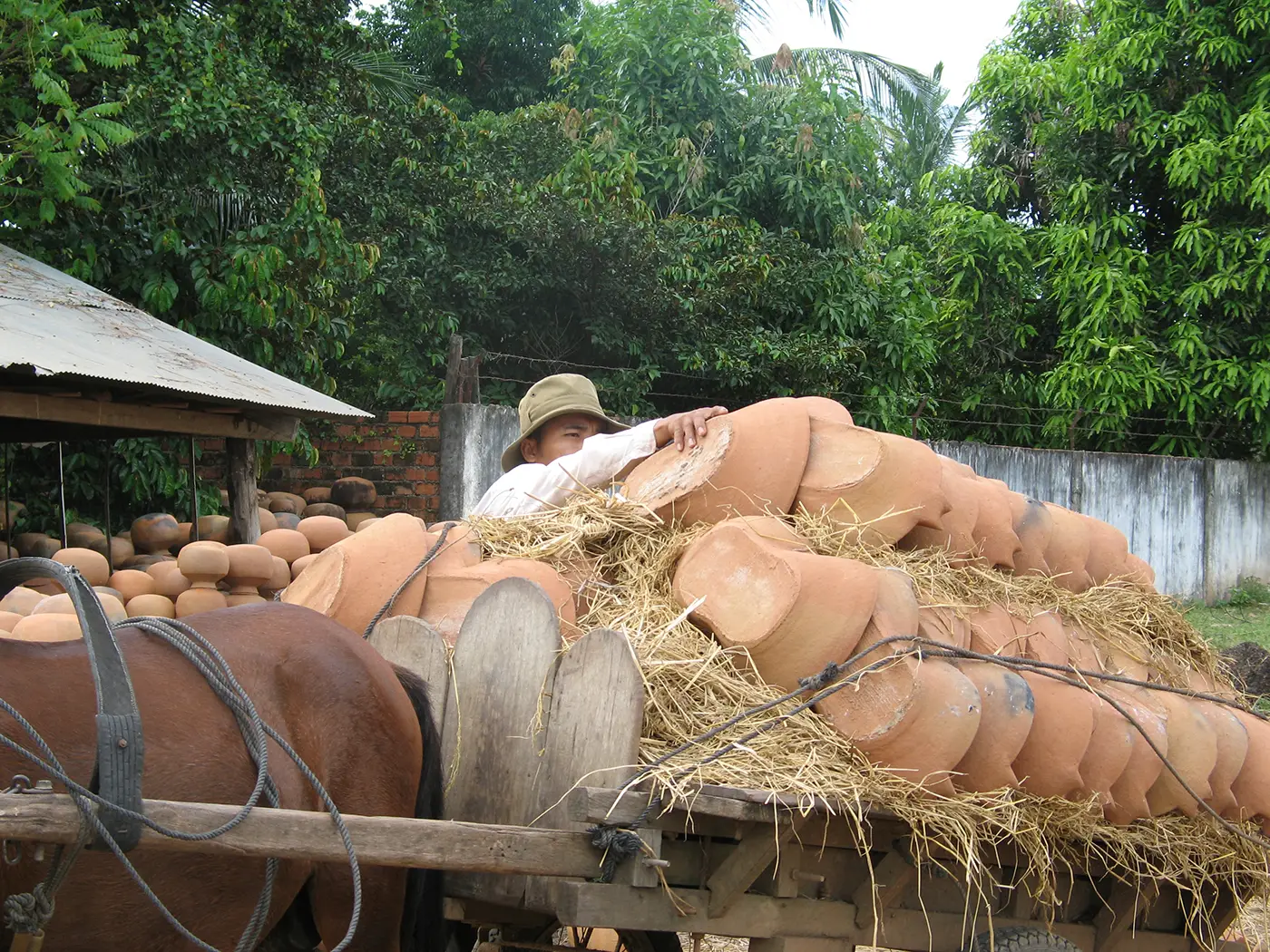
A load of cookstoves on the first leg of their journey, transported from the potter’s workshop by horse-cart. Photo by Cynthia Vidaurri, October 2005. Ralph Rinzler Folklife Archives -
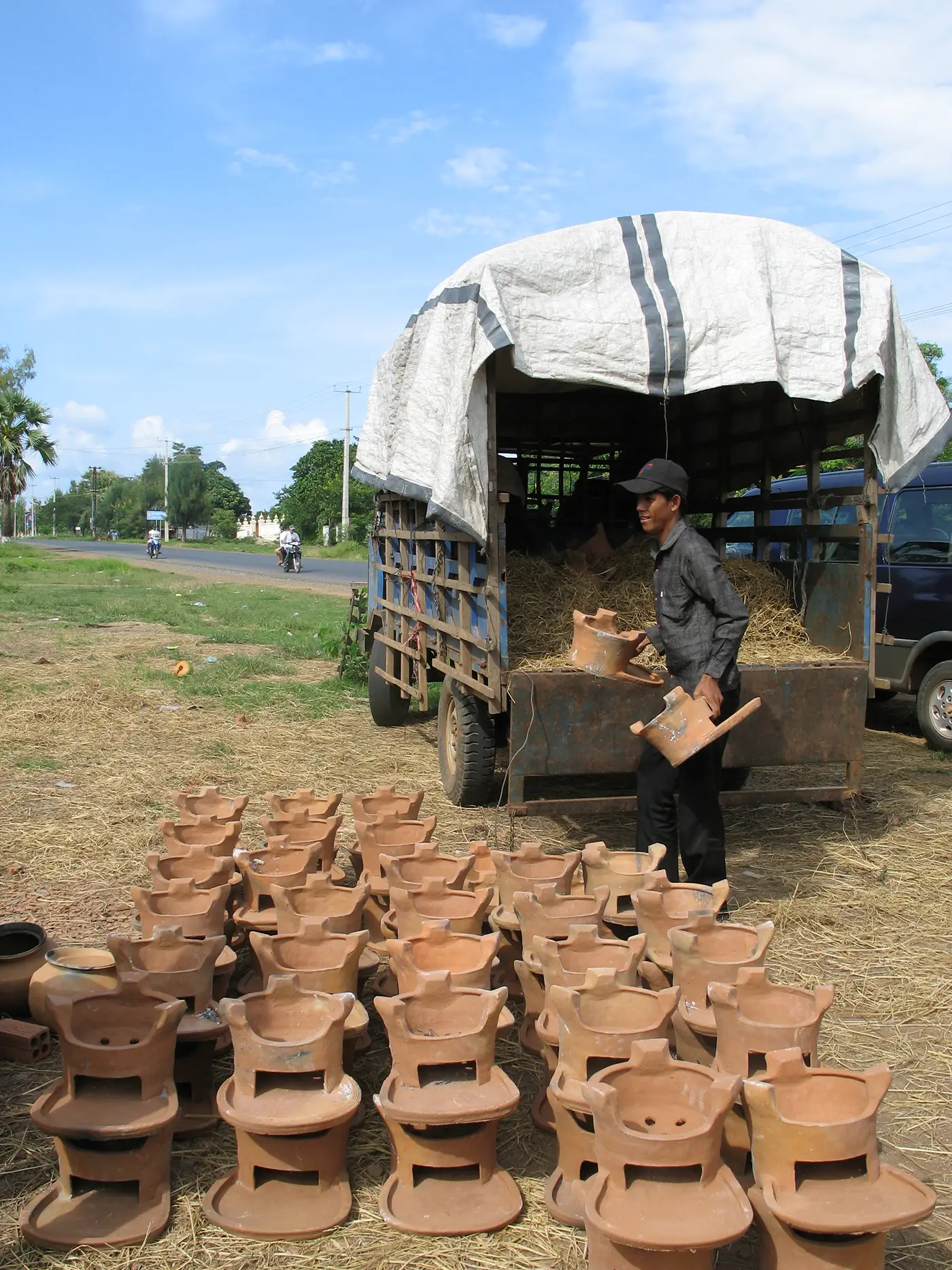
Village men transport the local earthenware throughout Cambodia and even across borders to Vietnam, Laos, or Thailand. Photo by Cynthia Vidaurri, October 2005. Ralph Rinzler Folklife Archives
