

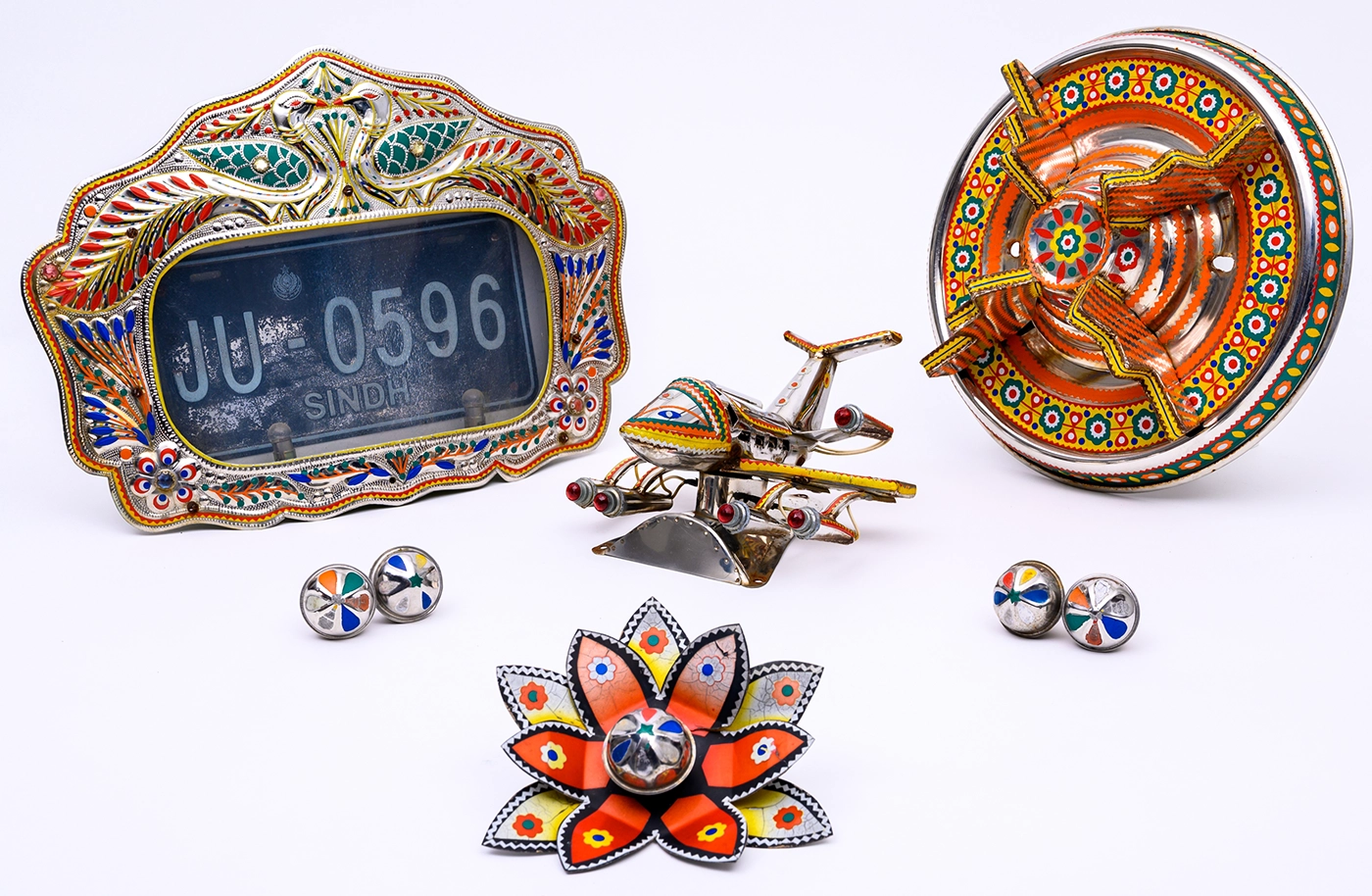
Pakistani Truck Ornaments
An array of ornamental parts spark memories of a remarkable program
-
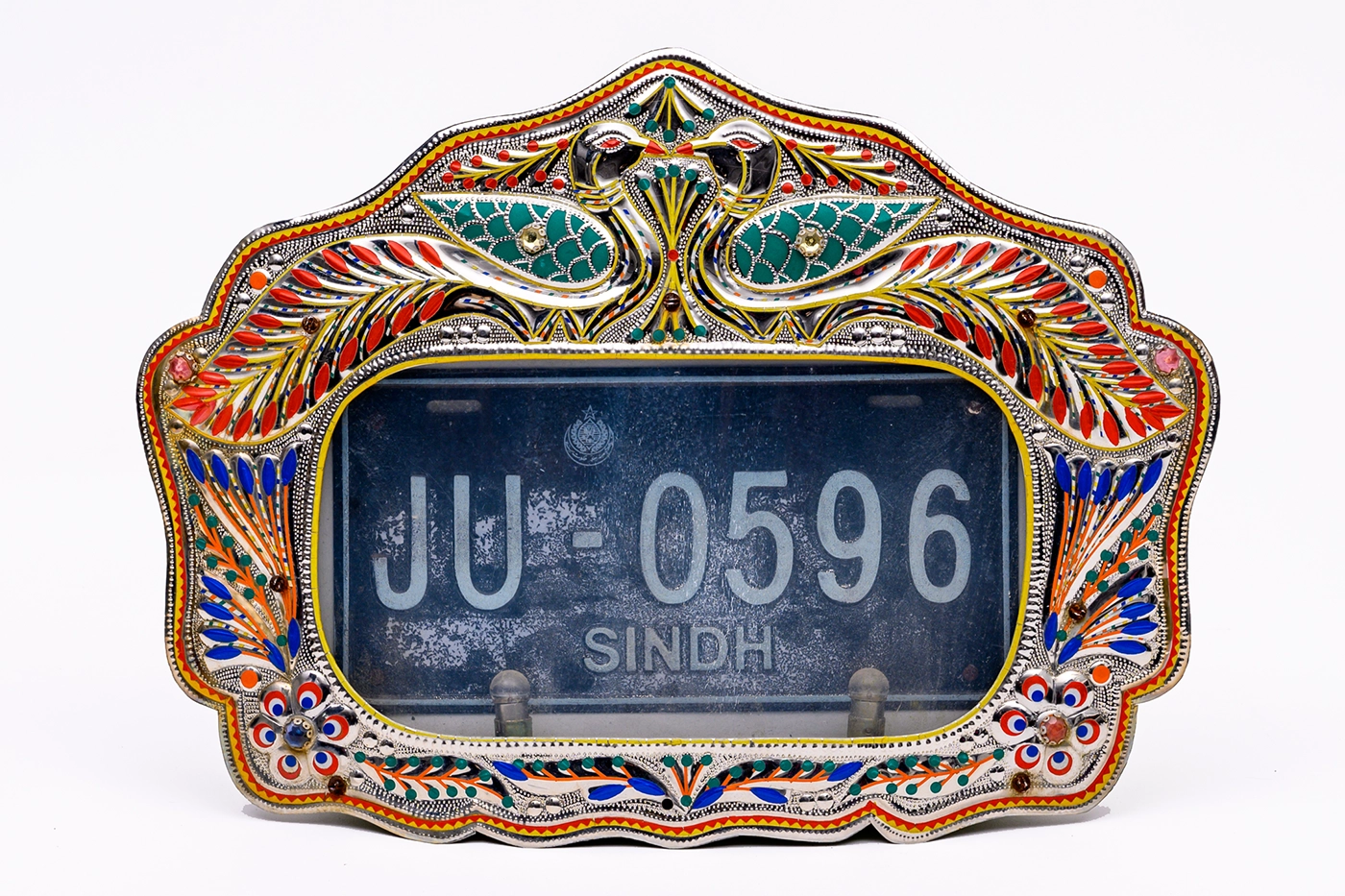
License plate Photo by Sonya Pencheva, Ralph Rinzler Folklife Archives -

Hood ornament Photo by Sonya Pencheva, Ralph Rinzler Folklife Archives -
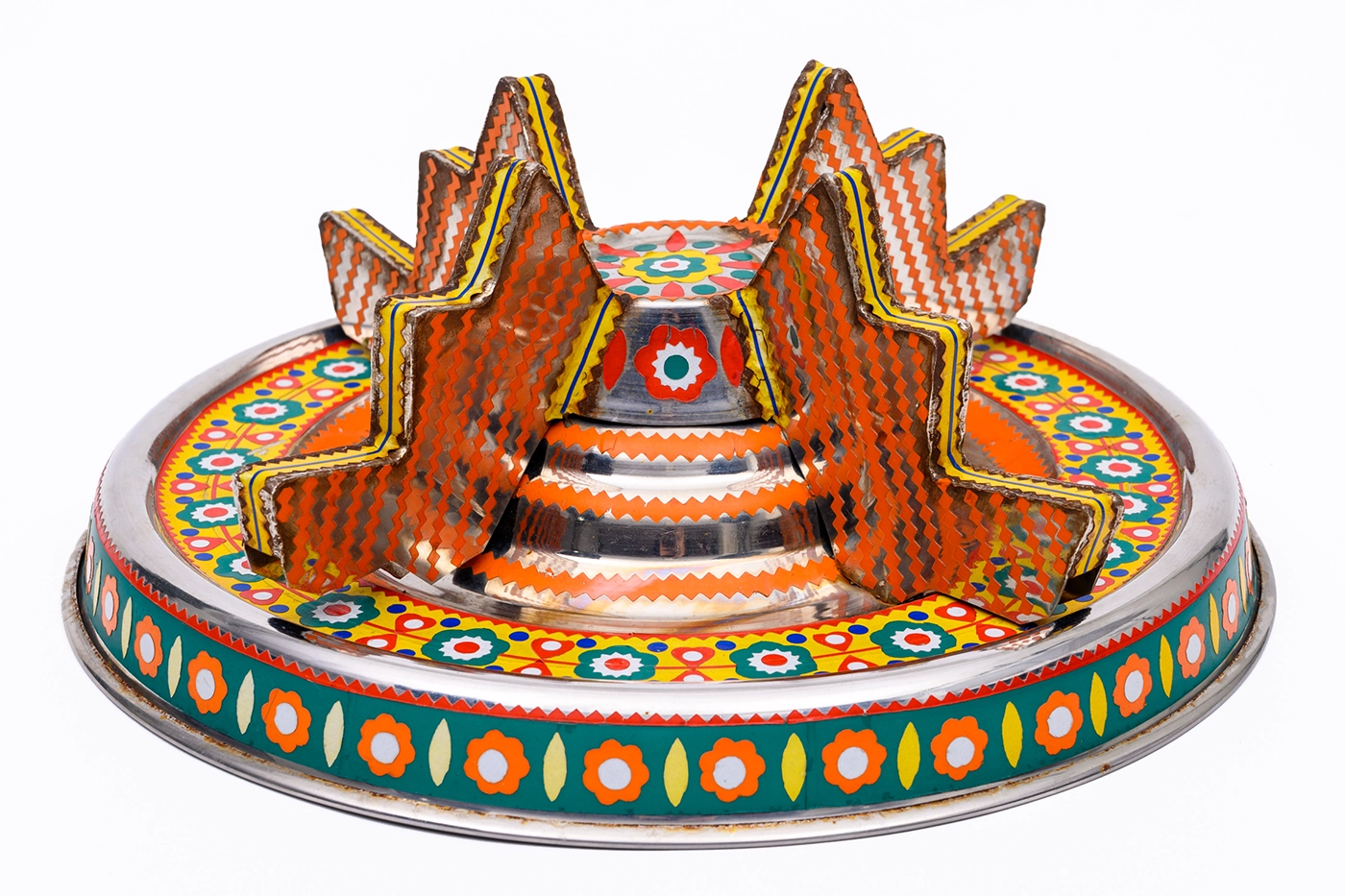
Hubcap Photo by Sonya Pencheva, Ralph Rinzler Folklife Archives -
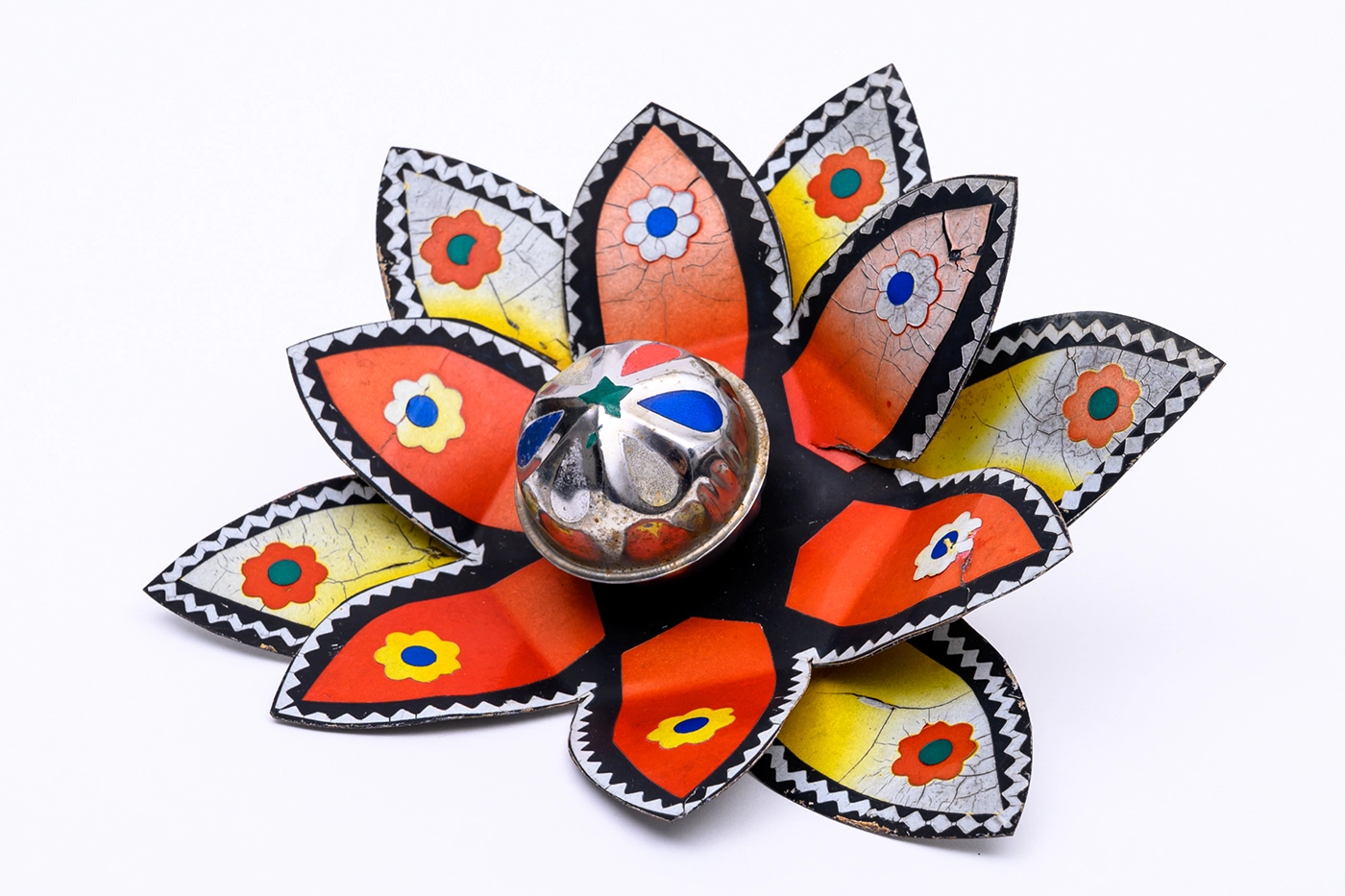
Tailgate ornament Photo by Sonya Pencheva, Ralph Rinzler Folklife Archives
The Smithsonian’s Pakistani painted truck began as a very ordinary 1976 Bedford that served a steel mill in Pakistan. The Smithsonian knew that it needed a modern means of transportation for its 2002 Festival program on the Silk Road and hired J. Mark Kenoyer, a professor of anthropology at the University of Wisconsin–Madison with expertise in Pakistan and India, to purchase a vehicle and arrange for its transformation. In Karachi, Kenoyer found two artists: Jamil Uddin to rebuild the Bedford from the chassis up with steel, chrome, mirrors, and more, and Haider Ali to paint the vehicle in vivid colors and spectacular designs.
Shipping the truck to the Washington, D.C., was a logistical challenge. The original itinerary was to travel by cargo ship from Karachi to Fujairah (United Arab Emirates), then to Kaohsiung (Taiwan), and finally through the Panama Canal to Norfolk, Virginia, where the Smithsonian would collect it. However, when the ship missed its connection in Kaohsiung, we suddenly had to scramble to put the truck on a ship to Long Beach, California, and then on a lowboy trailer across the country directly to the National Mall, where it arrived just two days before the start of the Festival. This saga of transportation was so impressive that it became the cover story for the July 8, 2002, issue of Traffic World: The Logistics News Weekly.
-
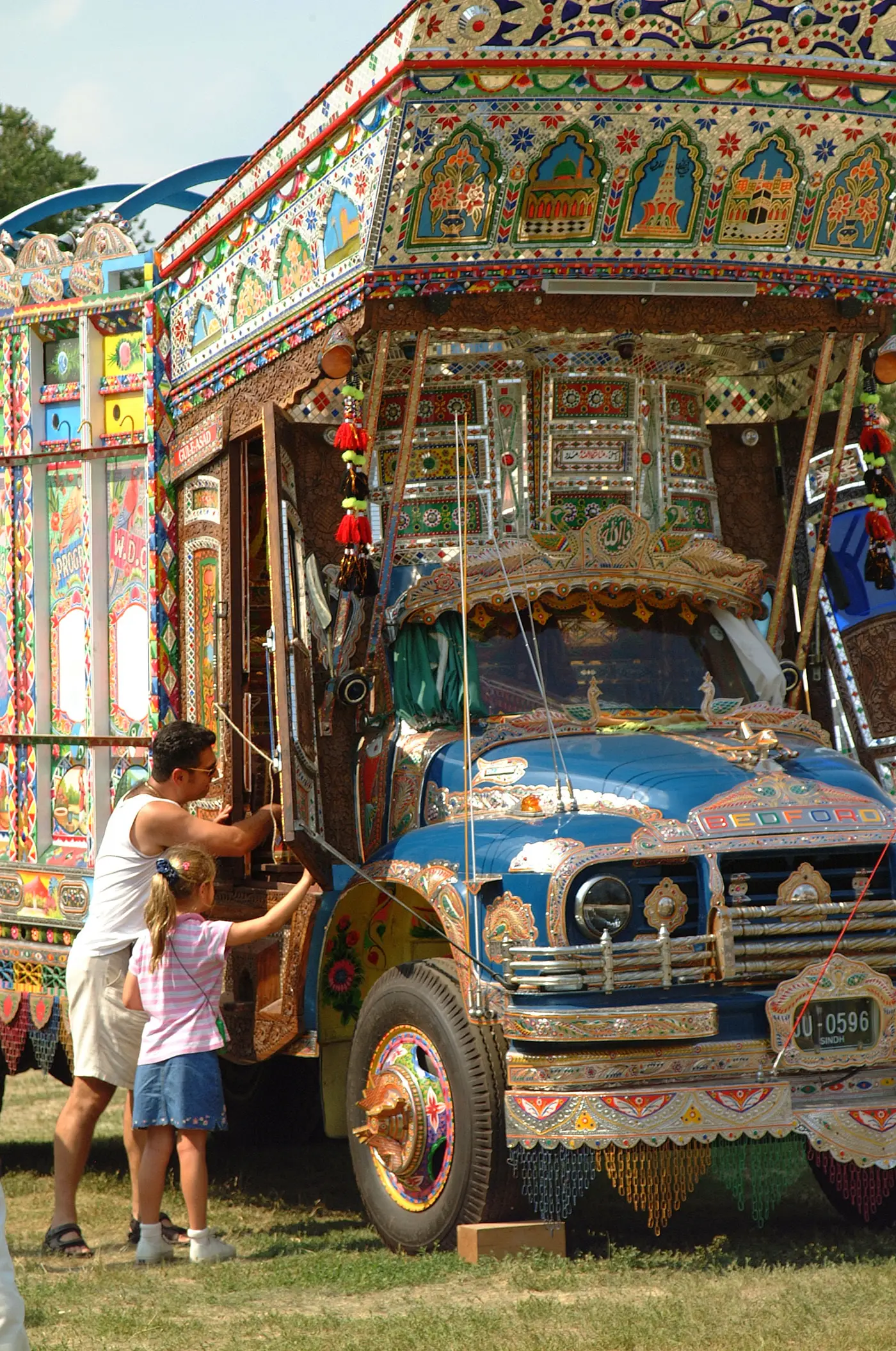
The truck, finally parked at the Festival, with the airplane hood ornament and decorated license plate visible. Smithsonian -
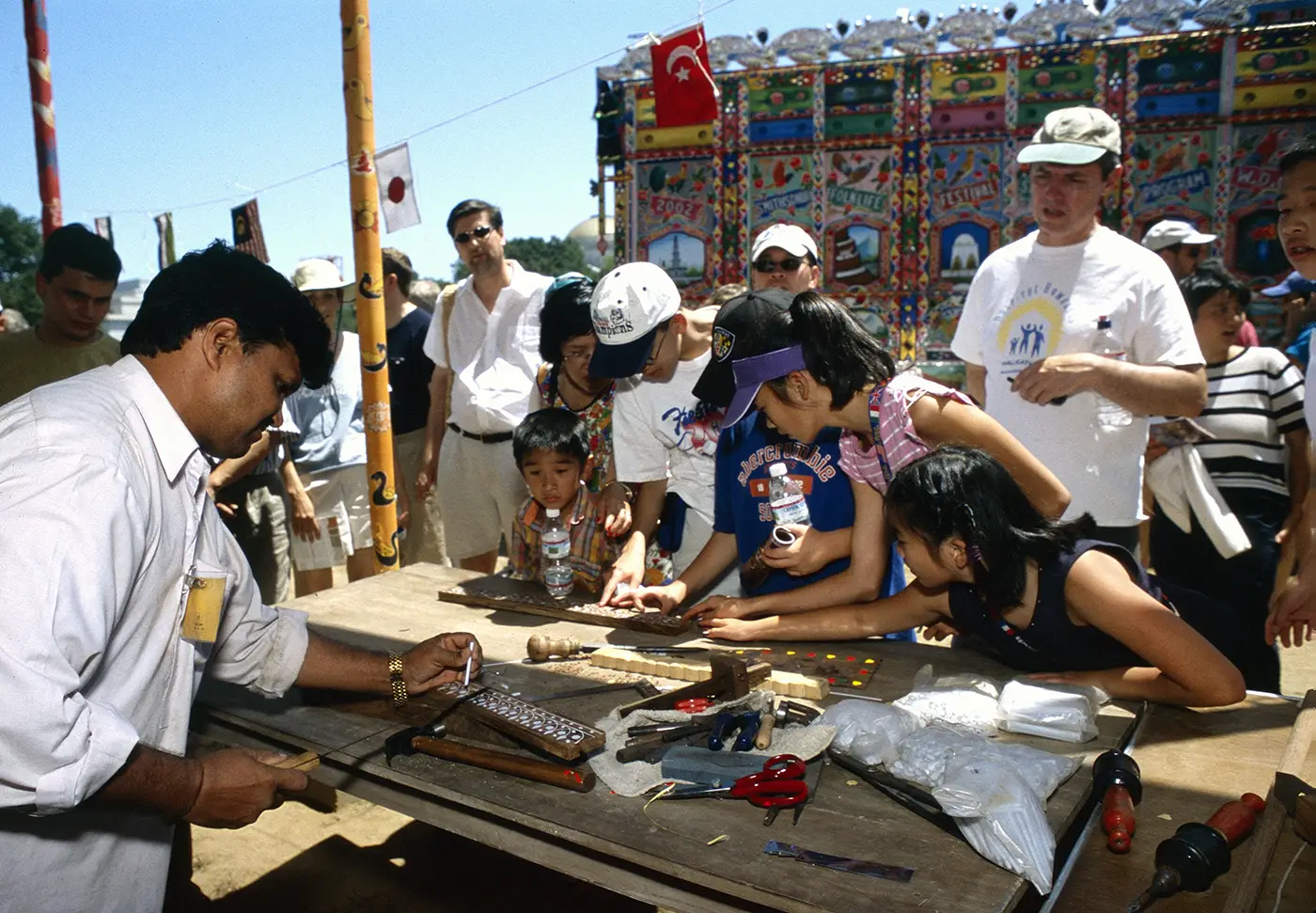
Jamil Uddin creating shell-inlaid teak trim for the restored truck. Photo by Charlie Weber, Smithsonian
The truck returned briefly to the National Mall for the 2006 and 2007 Festivals, where Jamil Uddin did some touch-up work in 2006. But in the years following, the truck sat fully exposed to the elements outside a Smithsonian storage facility in Prince George’s County, Maryland, causing the brilliant colors to fade and the polished metal to rust. Loraine Torstrup, a longtime fan of painted trucks due to her frequent visits to Pakistan, contacted the Smithsonian in June 2021 and took possession of the vehicle in May 2022, moving it to her home in New Jersey. However, the Smithsonian retained a few ornamental parts—such as the hubcap and license-plate holder—to remind everyone of the truck’s storied history and Festival glory.
-
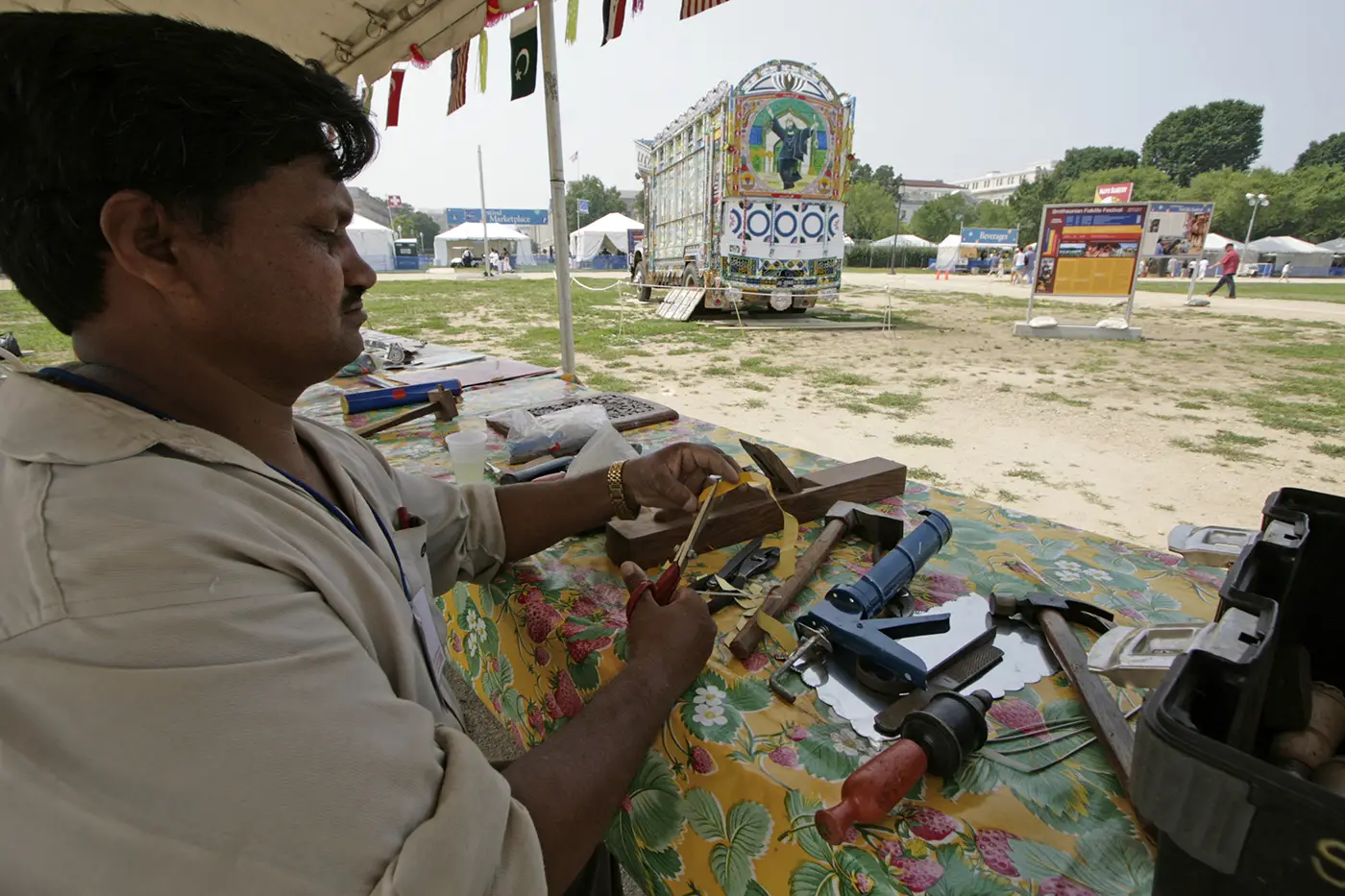
Jamil Uddin works on the truck’s restoration at the 2006 Festival. Photo by Leah Golubchick, Ralph Rinzler Folklife Archives -
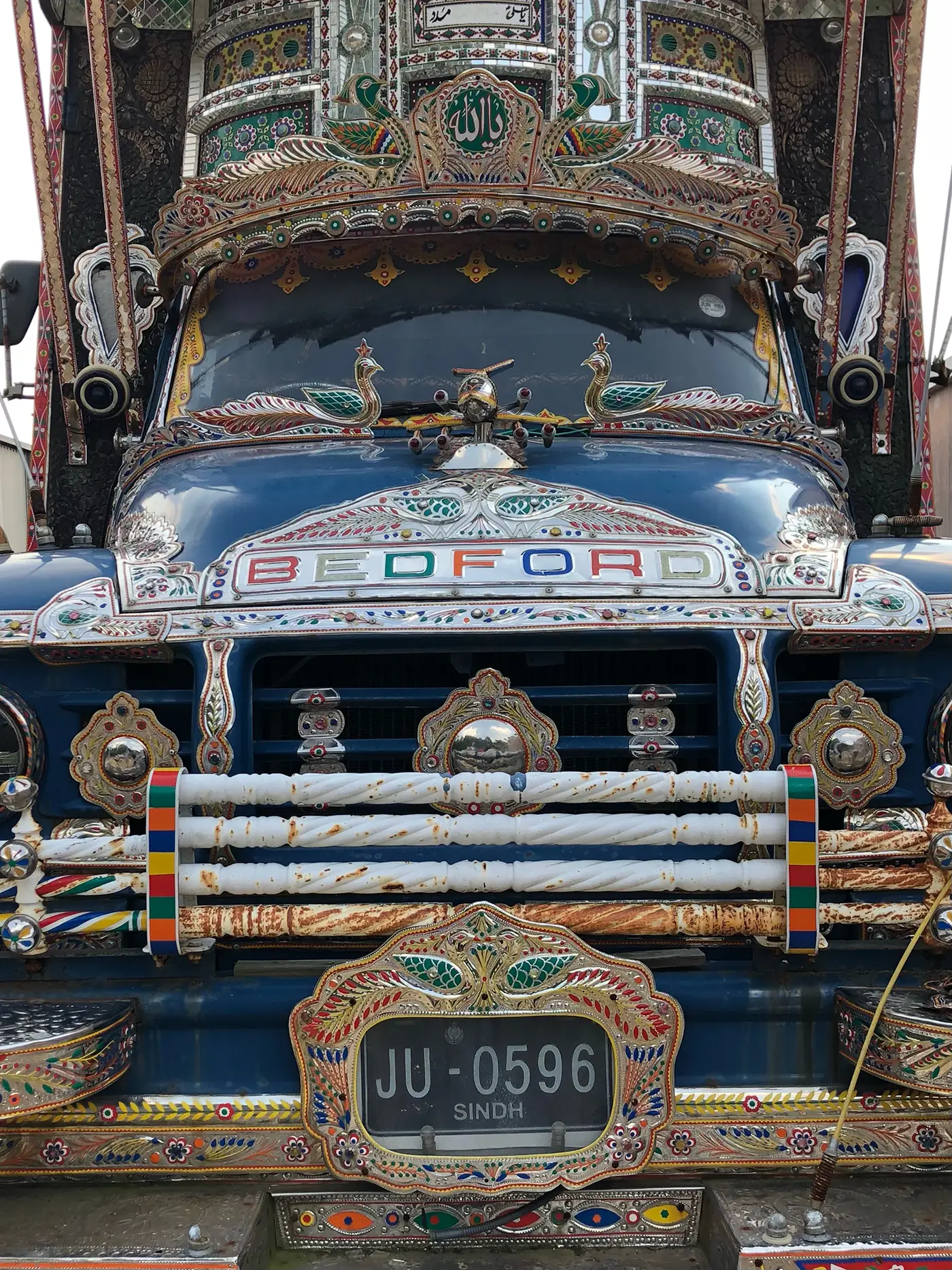
Front and rear views of the truck, prior to removal of the ornaments featured in this entry, as the truck was prepared for shipment to New Jersey in 2022. Photos by Jordan Leek, Smithsonian -

