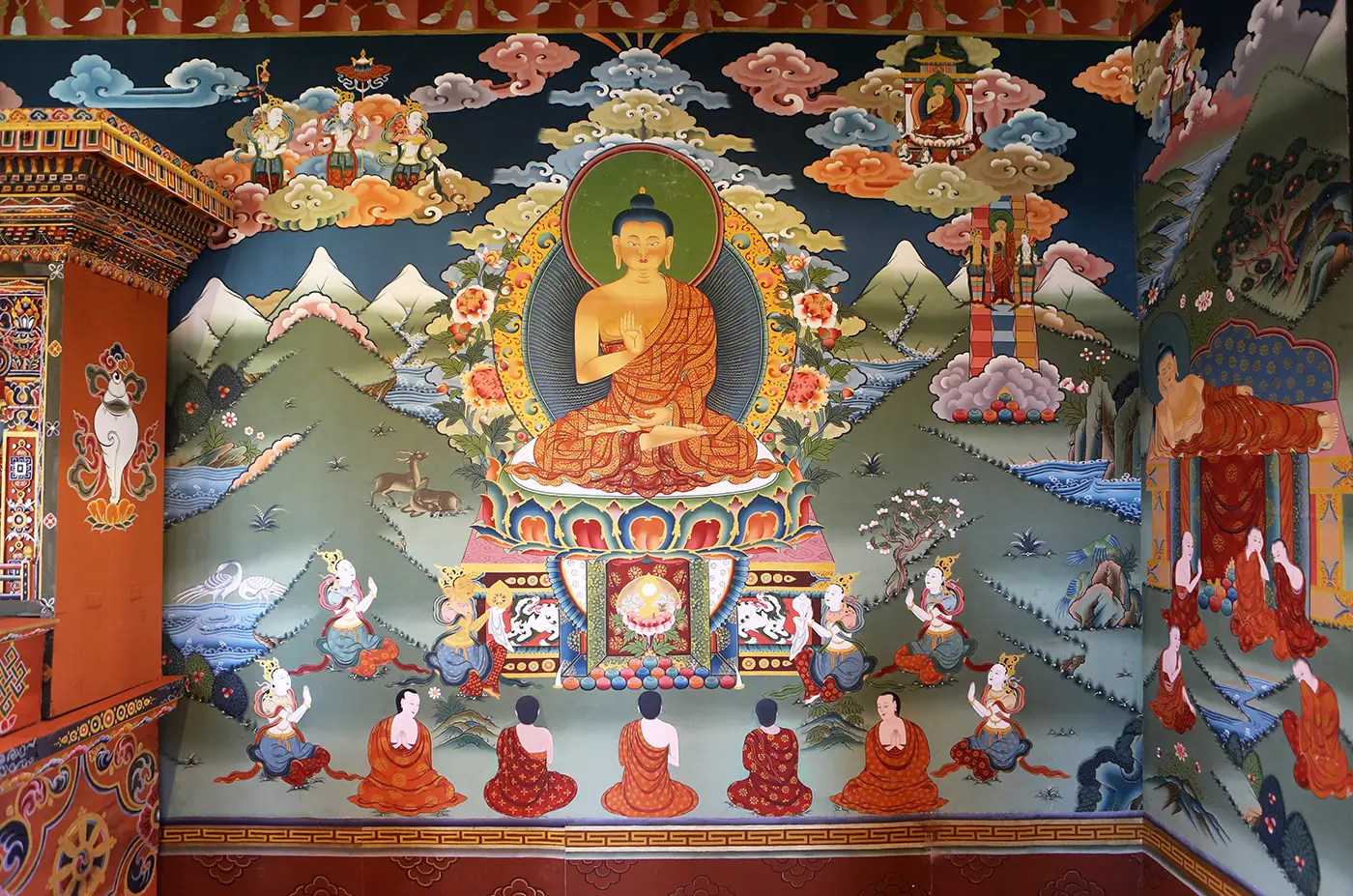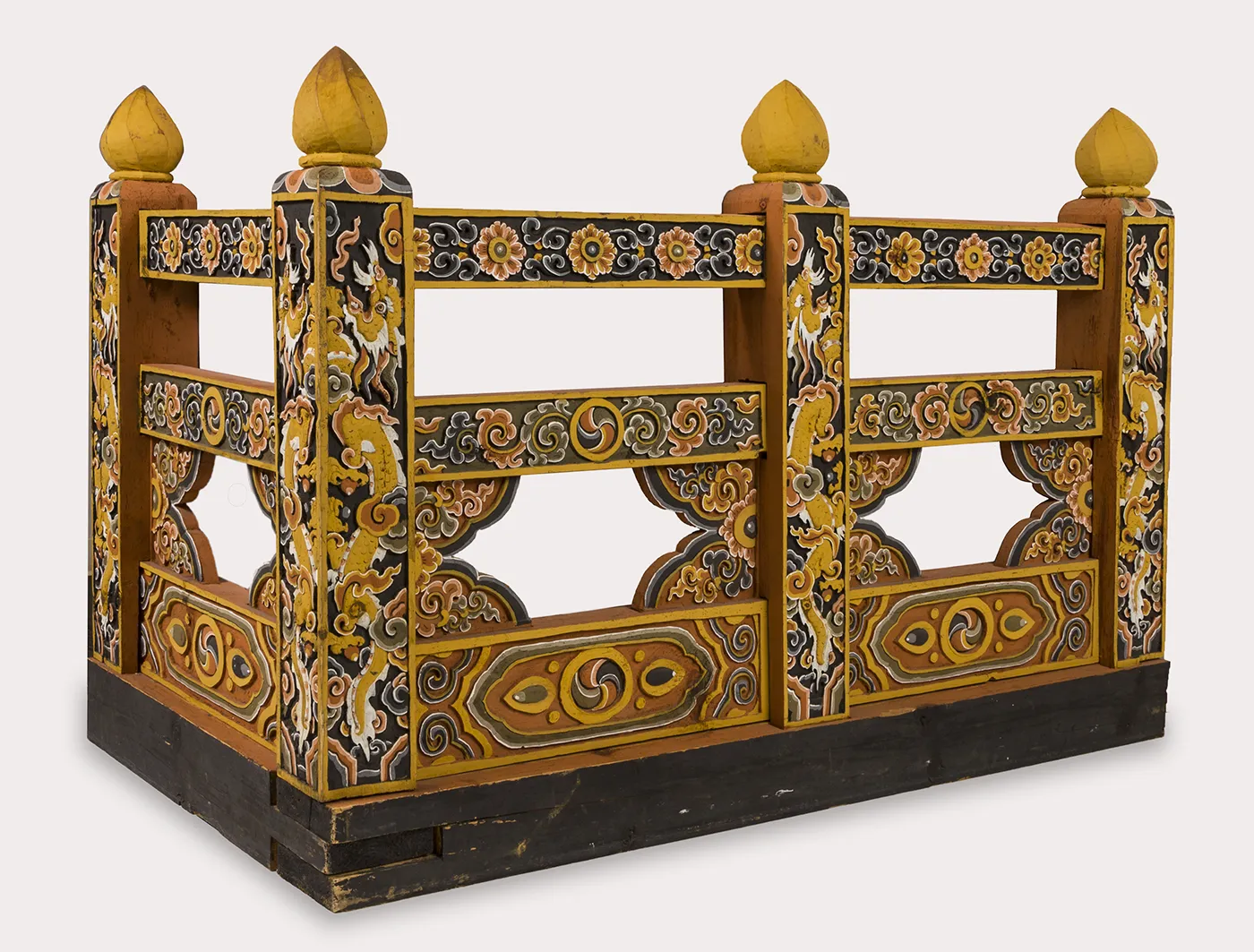
Bhutanese Temple Railing
The temple exerted a gravitation pull
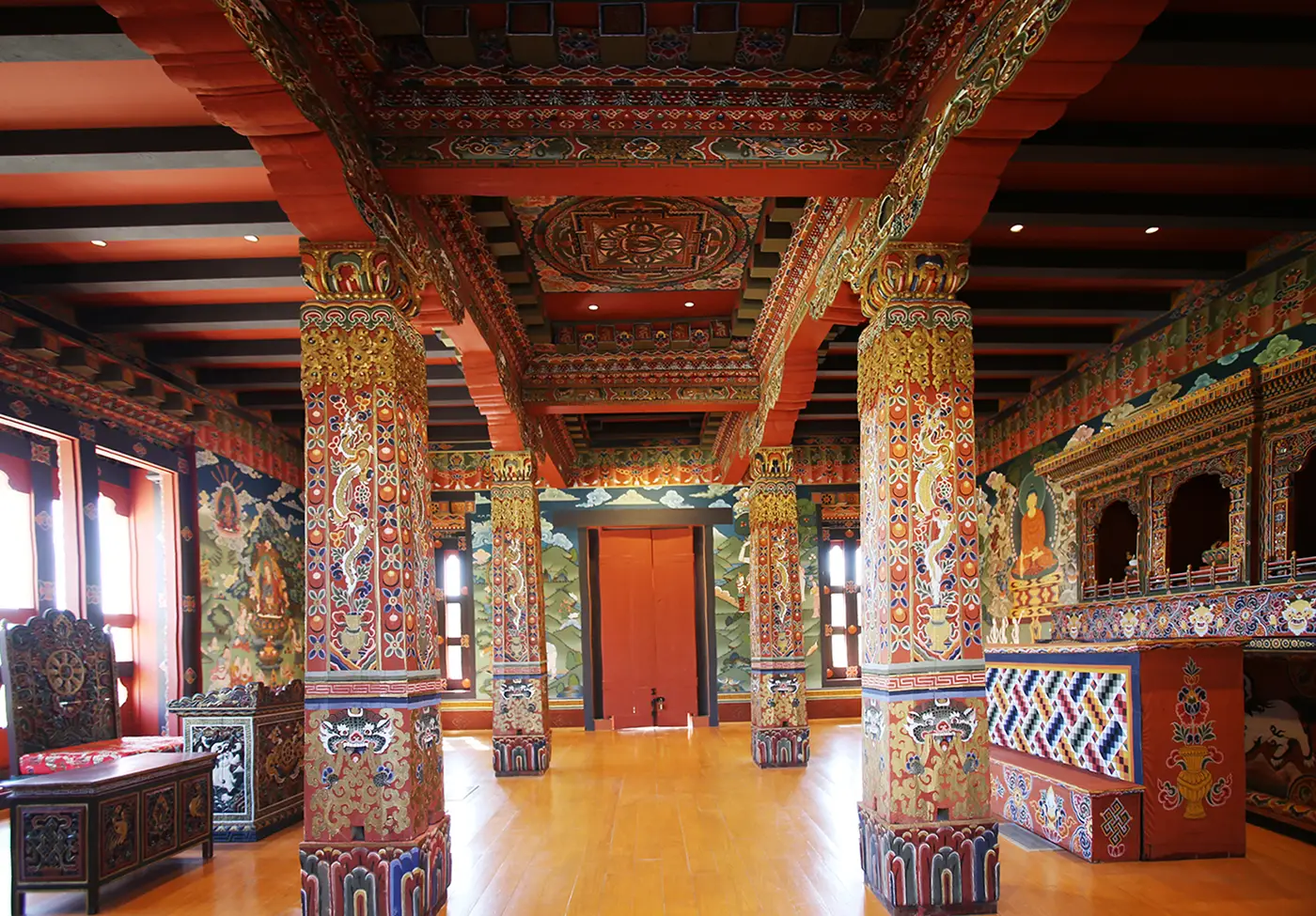
The 2008 Bhutan program introduced Festival visitors to a little-known part of the world at a time when Bhutan was transitioning to a constitutional monarchy. The lhakhang was the centerpiece of the program and became an irresistible draw. Its architectural elements were created in Bhutan, packed and shipped to America, and then carefully assembled into this country’s first authentic Bhutanese building. When completed, monks welcomed visitors into the temple. Its interior dazzled, and visitors knew they had entered a special place when they passed over its threshold.
-
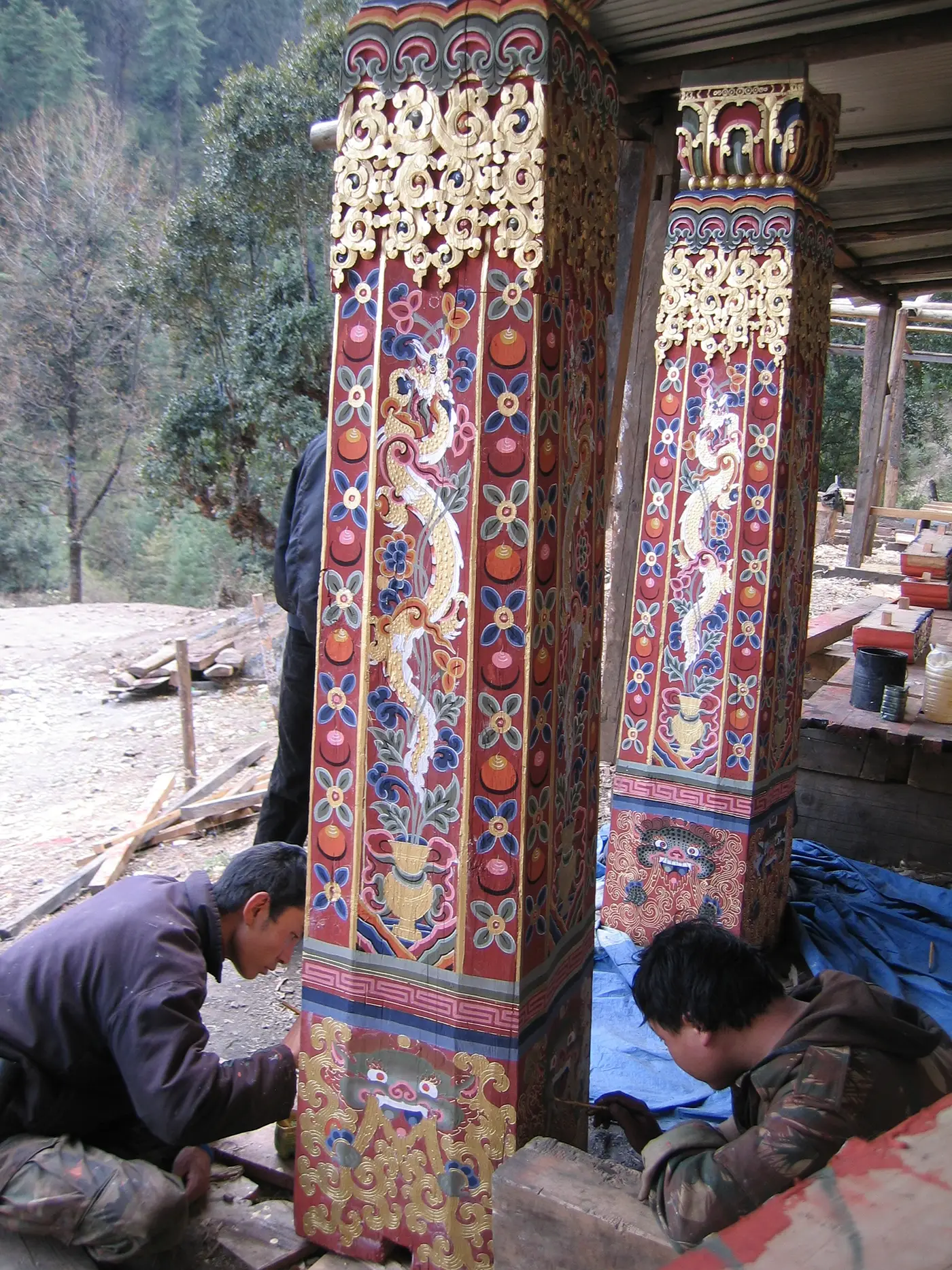
Artisans paint the interior pillars of the lhakhang in Bhutan. Photo by Dorji Yangki, Smithsonian -
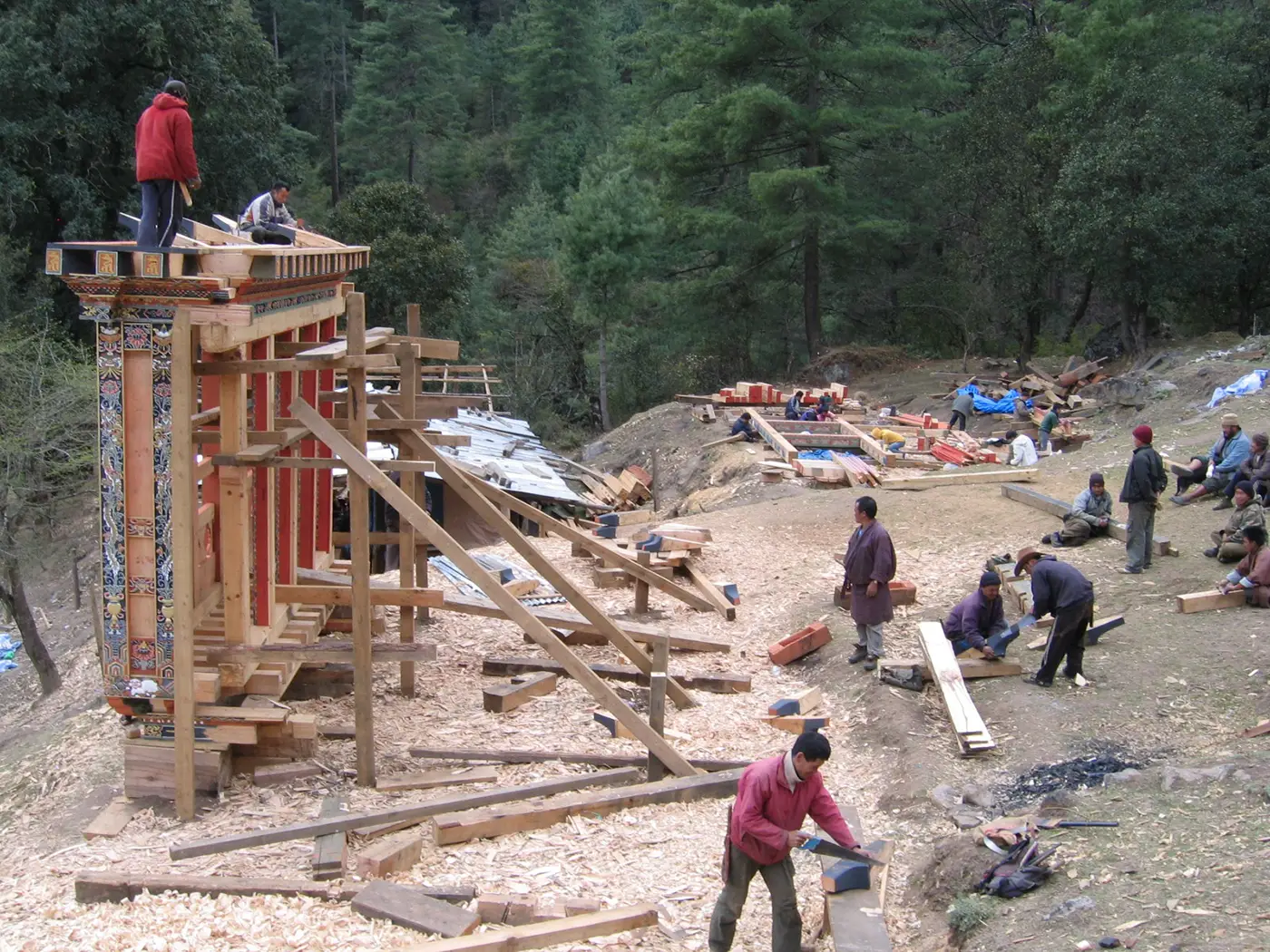
An interior wall section is assembled before shipping to the U.S. Photo by Dorji Yangki, Smithsonian -
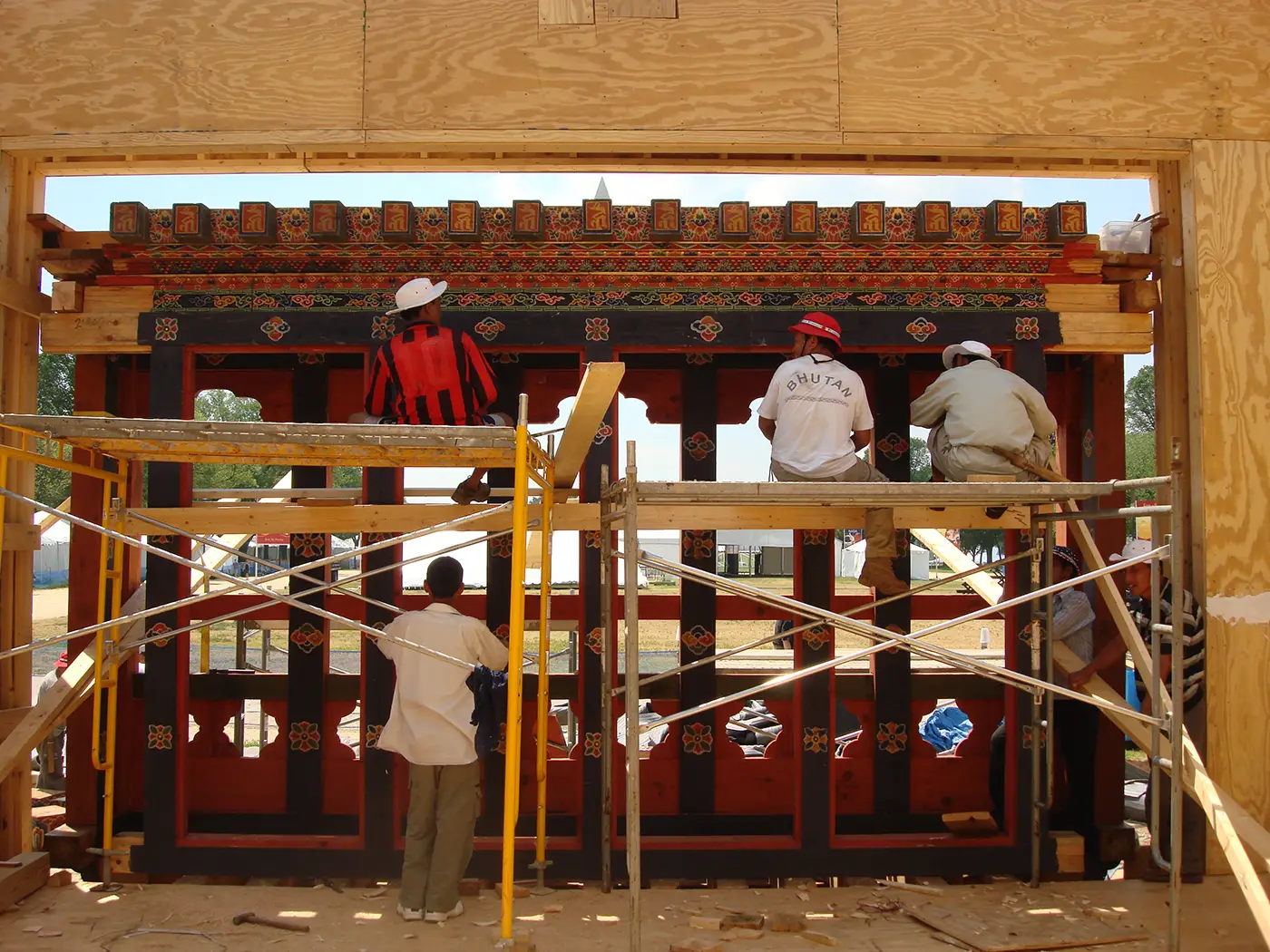
The section is set into place on the National Mall. Smithsonian
As the 2008 Folklife Festival drew to a close, a sudden thunderstorm struck. As retired Festival director Diana Parker recalls, “The rain came out of nowhere… it poured! And then there it was: a double rainbow right over the temple. The Bhutanese told me, ‘Of course! It’s a blessing at the end of this endeavor.’”
-
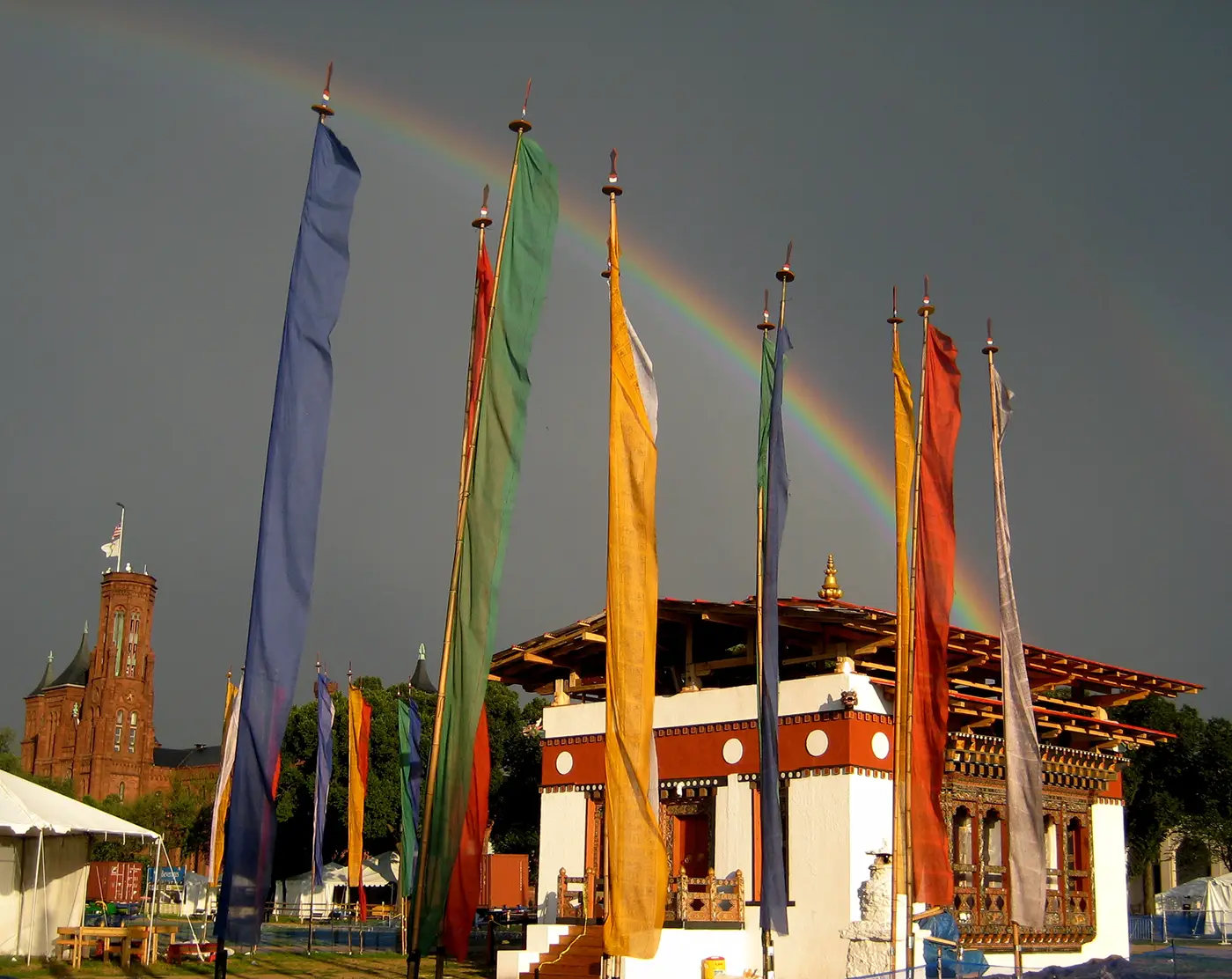
Rainbow over the temple and Smithsonian Castle. Photo by Alana Ackerman, Smithsonian
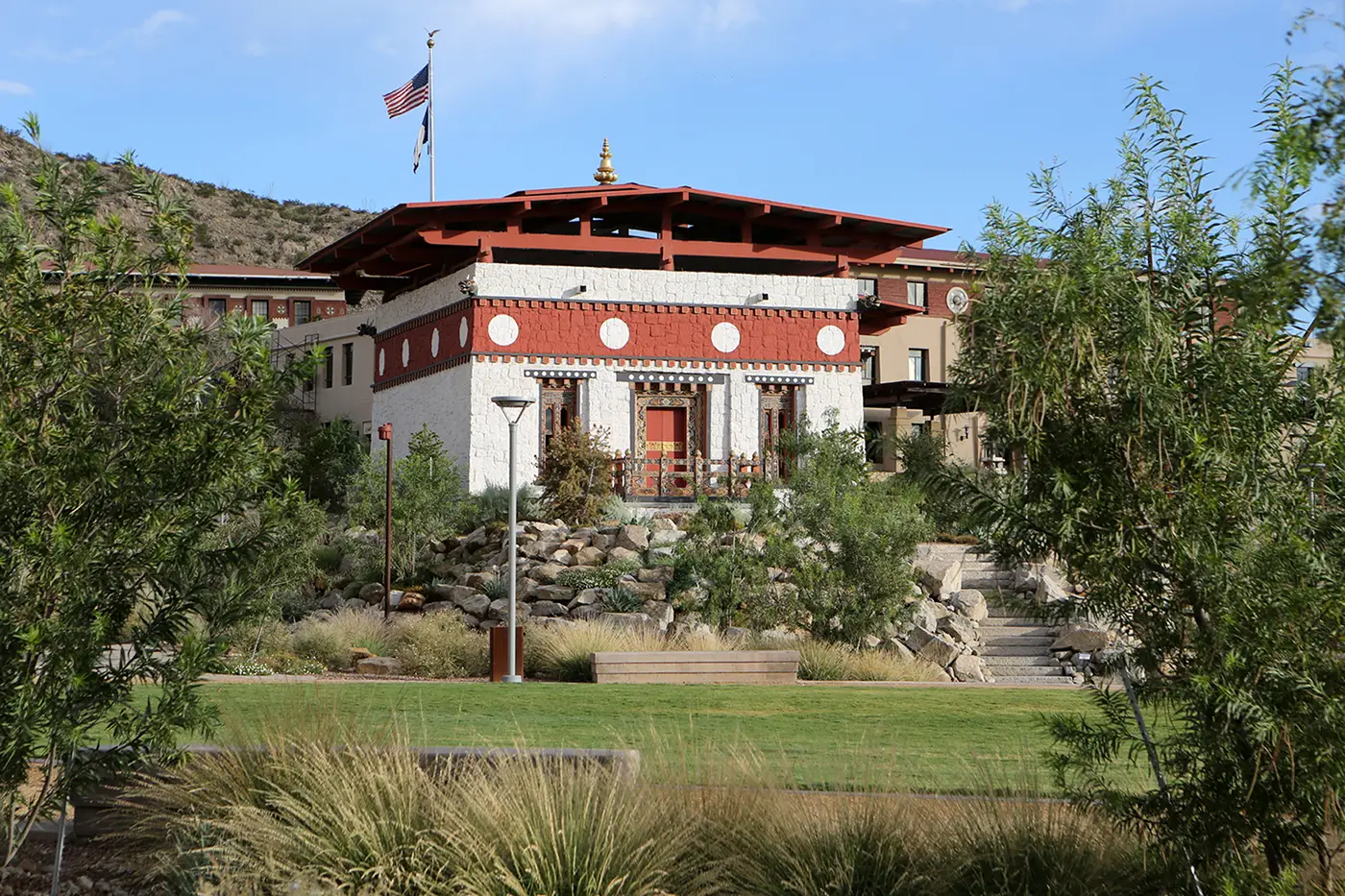
Visitors often wonder what happens to the large temporary structures erected each year during the Festival. In the case of the lhakhang, prior arrangements had been made to move the building to the campus of the University of Texas at El Paso. Why there? A devastating fire had destroyed the original buildings nearly a century earlier, and the campus was rebuilt in a style reminiscent of Bhutanese architectural design. University planners were inspired by the April 1914 issue of National Geographic, which featured the distinctive whitewashed buildings of Bhutan, set in a hilly, arid terrain similar to El Paso.
The reconstructed lhakhang now stands at the center of the university’s Centennial Plaza. Its highly decorated exterior and interior have been fully documented and described, and the building is open to the public by appointment.
-
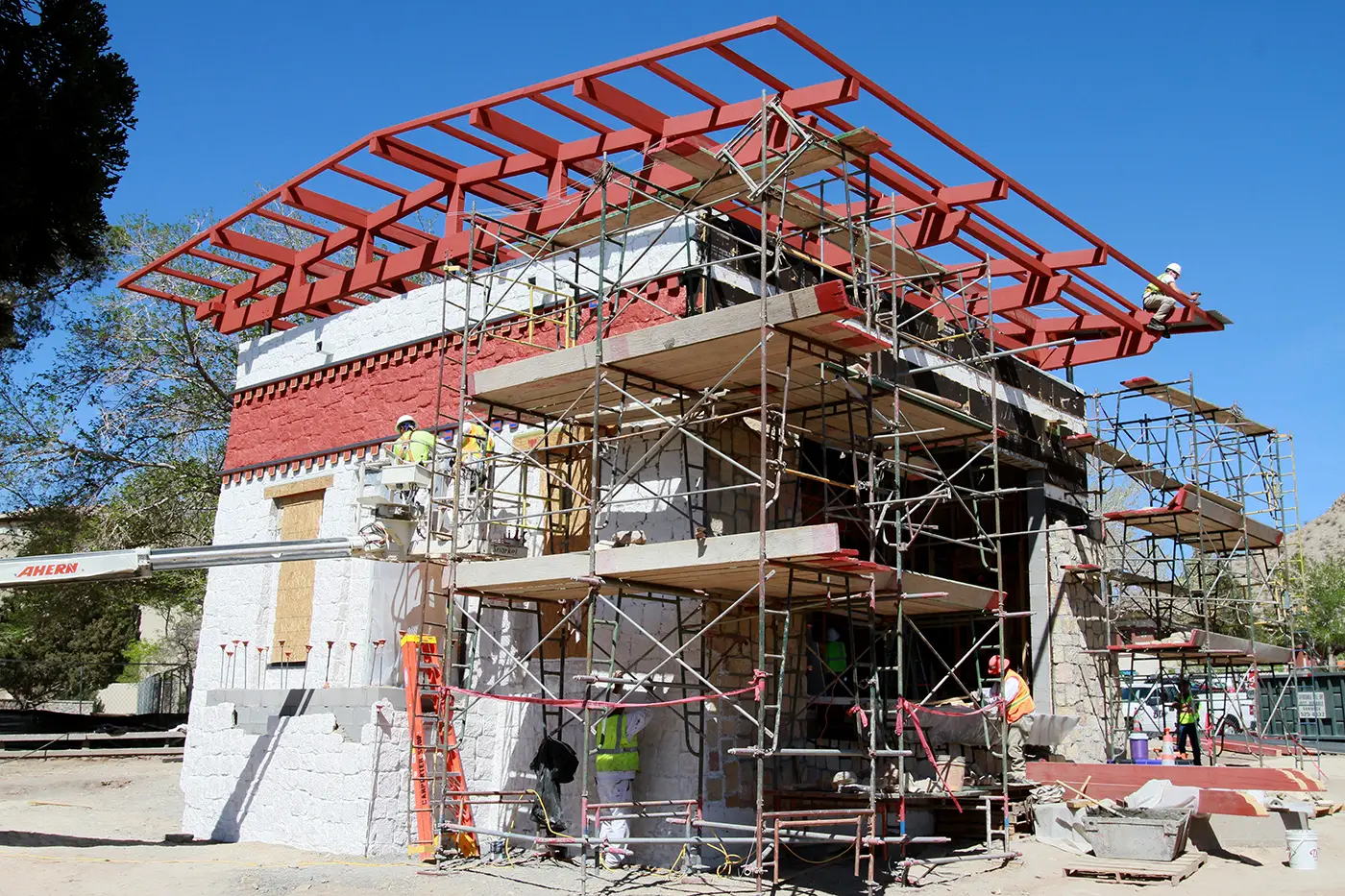
Images of the reconstructed lhakhang at the University of Texas at El Paso. Photos courtesy of the University of Texas at El Paso -
-
-

-