

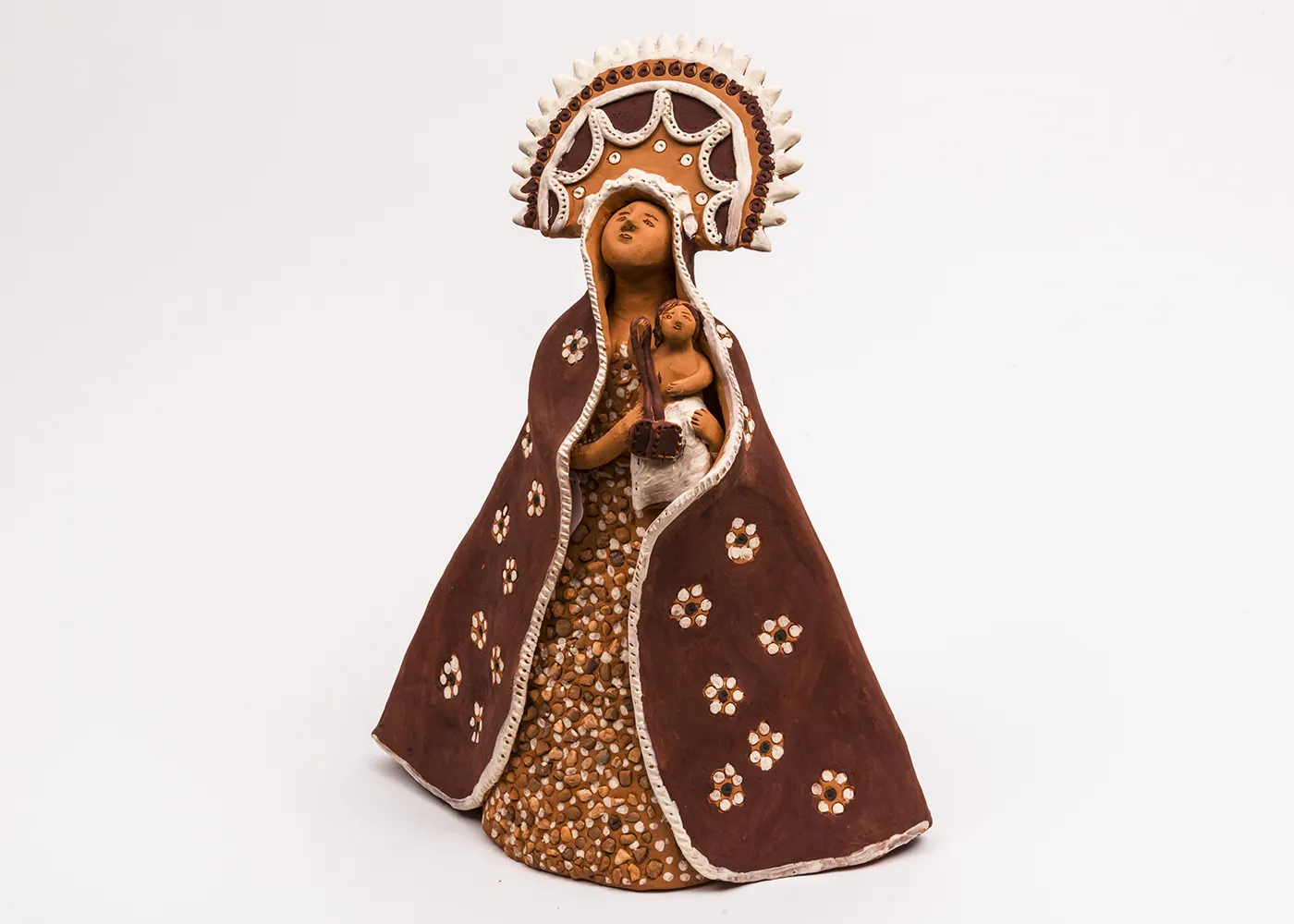
Virgin of the Mall
“As a girl, when I would see the saints in the churches with their tears, I thought they were so perfect that they were human beings transformed into statues… I wanted to reach that perfection.”
Using pebbles from the Mall to add texture to a sculpture
Rosa Jeréz is from Ráquira, Colombia, a town in the Andean Highlands known for its exceptional clay and, consequently, its ceramicists. The main market square in Ráquira is lined with pots, plates, and vessels in the clay’s rich orange hue. Rosa comes from this lineage of artisans. Her mother was a potter, but it was expensive to get her pieces fired, so the family turned to cattle farming and basket making for a living. As Rosa got older, she was inspired by the sculptures of saints she saw in the churches. Over time, after much trial and error, she developed her own style and technique for fashioning virgins, churches, and other figures inspired by the faces and clothing of the people she encounters in her daily life.
The artistic value of her work and the Andean characteristics of her virgins are now well known throughout the traditional arts world in Colombia. But this was not always the case. The first time an artisan buyer from Bogotá came to view her work, she told Rosa that her virgins were jarrapastrosas—crude and grotesque. Undeterred, Rosa continued to fill her home with her hand-formed figures. Eventually another buyer came and saw the beauty and artistry in her work. Now she’s been working with Artesanías de Colombia for many years, and her sculptures are consistently shown at folk art exhibitions and craft expositions.
-
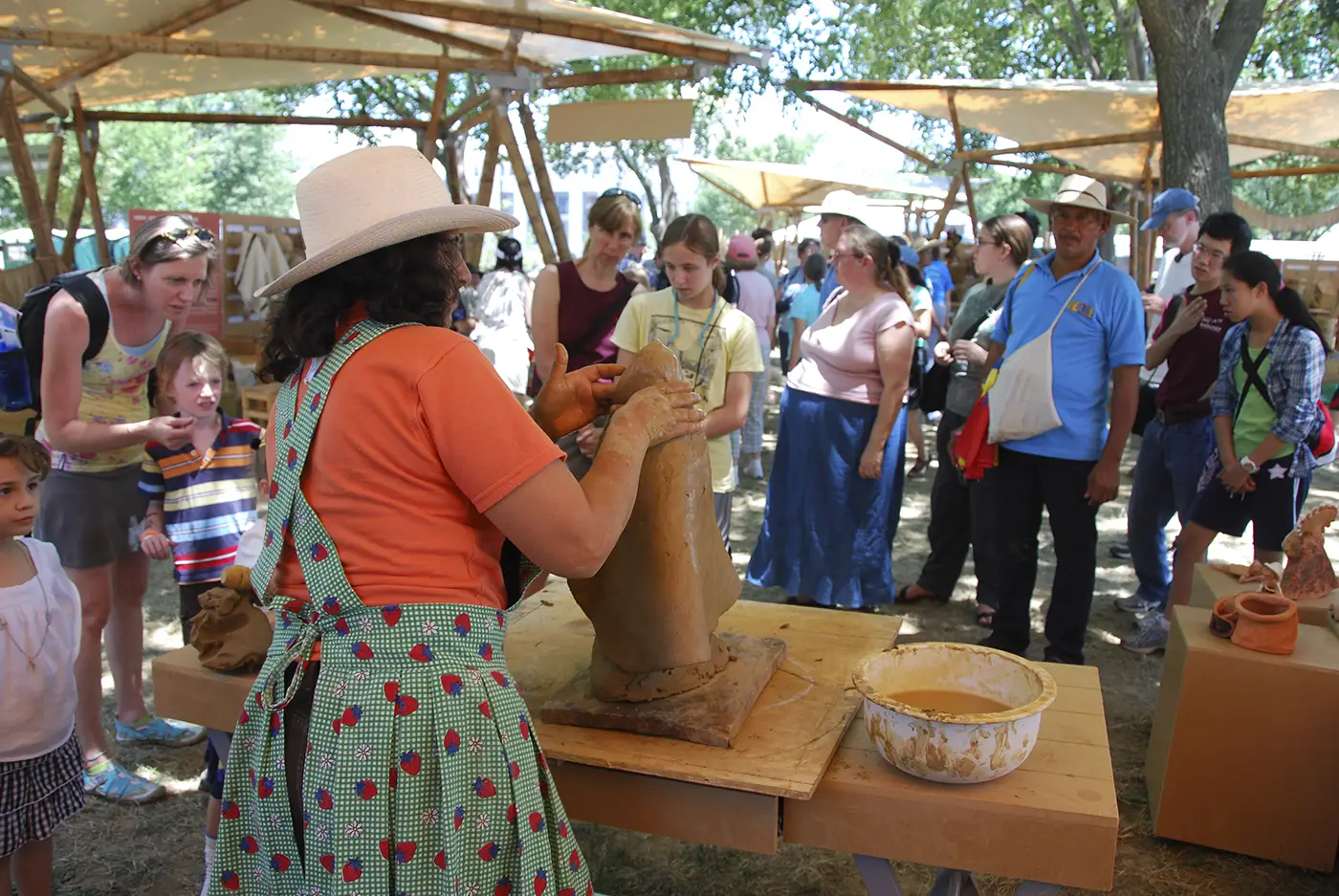
Rosa Jeréz works on the “Virgin of the Mall”. Photo by Michelle Arbeit, Ralph Rinzler Folklife Archives -

Detail of the Mall pebbles Rosa used to decorate the skirt. Photo by Zvonimir Bebek, Ralph Rinzler Folklife Archives
At the 2011 Folklife Festival’s Colombia: The Nature of Culture program, Rosa hand-molded figures from Ráquira clay for the visitors who would congregate around her. As usual, she looked to her surroundings for inspiration: when it was time to decorate the skirt on the figure shown here, she adorned it with pebbles she found on the pathway near her presentation area. The result is fondly called the “Virgin of the Mall” and was a welcome addition to the Center’s collection, marrying Rosa’s traditions and techniques with the environment of the National Mall.
