


Giraffe Family
What does it mean to be Kenyan?
This was the question we asked repeatedly in planning the 2014 Kenya: Mambo Poa program. Kenya’s Rift Valley was home to the world’s earliest humans, yet its democracy was only fifty years old in 2014. Forty-three different ethnic groups live—often uneasily—within its boundaries. Festival curators wanted to help visitors understand the textured story of modern Kenya that Kenyans wanted to tell. They ultimately chose a framework of three geographic areas—coastal, pastoral, and urban—and the theme of “innovation and change.”
-

Visitors interact with the Giraffe Family. Photo by Francisco Guerra, Ralph Rinzler Folklife Archives -
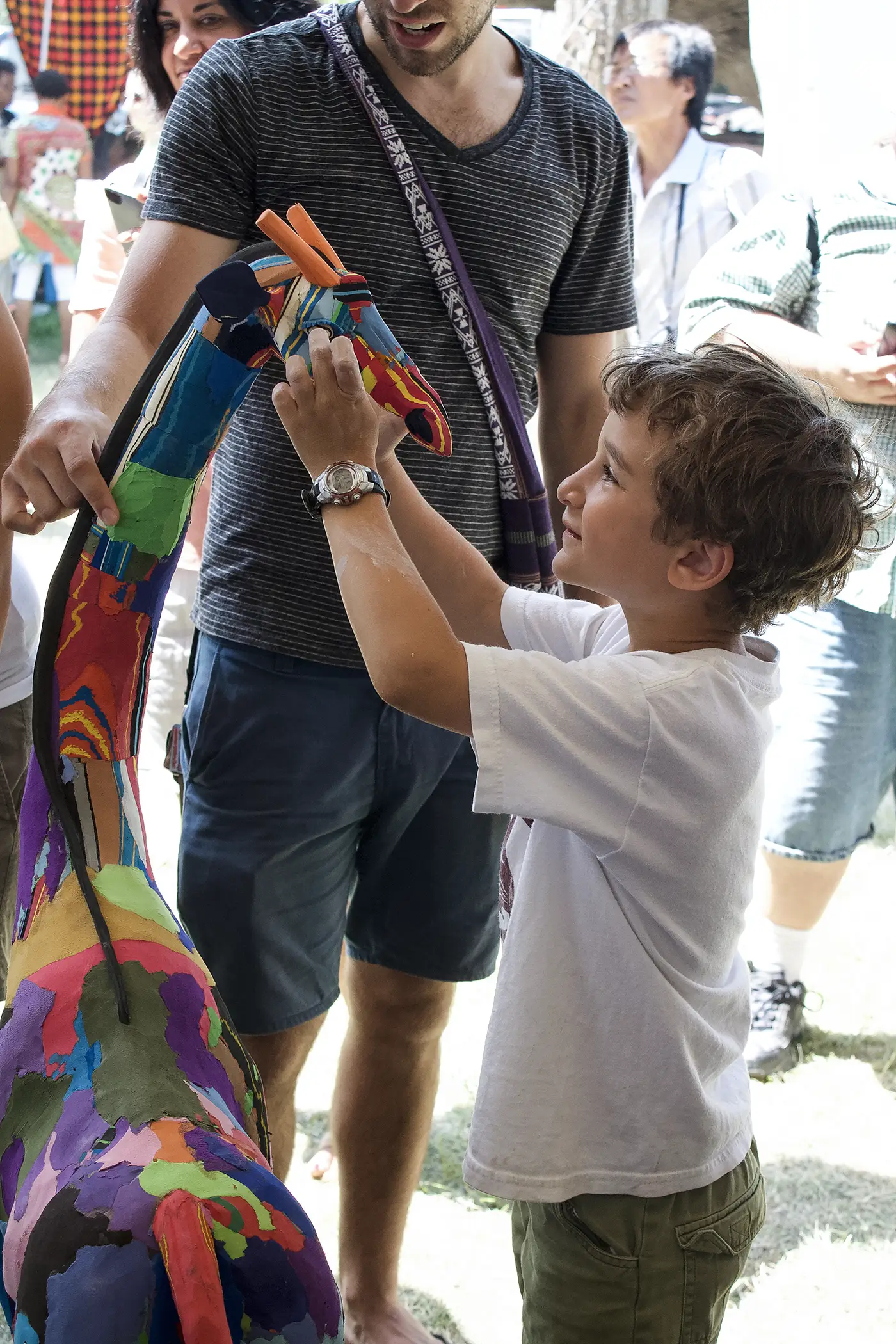 Photo by Beatrice Ugdini, Ralph Rinzler Folklife Archives
The Festival is at its best when it illuminates meaningful stories hidden in plain sight. Such was the case when carvers Francis Mutua Muvua and Jonathan Lento of the Nairobi-based Ocean Sole project traveled to Washington, D.C. Their work demonstrates the power of creativity to address pressing social and environmental issues. The Indian Ocean’s powerful currents pull tons of debris to the East African coast, marring the landscape and endangering marine wildlife. Ocean Sole was created in 1983 to address this threat—and create a sustainable future for their employees. The company currently employs over one hundred people and has workshops throughout the country—including remote coastal areas where more than 400,000 flip-flops are collected each year.
-
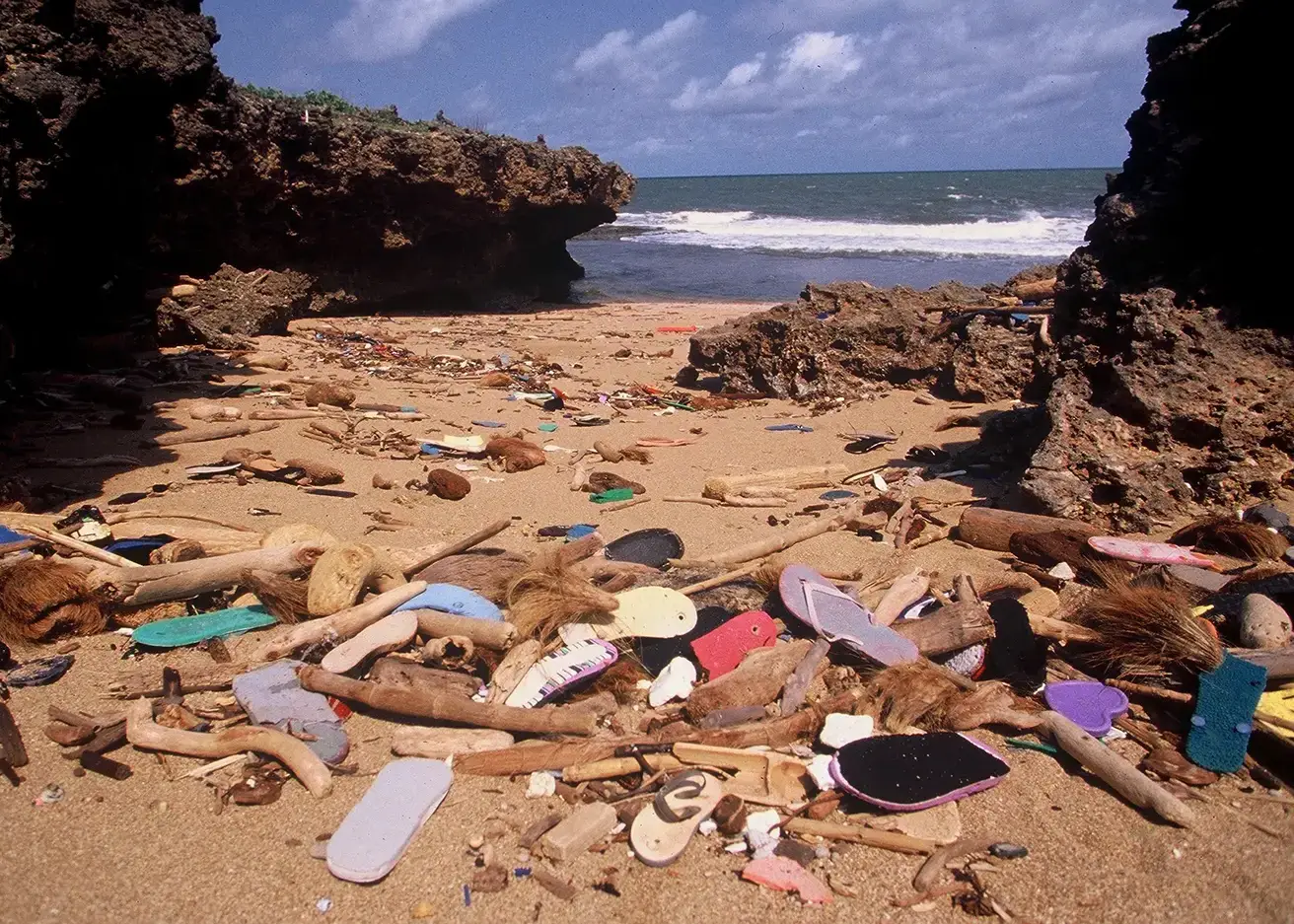
Flip-flops washed up on a beach on Kiwayu Island in eastern Kenya. Smithsonian -
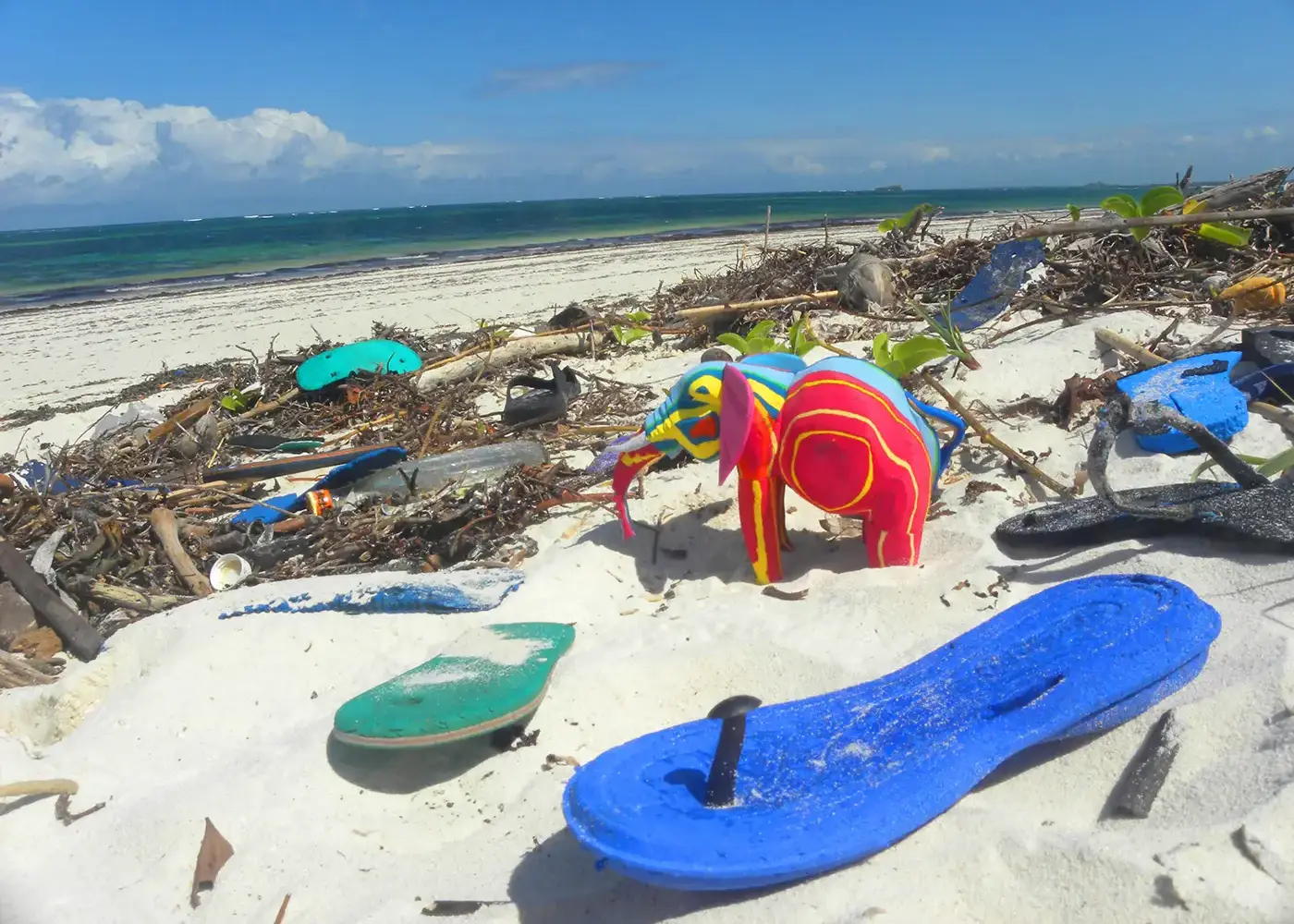
Beach scene near a flip-flop collection site. Smithsonian -

Artists work on larger sculptures, gluing overlapping flip-flop soles onto foam rubber bases after the shoes have been washed and dried. Smithsonian -
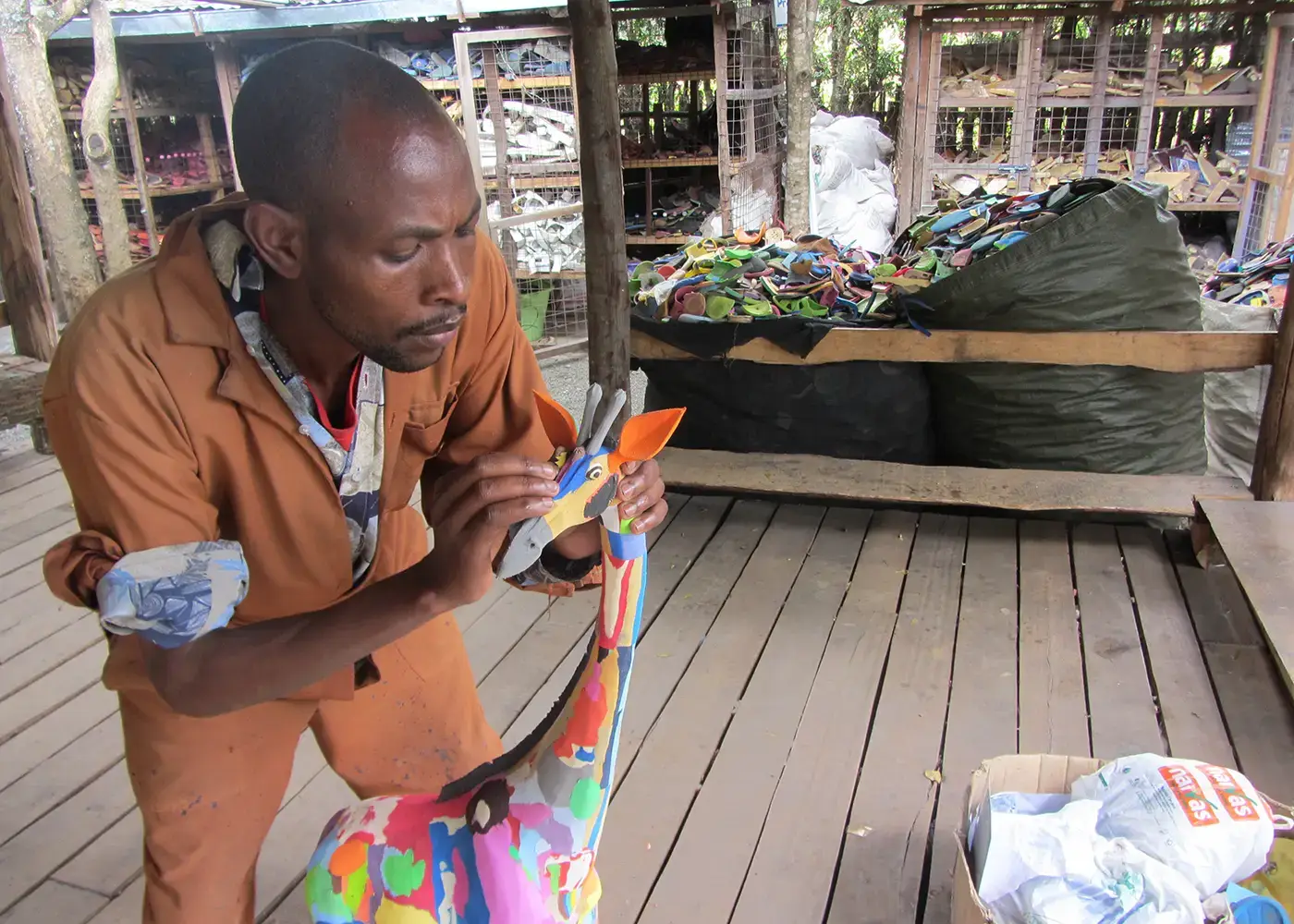
The final touch: adding eyelashes to a giraffe sculpture. Smithsonian
The artisans know their subjects well: many have worked on the game preserves and are trained wildlife wood carvers. Now they work in the country’s largest city and make innovative art from recycled materials. After being collected and cleaned, the soles of discarded flip-flops are glued into small blocks and carved into animal shapes or decorative chains. Larger pieces, like the giraffe family, are formed around carved Styrofoam bases covered with overlapping soles that are then carved, sanded, and shaped to the form. It takes three men two full weeks to create a large giraffe.
Francis Mutua Muvua, who was a woodcarver before joining Ocean Sole, told us, “This work is my daily bread.” It has allowed him to afford school fees for his children—and to travel to Washington, D.C.
