

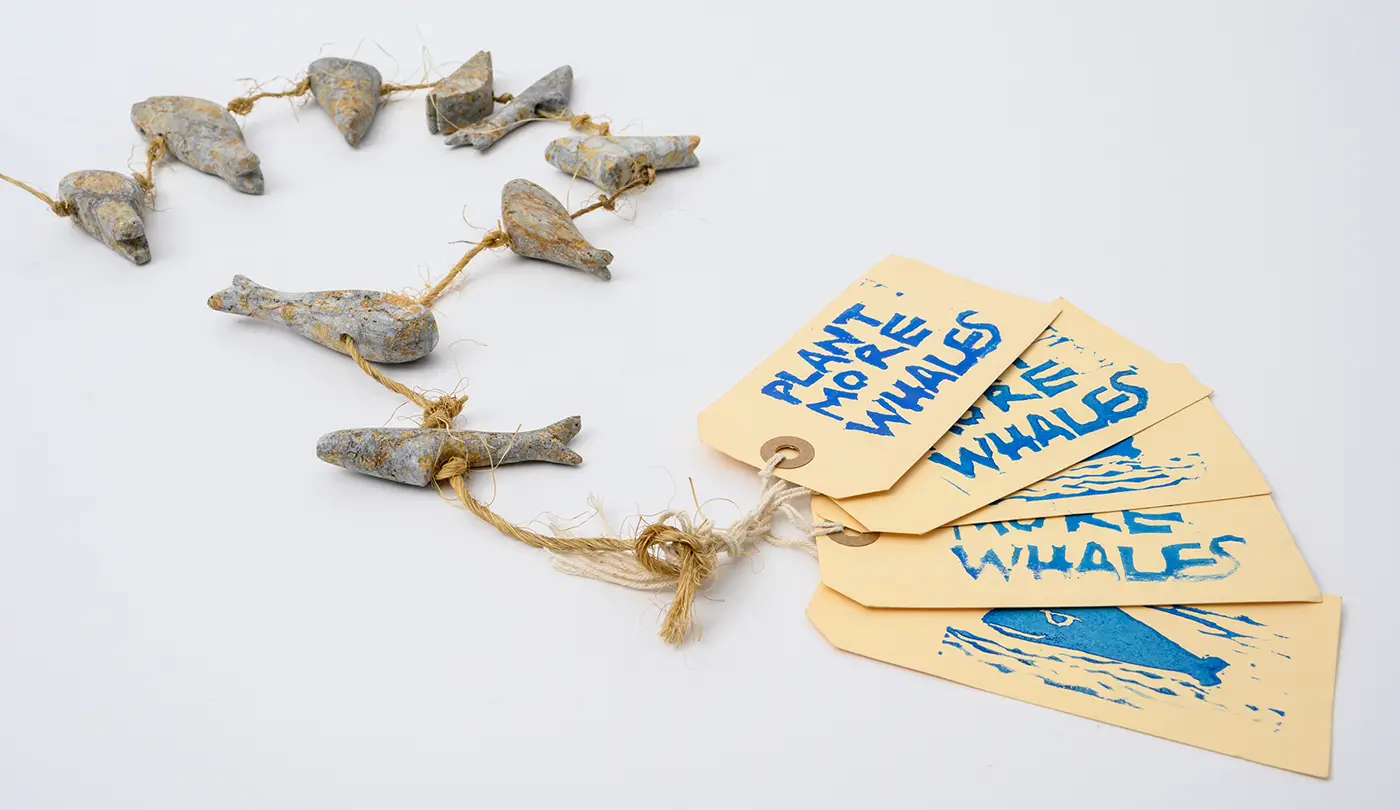
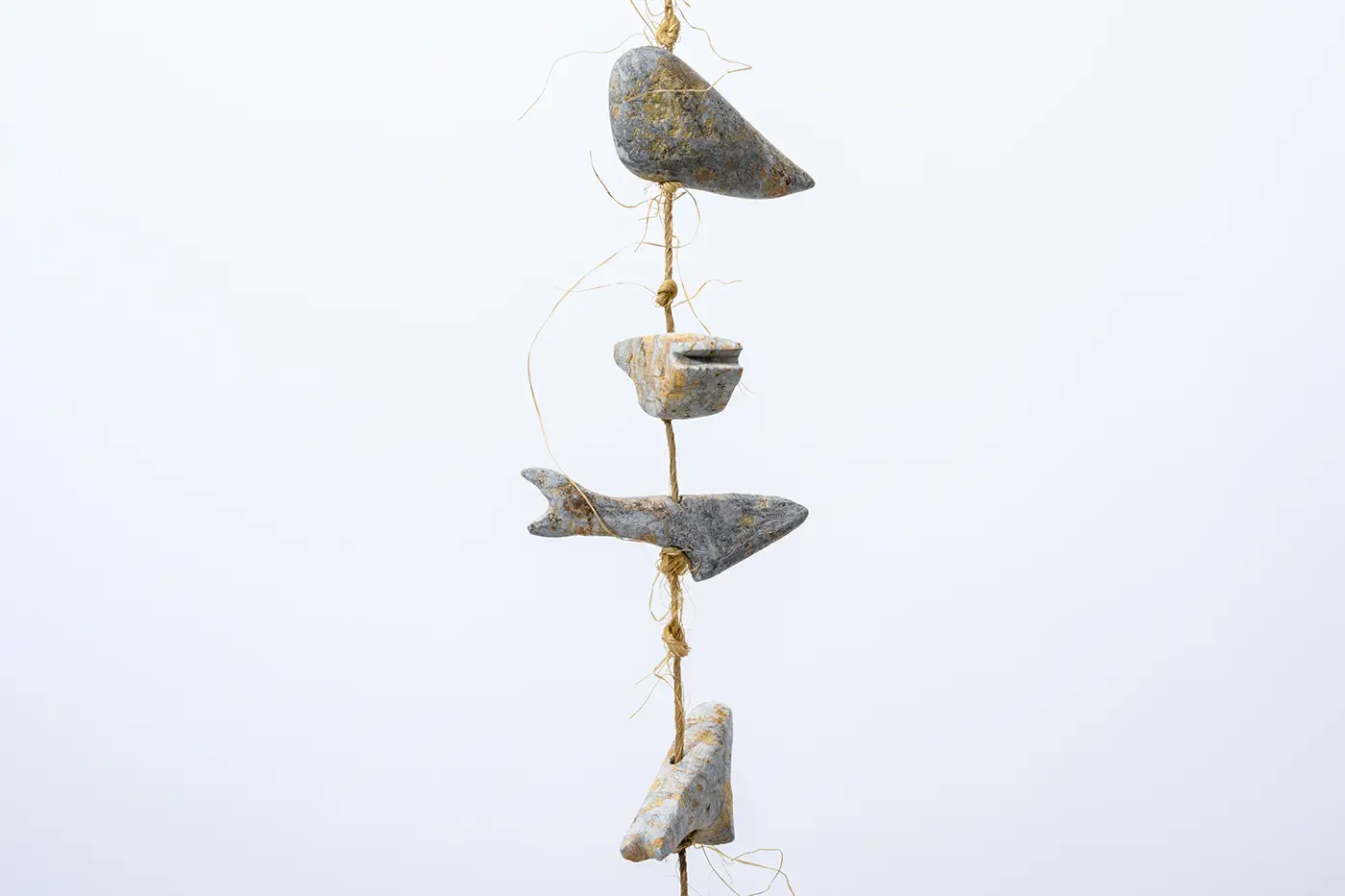
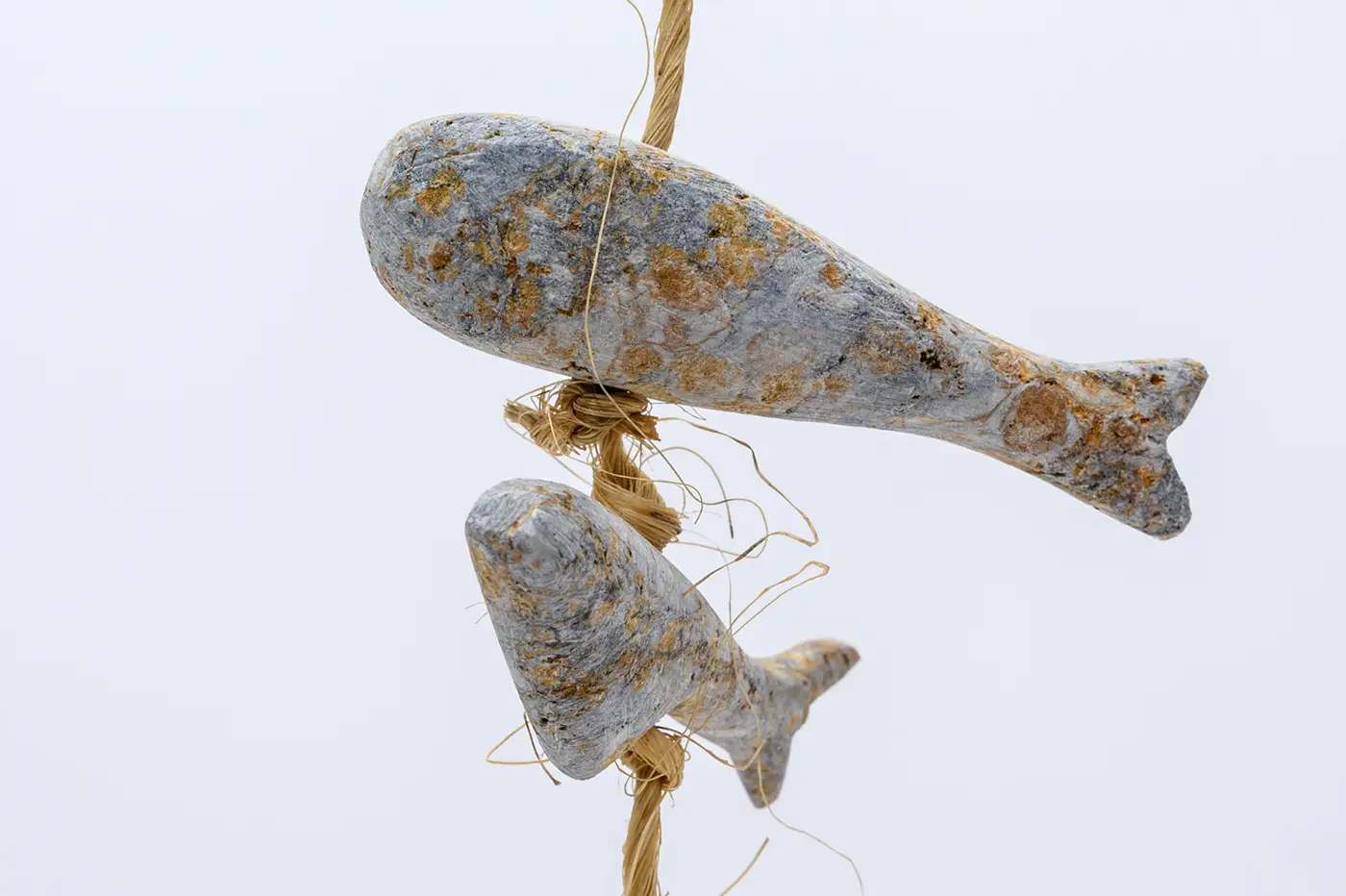
Whale & Shark Effigies
-
 Photos by Sonya Pencheva, Ralph Rinzler Folklife Archives
 -
The enduring Indigenous wisdom of human relationships with nature
L Frank Manriquez arrived in Washington, D.C., with a suitcase full of rocks. She had collected the soapstone from Angels Camp in Central California and brought them to her home in Santa Rosa where she carved them into rough shapes of sharks and whales. The Tongva share a deep relationship with these beings, who they acknowledge as peoples who populate the oceans, line the coasts, and encircle the islands in the Southern California region where they have coexisted for millennia.
-
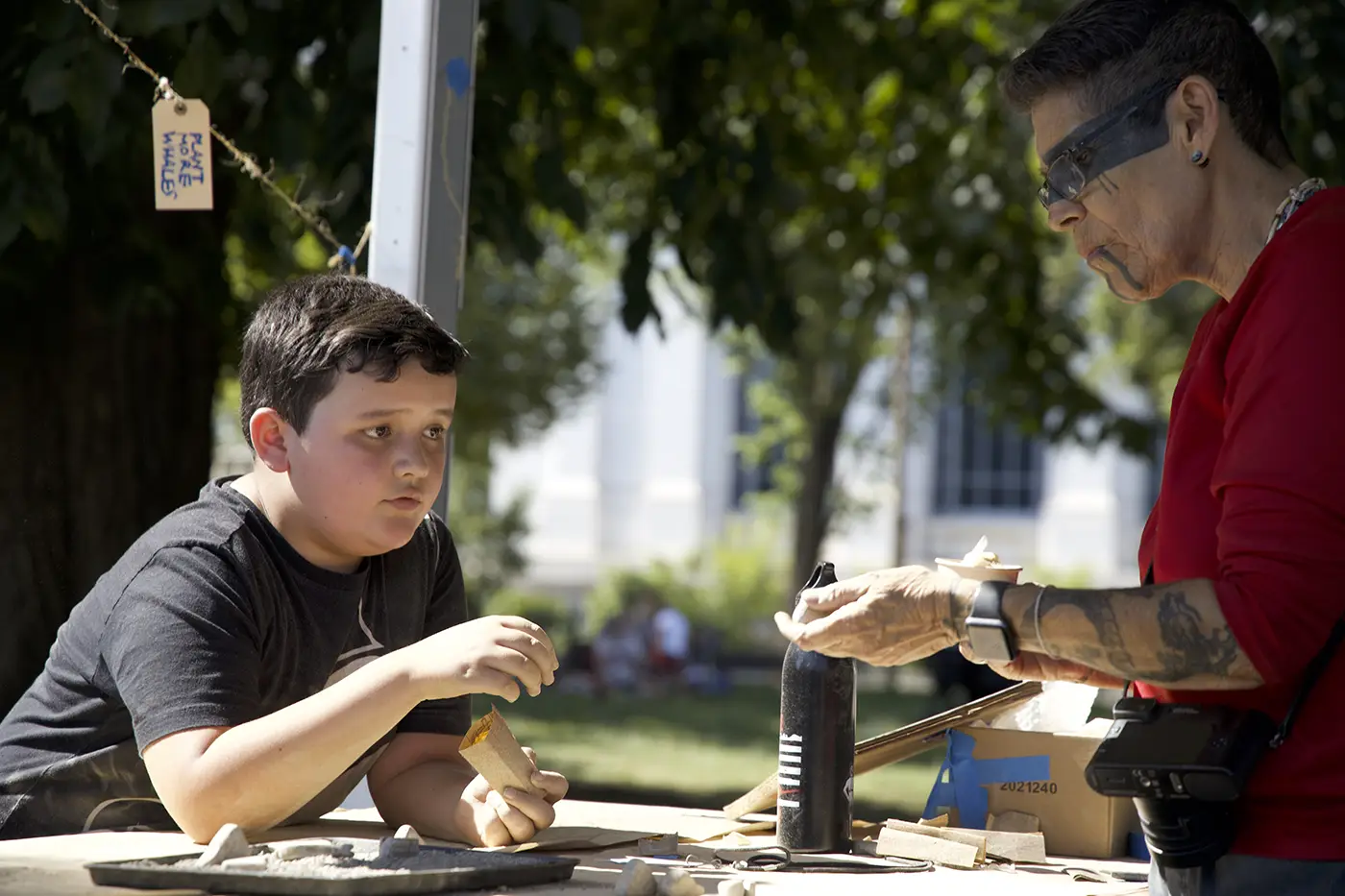
L Frank Manriquez and a young visitor work on the effigies. Photo by Phillip Ryan Lee, Ralph Rinzler Folklife Archives
During the Festival, Manriquez—joined by Chumash community organizer Keli (Lele) Lopez—sat with visitors as they used sandpaper to polish the sculptures into effigies. Manriquez describes pieces like these as gifts and prayers which were once abundant on beaches but that are now held captive in museums. Sharing these practices and stories is part of a recent revitalization of language, history, and culture of the Tongva people who were once erroneously deemed extinct.
-

Gabrielle Tayac, of Piscataway Nation, greets Manriquez. Photo by Stanley Turk, Ralph Rinzler Folklife Archives
These sculptures were part of Wavelength, co-presented by the Smithsonian Asian Pacific American Center, along with artist and ocean engineer Jane Chang Mi, who introduced Manriquez to the project, as well as artists Peggy Oki and Soul & Ink. Together, the Wavelength artists highlighted the ways in which humans and sea creatures are interconnected. Key to this interconnectedness is a recognition of the importance of Indigenous knowledge and solidarity. To underscore this theme, during one of the last afternoons of the Festival, Manriquez was formally greeted by Gabrielle Tayac, a representative of Piscataway Nation, as a nod to kinship and shared relationship with the environment.
