

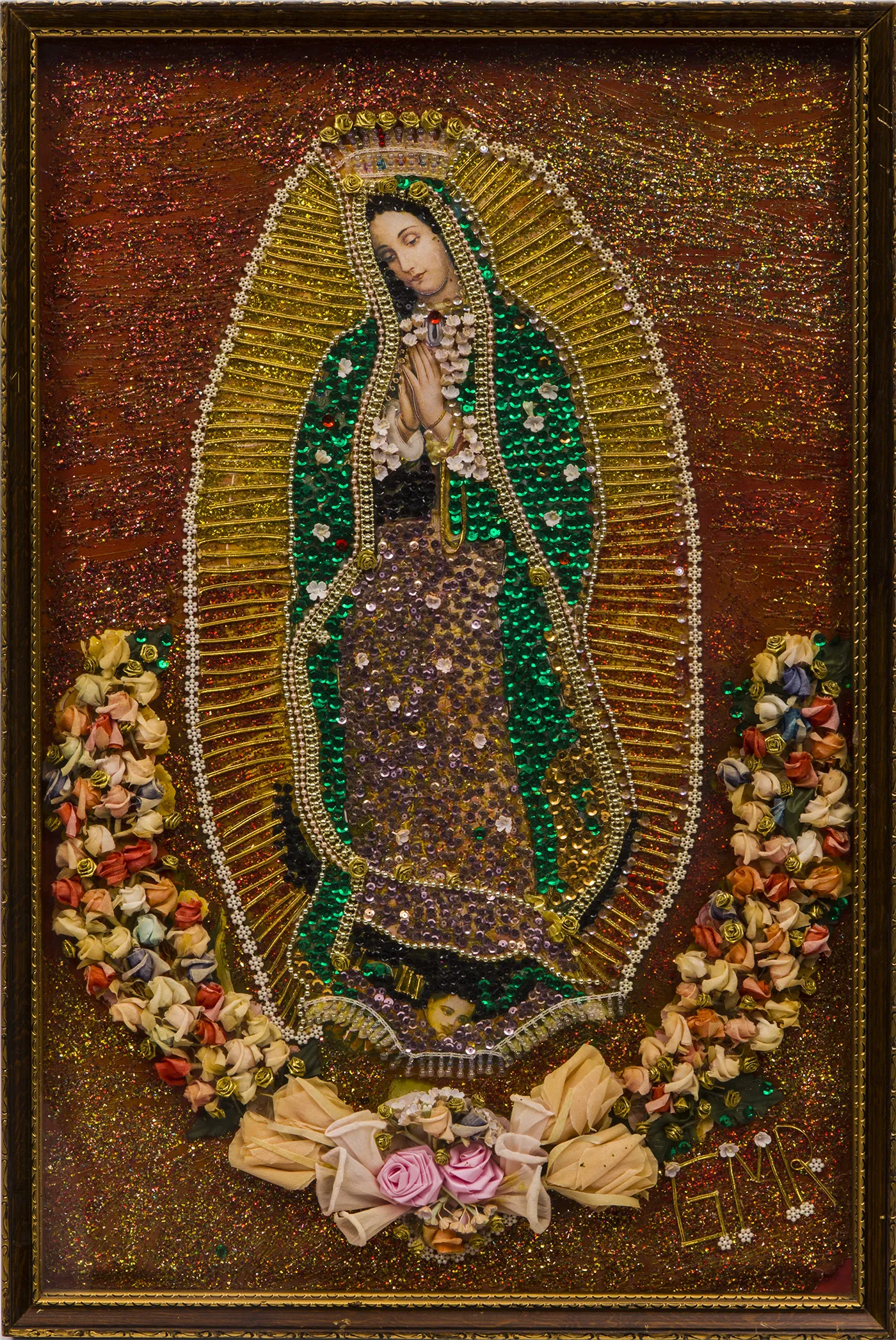
Virgin of Guadalupe
“When Doña Gloria Moroyoqui arrived at the Folklife Festival with a beautifully adorned Virgin of Guadalupe, she says, ‘Olivia, we need some music. We have to bring the Virgin down to my stall, to my casita. We can’t leave her back there at the trailer. She’ll get lonely!’”
Gloria Moroyoqui’s close relationship with the Virgin of Guadalupe enlivened the Festival in an unexpected way
Doña Gloria is renowned in her community for the beautiful paper flowers she crafts. When Festival designer Joan Wolbier visited her in Nogales, Mexico, she commissioned a paper flower arrangement for a poster to use with the Borderlands program for 1993. But Doña Gloria’s gift of a framed image of the Virgin of Guadalupe decorated with sparkles and tiny delicate flowers was a surprise. This patron saint of Mexico and the Americas was more than an adorned picture; she was a presence at the Festival that took caring for like any other participant. No later than 9 a.m. every day, my primary responsibility was to find at least one musician to lead a procession to Doña Gloria’s casita—her work stall at the Festival. The same thing repeated at the end of the day: find a musician to lead a procession back to the trailer.
-
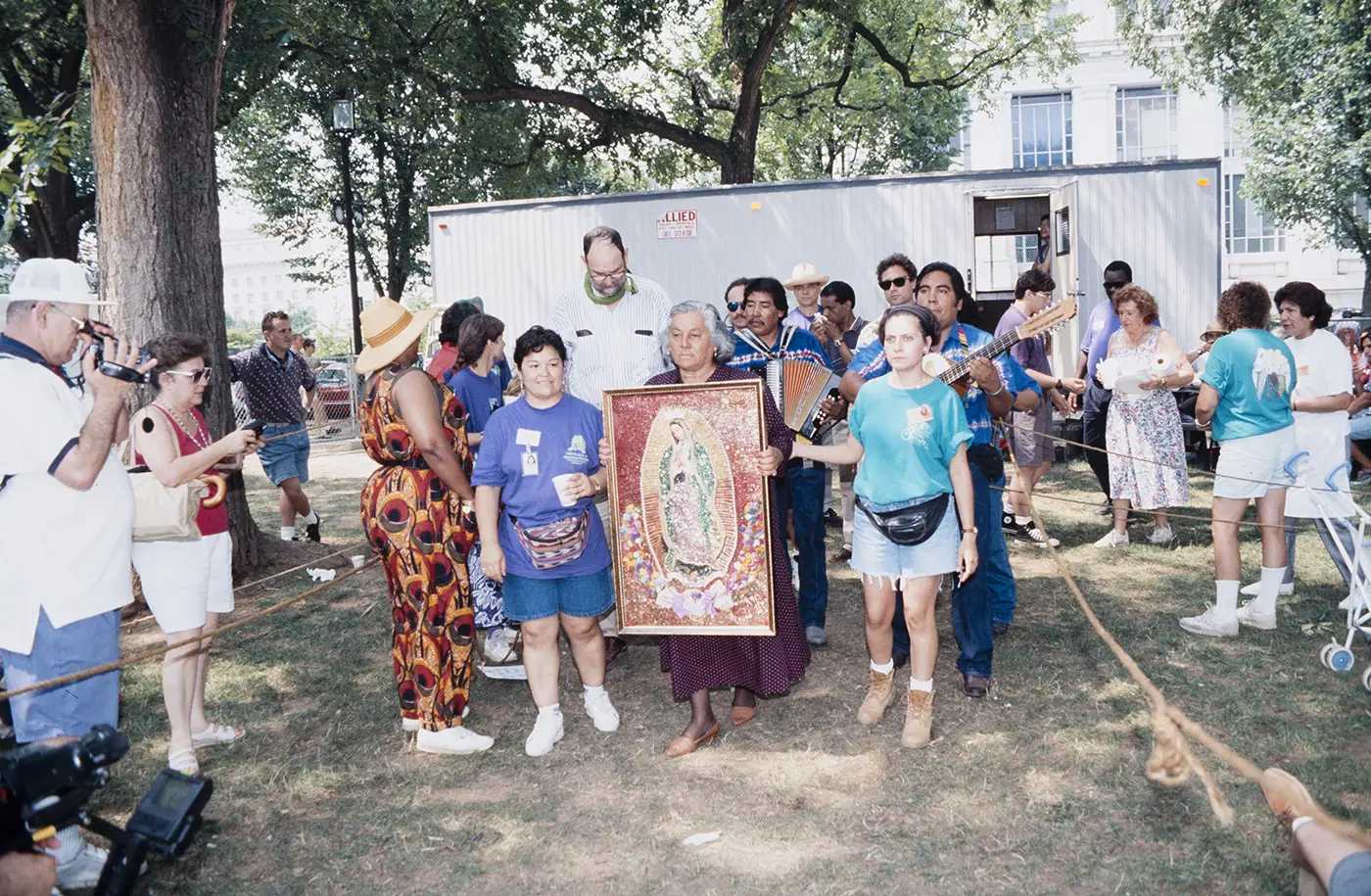
Gloria Moroyoqui begins her daily procession, this time accompanied by guitar and accordion music (and folklorist “Big Jim” Griffith just behind her). Photo by Jeff Tinsley, Ralph Rinzler Folklife Archives Photo by Jeff Tinsley, Ralph Rinzler Folklife Archives
This daily ritual created a special mood at the Festival, drawing together all the nearby participants and staff. The interactivity, binationality, and cultural diversity of this border region between Mexico and the United States that had guided development of the program was also reflected in the procession—now a Yaqui musician played his guitar, another day it would be Texas conjunto with accordion, then the violin of the Tohono O’odham elder. Staff members who were also musicians were not exempt from being drafted to lead a procession. The crowd that followed each day was equally diverse—Mixteco immigrants from Tijuana; Black Seminoles from Bracketville, Texas; a Mexican American border patrol agent from Nogales, Texas; a Chicano muralist from El Paso. Doña Gloria’s close relationship with the Virgin could be seen and felt every day, making her a true guest at the Festival.
Postscript: Sometimes an object’s story grows, long after a Festival concludes. In 2021, the Virgin of Guadalupe’s portrait was included in a special exhibition at the White House as part of a larger display honoring National Hispanic Heritage Month. Before the month was over, we were asked for an extension so that she could also become the centerpiece of a nearby Day of the Dead altar. Little did any of us imagine that her journey would continue in this way, but clearly her presence remains strong.
-
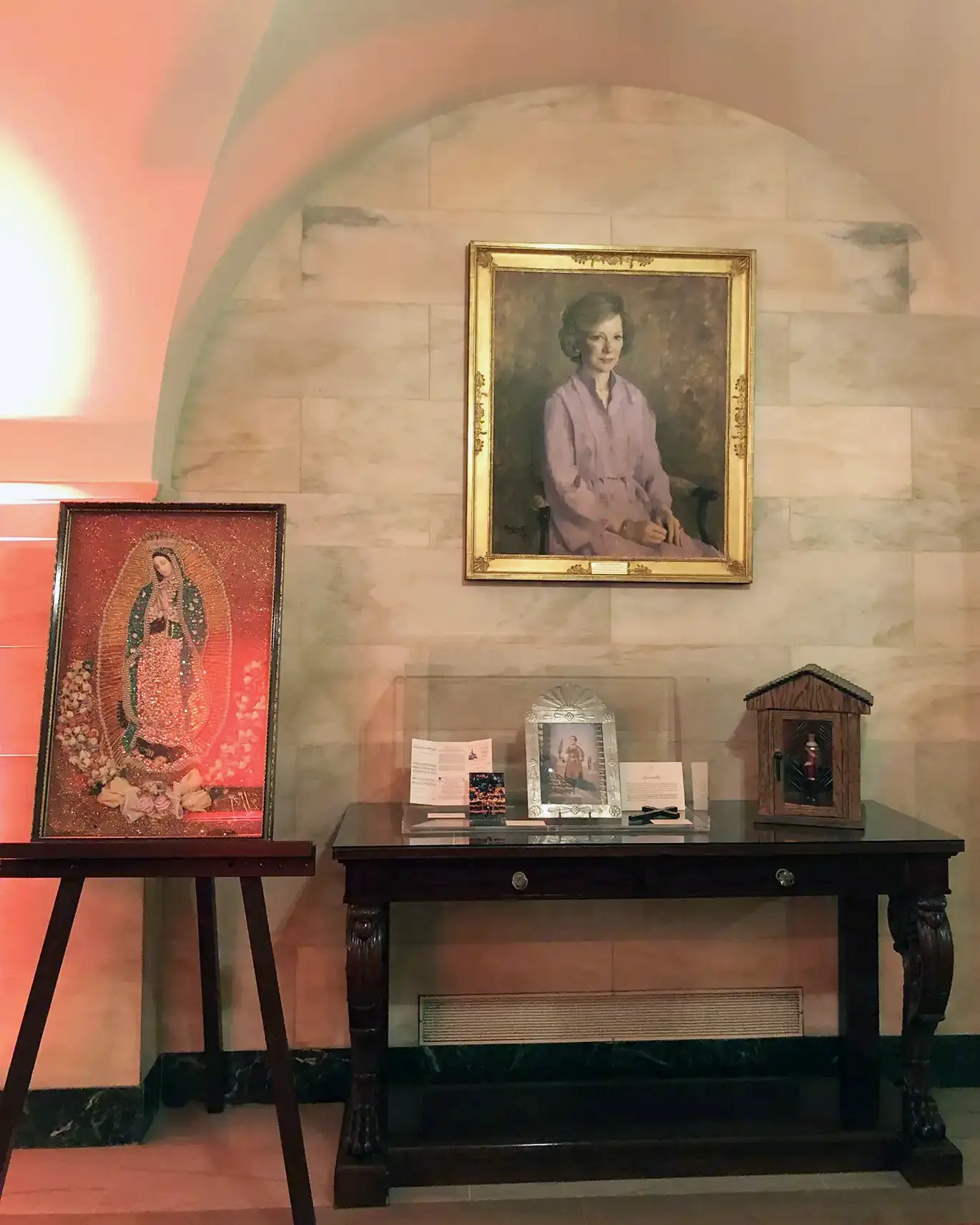
Virgin of Guadalupe in the East Wing. Photo by Erin Younger, Smithsonian -

Day of the Dead Altar featuring La Virgen a week later in the East Wing. Official White House Photograph
