


Rocking Horse
A dappled grey rocking horse waits to emerge
Roots of Virginia Culture marked the 400th anniversary of the founding of Jamestown. By looking at the roots of Virginia’s historic settlement and later growth, Festival organizers and participants took on a particularly big challenge that year. Curator Betty Belanus noted that the first Englishmen who stepped foot on the continent had come looking for a quick route to riches. Instead, they put in motion the creation of a new country set to be shaped by many different cultural traditions. By looking at the Native American, English, and African American roots of Virginia culture, the program brought participants from Kent, England, and Senegal, West Africa. A wide range of arts and cultural practices were presented side by side so visitors could note the similarities and differences.
The parallels remain strong between Kent County and Virginia when it comes to horses. Horses are big business in both, as are rolling hills, good grass, and a supportive local clientele. They are raised for pleasure riding, equestrian shows, and racing in both locales, and there are markets for everything from horse portraits to harness brasses, as well as rocking horses.
Twin brothers Tony and Marc Stevenson of Bethersden, Kent, came to their business of creating and selling rocking horses through family. Born overseas, they had seen rocking horses made by their uncle on visits home and secretly hoped to be given one when their family returned to England. The gift never came, but when the brothers decided to go into business together, they followed in their uncle’s footsteps. They have now been crafting exquisitely beautiful horses for more than thirty years—including for members of the royal family.
-
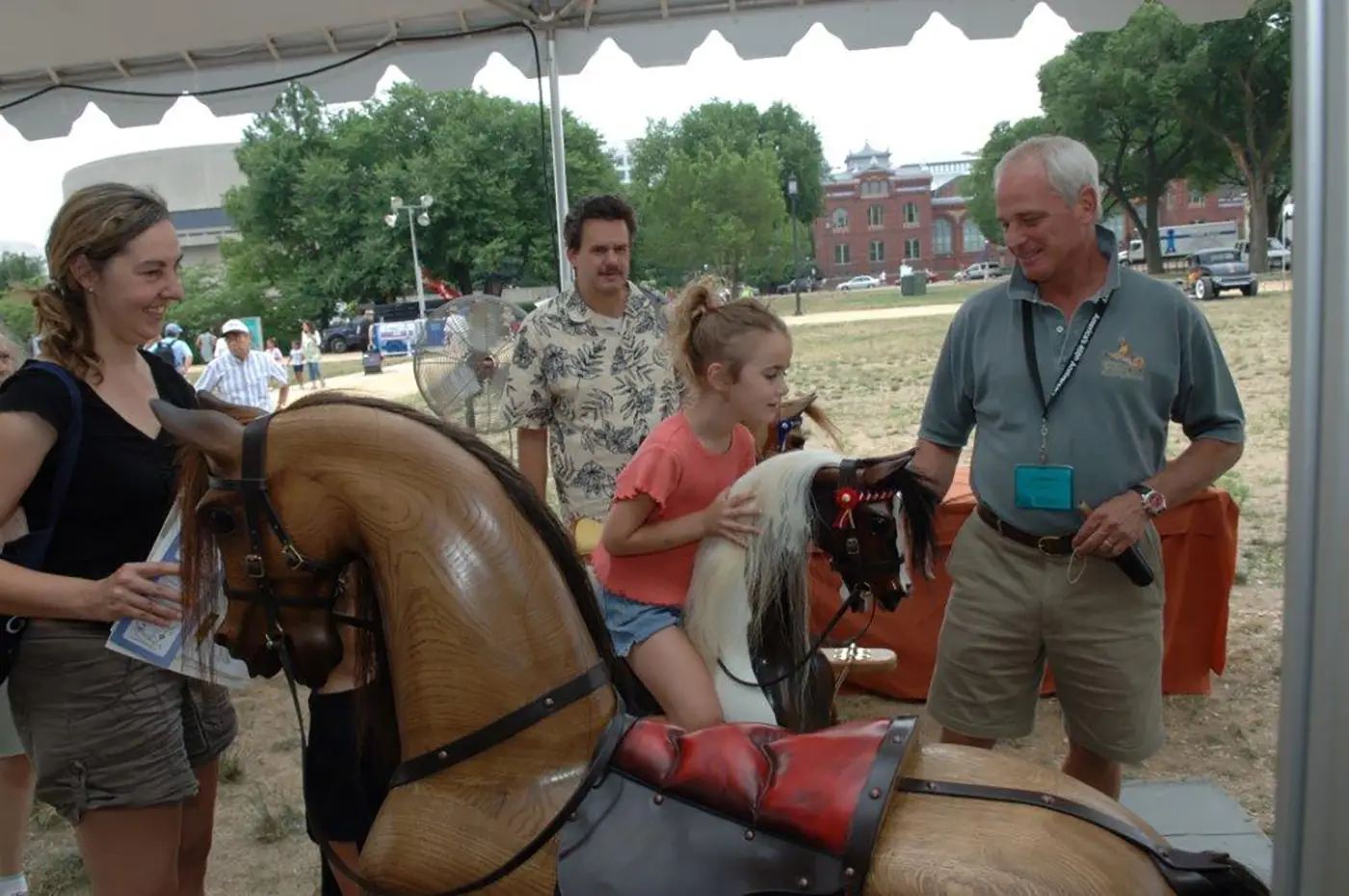
Tony Stevenson visits with a young Festival visitor trying out a rocking horse. Photo by Harold Dorwin, Ralph Rinzler Folklife Archives -
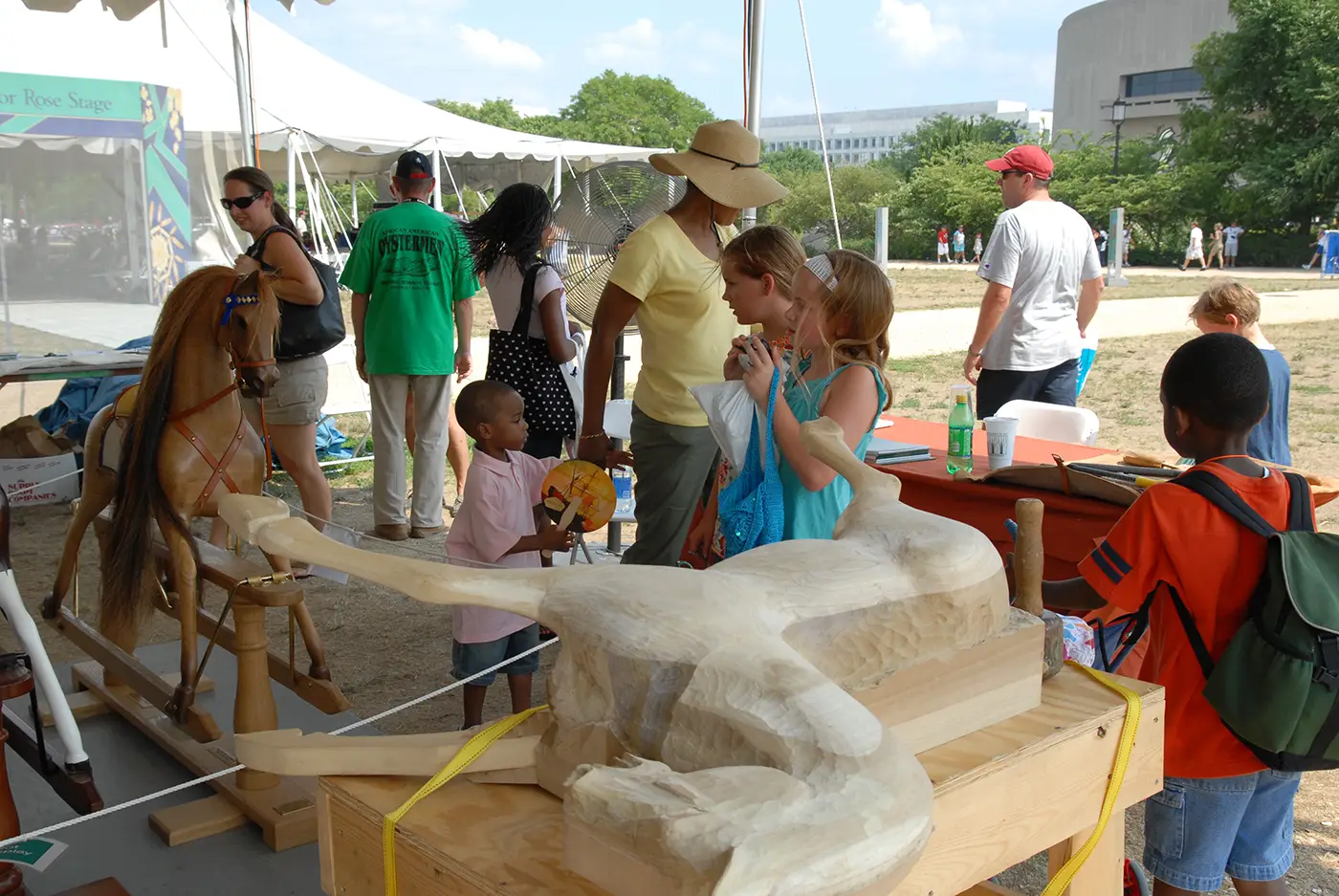
Visitors mill through the demonstration area. Photo by Nancy Libson, Ralph Rinzler Folklife Archives -
 Photo by Zvonimir Bebek, Ralph Rinzler Folklife Archives
The brothers brought some horses to the Festival and also worked on a new one, said to be a dappled grey. Although not finished, the horse was ceremonially presented to the Center where it draws visitors down to the Festival director’s office—even if its dappled coat can’t yet be seen.
