

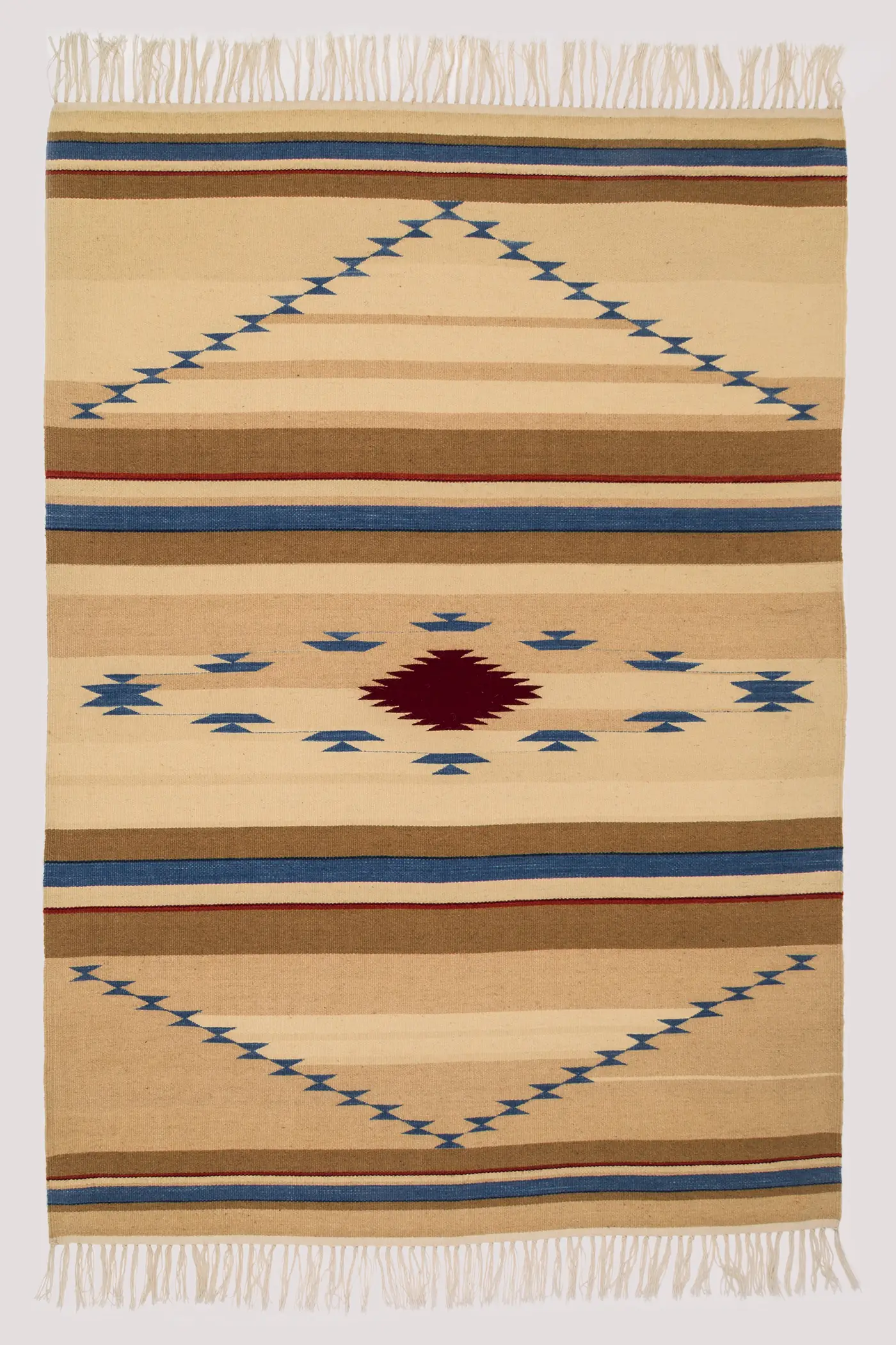
Rio Grande Weaving
“We could see that our communities were falling apart. Our kids would grow up, go off, and never come back. There was no opportunity for them to stay at home… But we did have some ideas of maintaining something that we knew: a tradition of weaving and raising sheep in the community.”
Re-establishing connections between the land, sheep, and weaving
Tierra Wools was founded in New Mexico in 1983 as an economic development cooperative. Built around a philosophy of local control of land and resources, it sought to create economic opportunities by supporting local traditions and sustainable resources—reviving the Rio Grande weaving tradition and rescuing the almost extinct Navajo-Churro sheep. Tierra Wools is still located in Los Ojos, New Mexico, and continues to provide weaving workshops, training, and marketing support to local community members. It buys Navajo-Churro wool from local ranchers, and through e-commerce and tourism serves an international customer base.
-
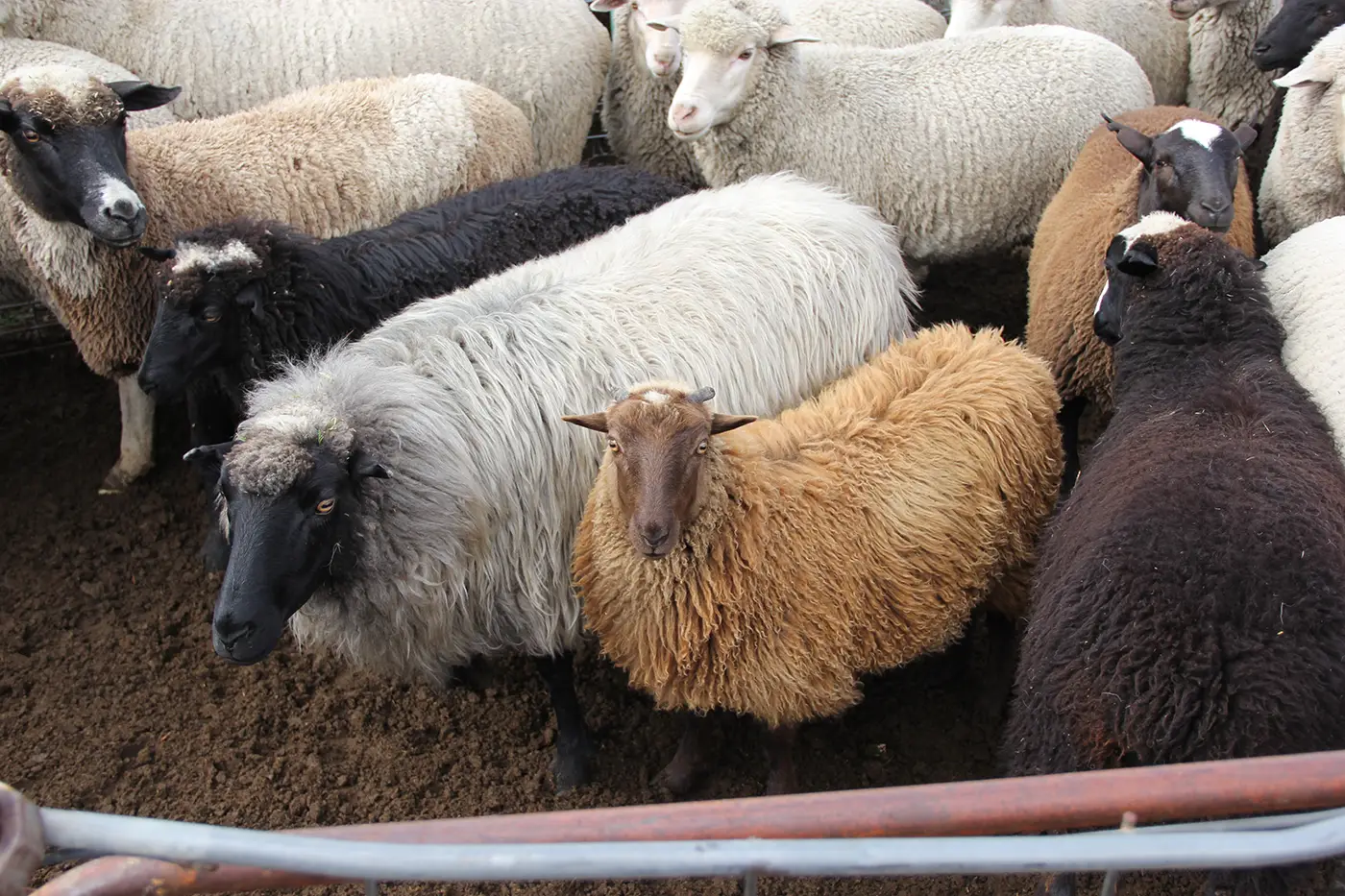
Churro sheep, a breed restored by a local Navajo-Churro program that started in the 1980s in association with Utah State University. Photo courtesy of Tierra Wools
The 2003 El Río traveling exhibition grew out of two earlier Festivals: 1998 Río Grande/Río Bravo Basin and 2000 El Río. As a hybrid project, it wove together themes that explored the relationship between traditional knowledge, local culture, and sustainable environments along the great boundary-straddling river. It is also a good example of how the Festival’s work extends beyond the summer programs. Collaborative training and fieldwork are at the heart of this kind of work: community members are trained to be active researchers and use their new skills to shape the content to be relevant to their own communities as well as a broader public. The traveling exhibition opened at the Smithsonian and then traveled throughout the Southwest and northern Mexico for several years. Many of the commissioned objects were returned to the Center for Folklife and Cultural Heritage at the conclusion of the tour, including this fine Rio Grande weaving by Teri García of Tierra Wools.
García’s personal experience attests to the success of the cooperative’s mission: she has been able to stay in her home community, help raise her family, and develop an economically viable career. “In 1992 I was hired as a finisher at Tierra Wools. Two years later, I enrolled in the apprenticeship weaving program. In 1998 I was recognized as a Master Weaver… Tierra Wools has given me a true appreciation of the art and ability to express my creativity through my weaving.”
