

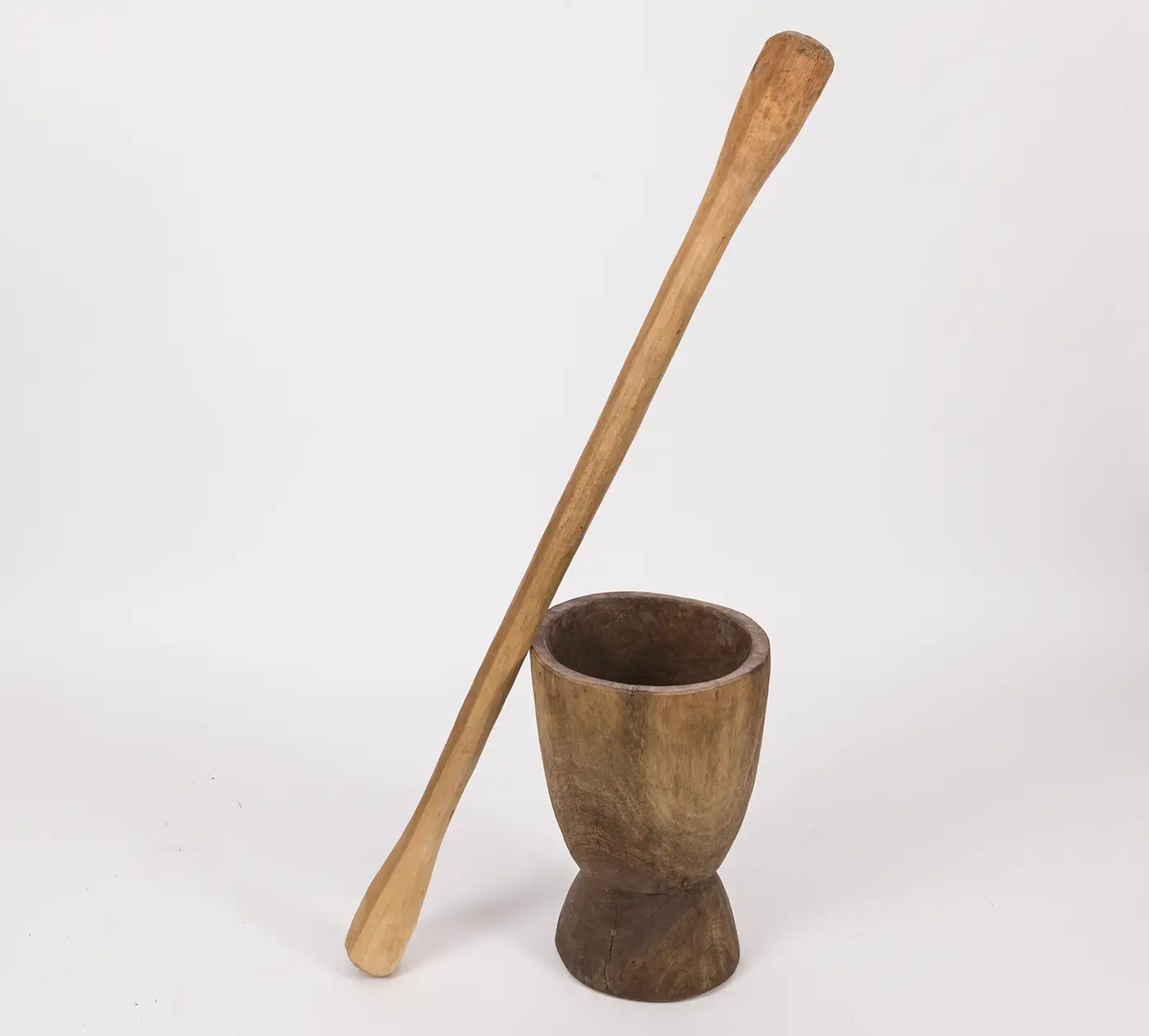
Grain Mortar & Pestle
A global emblem of African foodways
West African food aficionados are the first to note the difference between a mortar and pestle and the electric food processor: the pestle crushes the ingredients in a way that releases their fresh flavors and oils; the sharp blade of the food processor bruises them! The mortar and pestle are essential agricultural tools used to pound grains—especially millet and rice—throughout Africa. They have an obvious connection to the preparation of food but are also connected to music and deeper cultural beliefs. In West Africa, the mortar is said to represent the strength of the family; in southern Senegal, an upside down mortar with the pestle at its base signifies a death in the family.
In communities where the mortar and pestle are in daily use, men do the carving and women do the pounding. Often the women work in pairs, each with their own pestle pounding in the same mortar, alternating in distinctive rhythms that inspire improvised work songs.
-
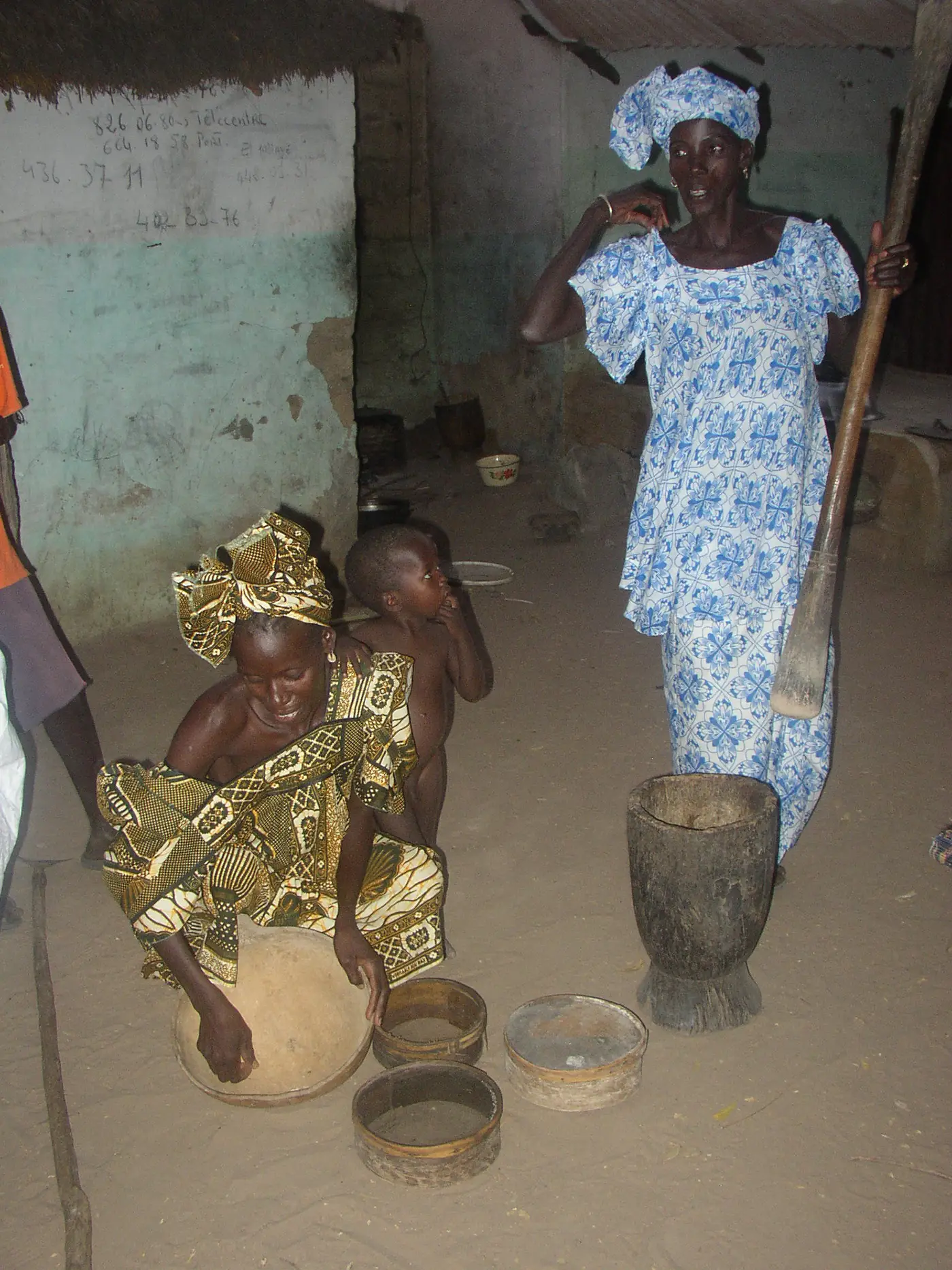
Marieme Diene, who participated in the 2007 Roots of Virginia Culture program, was photographed in her home village of NDjillaseme, Senegal. Photo by Diana N’Diaye, Smithsonian
At the 1990 Senegal program, woodcarver Abdoulaye “Gadiaga” Sene made the mortar used by cook Maimouna N’Diaye to crush the peanuts for her tigadege (peanut mash). At the 2007 Roots of Virginia Culture program, Marieme Diene used a pestle carved by Yoro Kebe to make her dahine (millet ground with peanuts and added to chicken). Abdoulaye and Yoro are members of the Laobe, an occupational clan of woodcarvers who make and repair wooden tools, furniture, musical instruments, and decorative objects in Senegal and Mali. Maimouna and Mariame are expert cooks from farming families in Senegal’s peanut-growing midsection.
