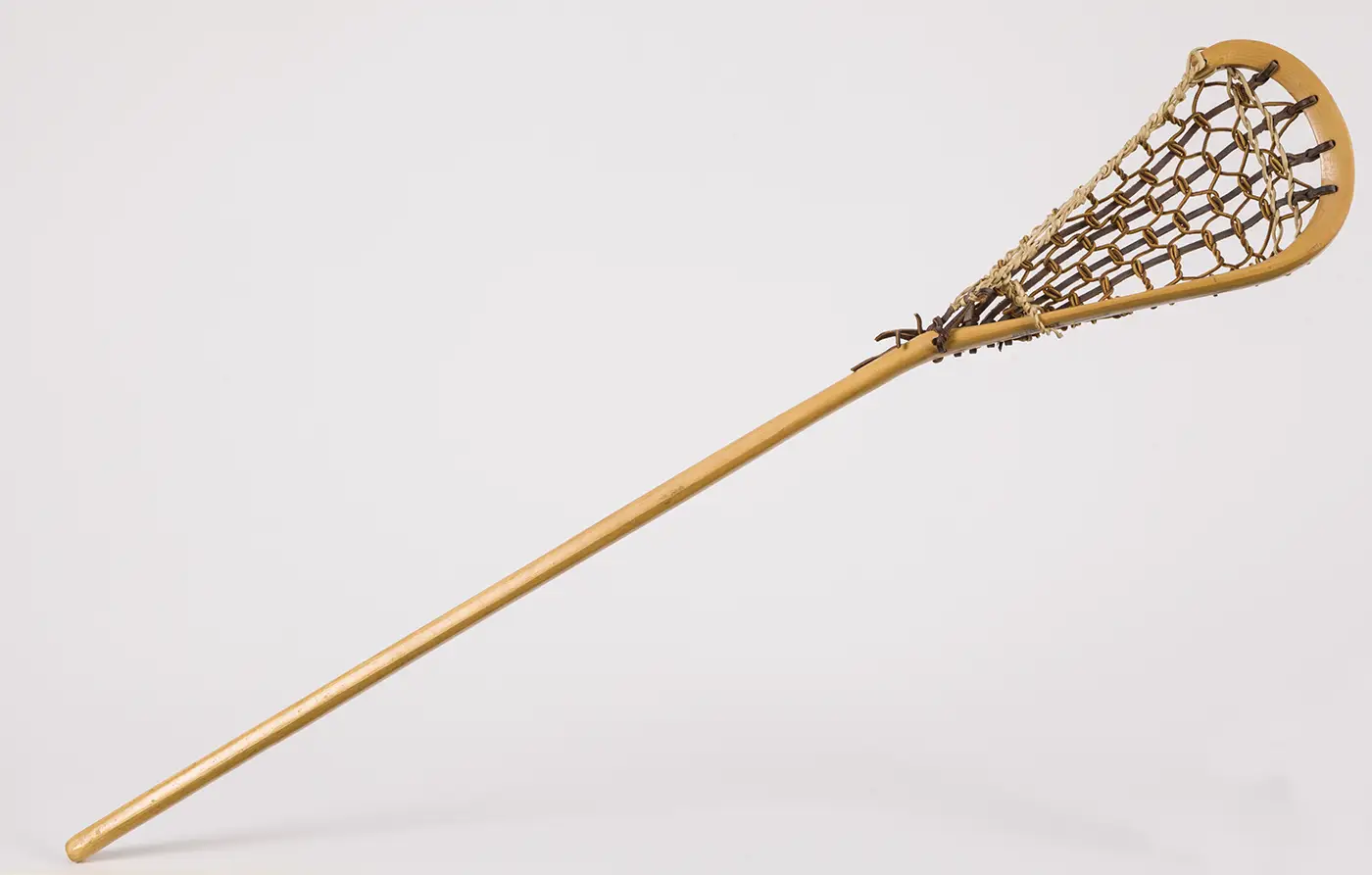
Haudenosaunee Lacrosse Stick
A sport to honor the spirits
When Europeans first made contact with Indigenous North Americans, they observed lacrosse played in many different styles. Among the Huron people in the early seventeenth century in what is now southern Ontario, different clans—Bear, Deer, Hawk, Porcupine, and Wolf—competed against each other, with sometimes sixty men playing all day. Painter George Catlin’s field notes and drawings of the Choctaw playing lacrosse in the 1830s in what is now eastern Oklahoma described hundreds of players on a field half a mile long. Team sports were uncommon in Europe at this time, and certainly there were no sports in which many players advanced a ball across a field with sticks made of wood and rawhide netting.
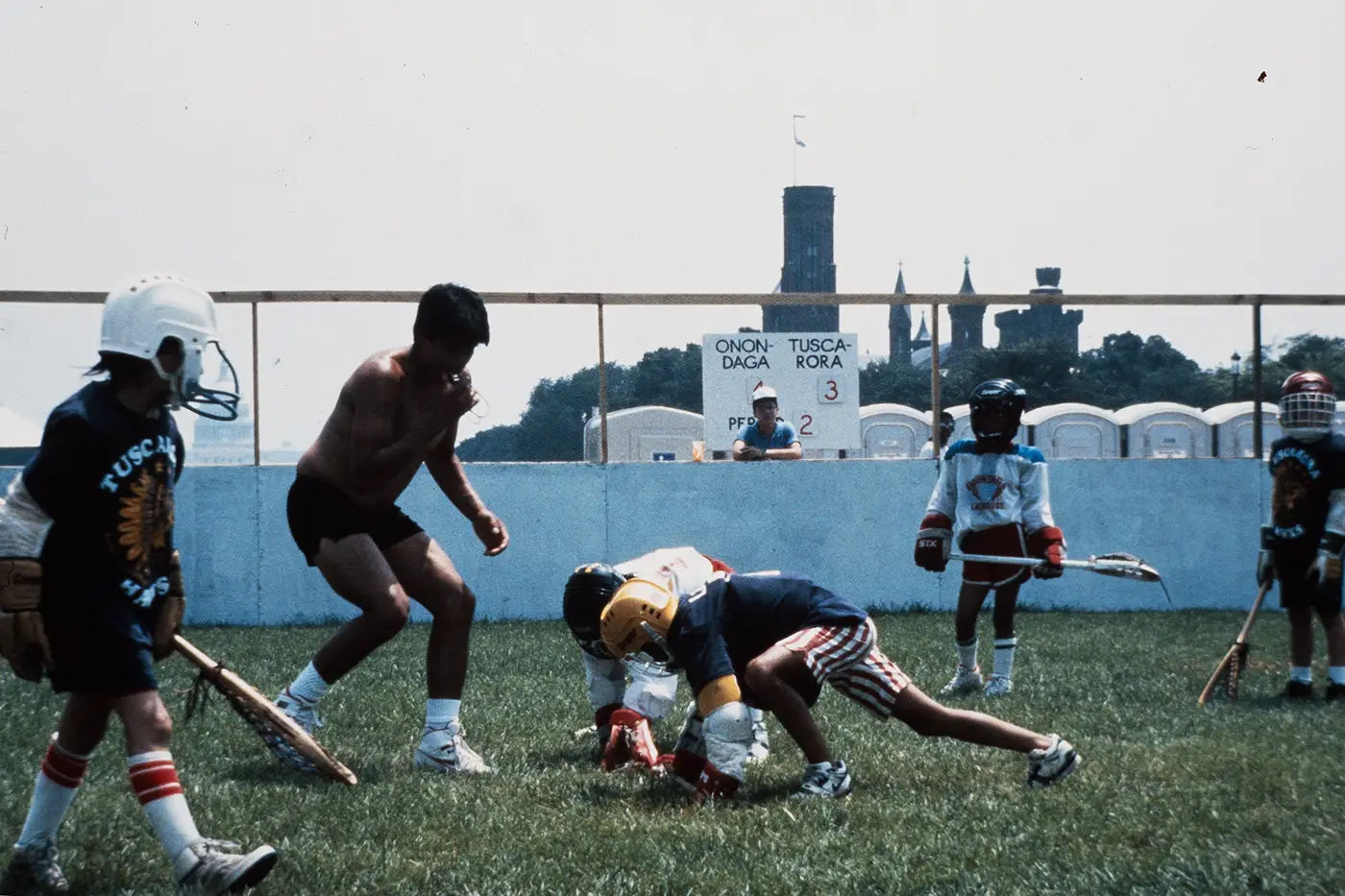
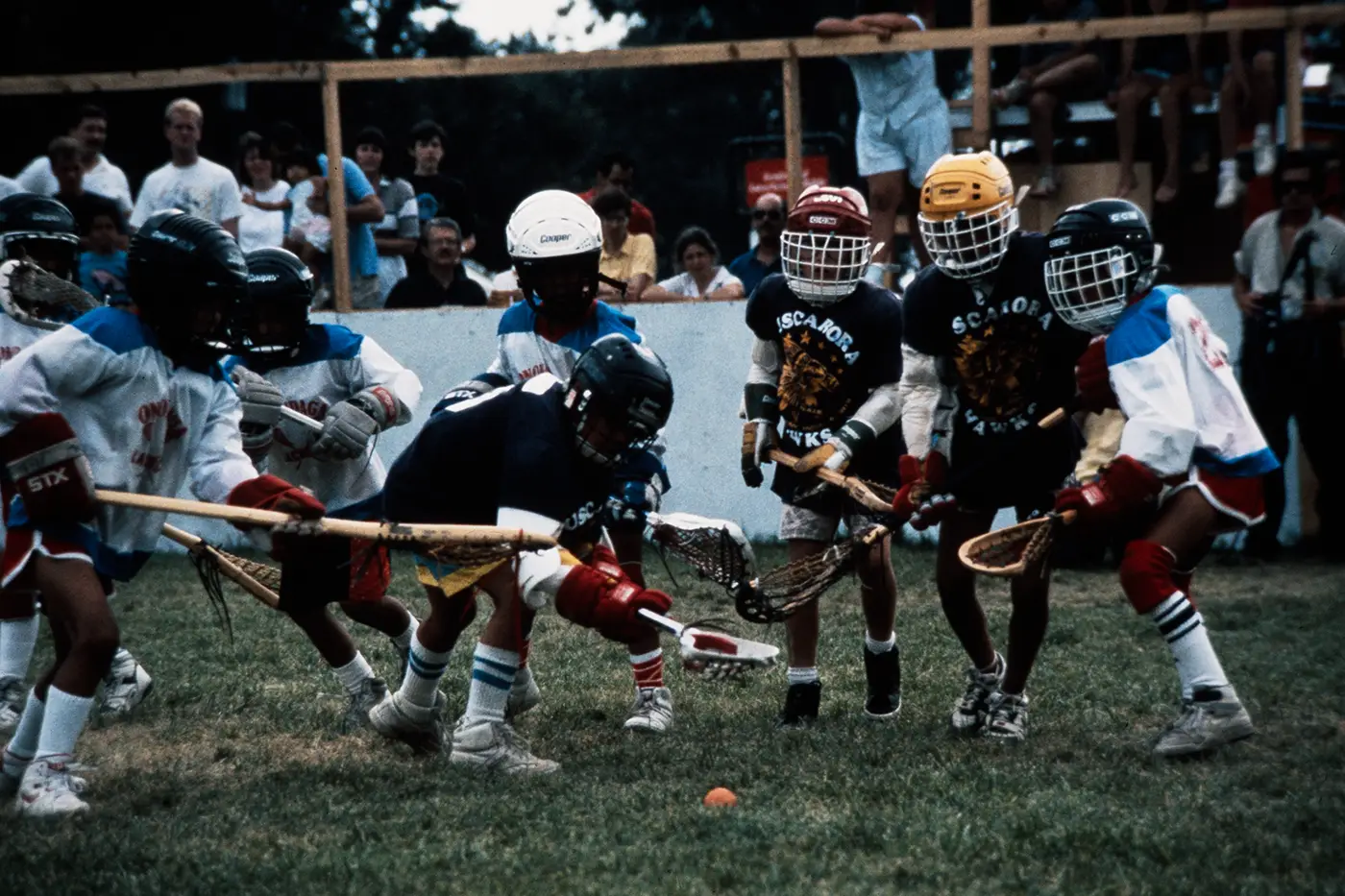
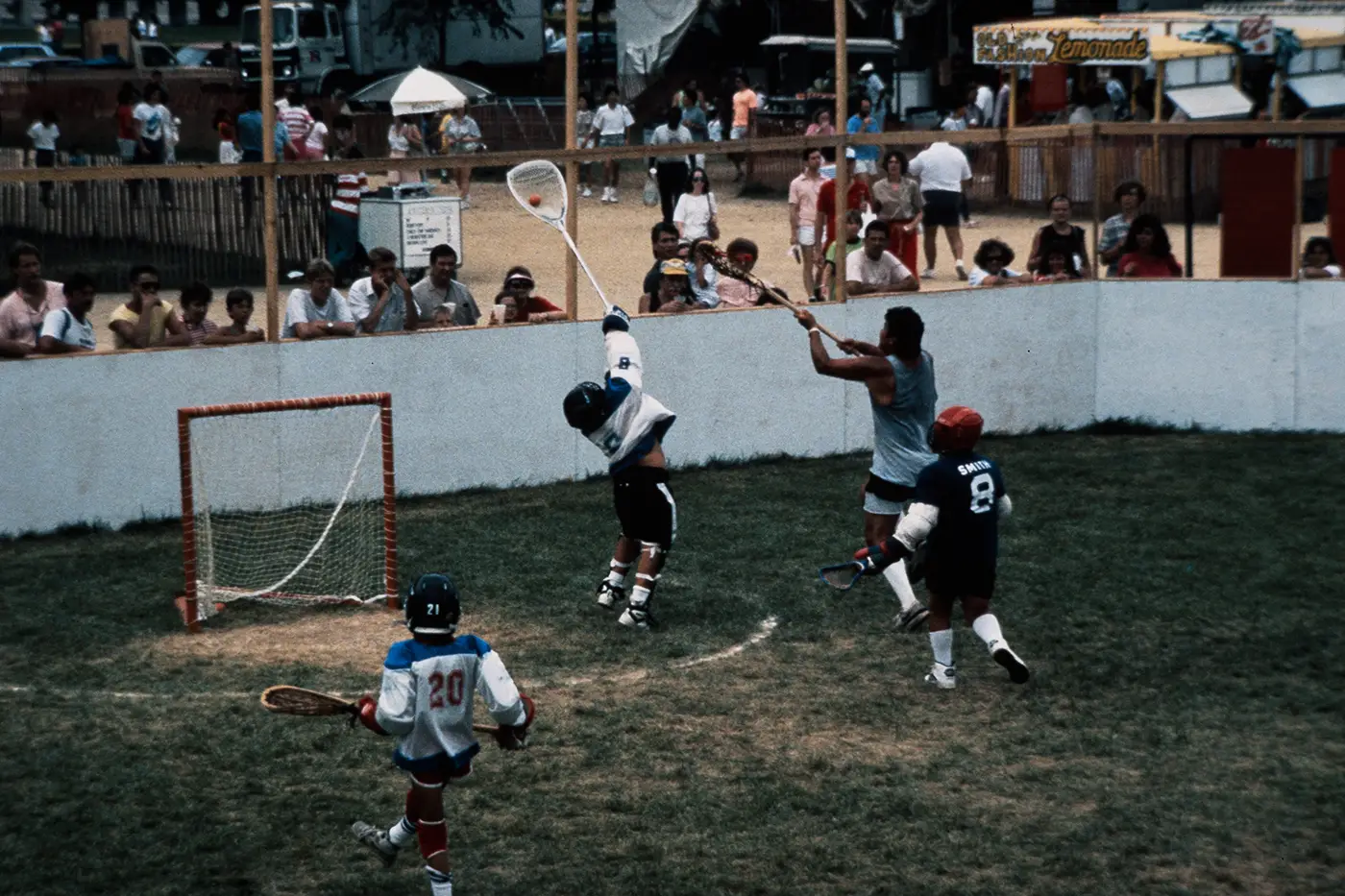
The Center’s collection includes two lacrosse sticks—one well-used during the 1975 Festival and this one from the 1989 American Indian program. Curated by ethnomusicologist Thomas Vennum Jr., one of the foremost scholars of Native American lacrosse, that program included Haudenosaunee from the Iroquois, Mohawk, Onondaga, and Tuscarora nations who not only played lacrosse on the National Mall, but also discussed ways in which lacrosse is linked to tribal identity, spiritual heritage, and cultural sustainability.
-
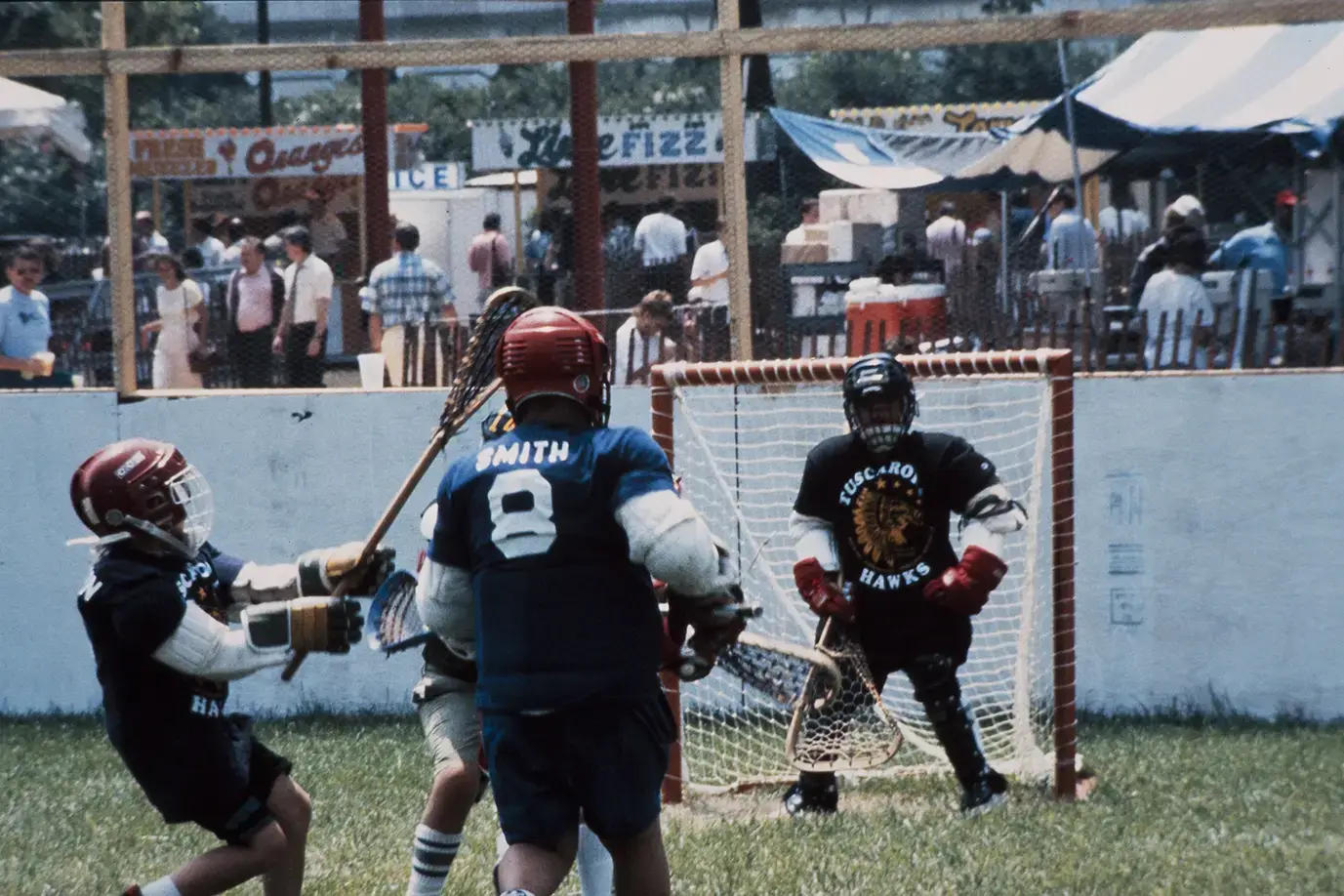
Young Iroquois lacrosse players compete on the Festival site. Ralph Rinzler Folklife Archives -
-
-
In 2024, the Festival again featured lacrosse while celebrating the twentieth anniversary of the National Museum of the American Indian on the National Mall. Indigenous Voices of the Americas spoke of ongoing work to reclaim histories, revitalize languages, and share cultural practices. For the Haudenosaunee, this included explaining the decision to replace the name “Iroquois” (a French-derived variant of “snake”) with Haudenosaunee (“People of the Longhouse”). While today’s lacrosse sticks are typically made from lightweight metals, wood sticks are still made and used, reinforcing lacrosse’s importance among Native Americans.
As Vennum noted, lacrosse was always much more than a game; its primary purpose was “to honor or petition some god or spirit.”
-
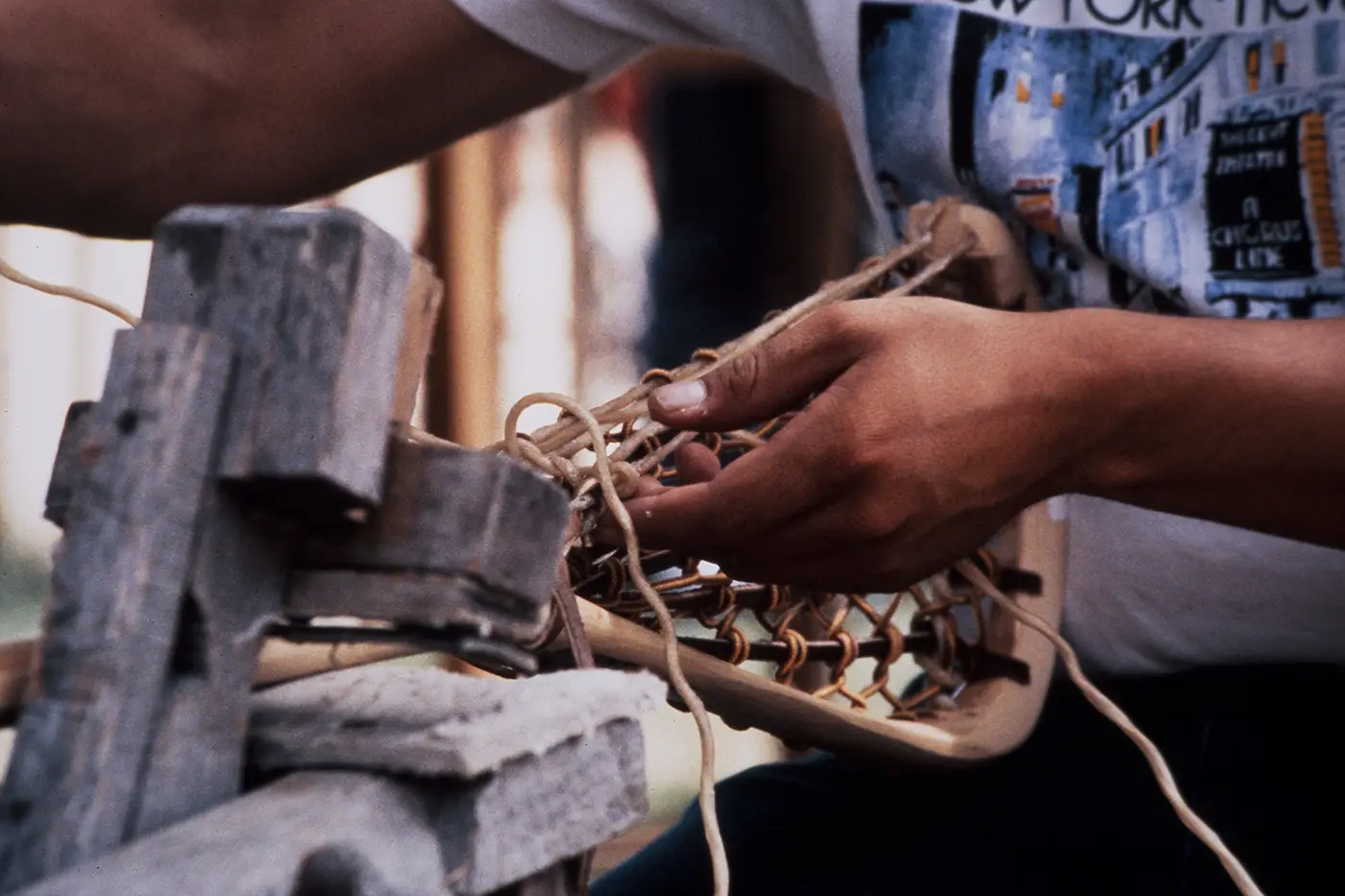
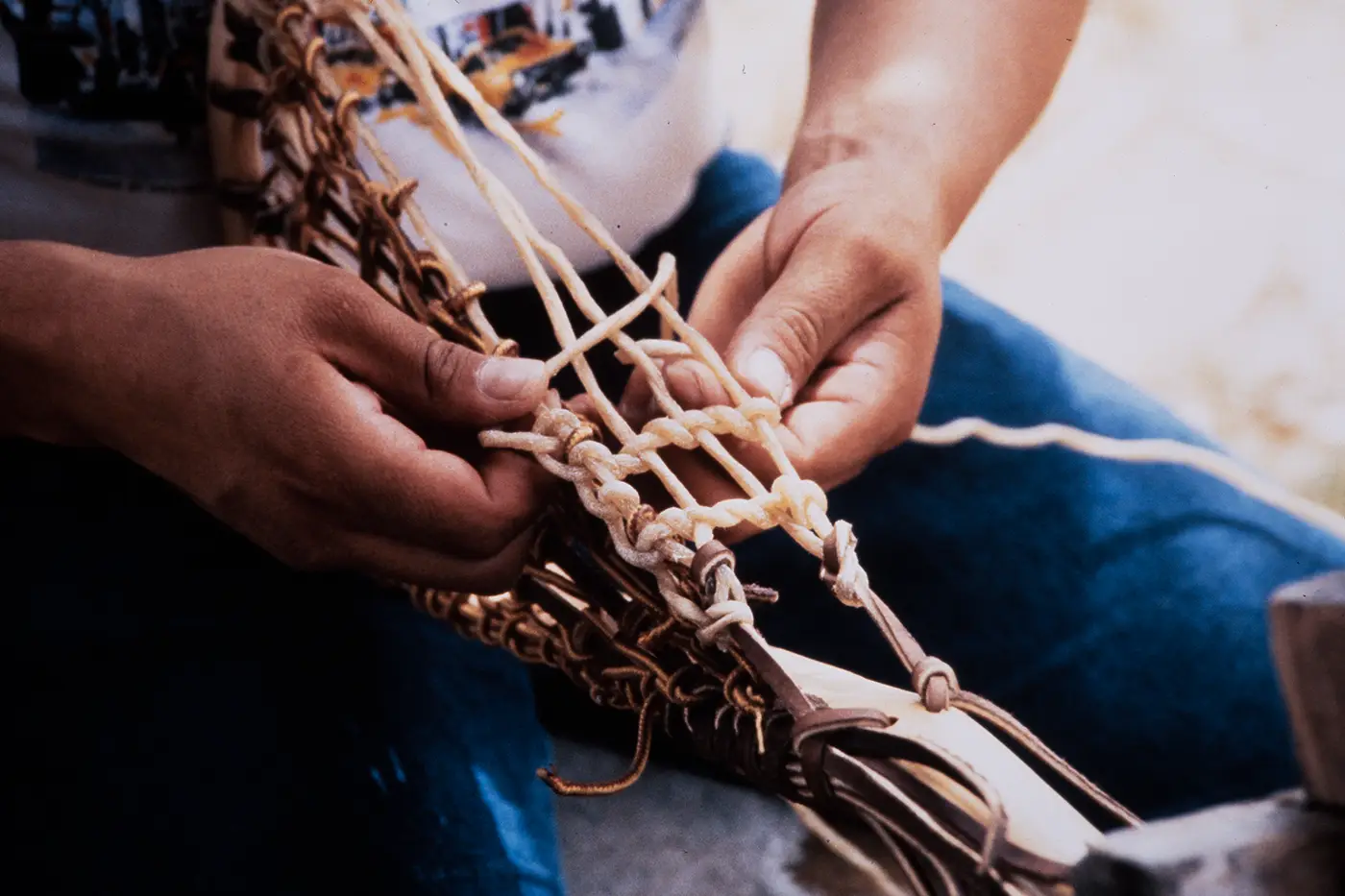
Melvin White finishes a lacrosse stick basket with rawhide. Ralph Rinzler Folklife Archives -