

Armenian Needlework
Embroidery as a symbol of Armenian culture and resilience
Embroidery bears witness to Armenia’s flourishing cultural traditions. It is evidence that rich customs have survived and evolved in the face of genocide and hardship. Maral Shohmahlian-Berberian is a master Armenian embroiderer. Raised in Aleppo, Syria, she kept her ancestral tradition of lace-making alive while living in diaspora. Shohmahlian-Berberian learned embroidery skills from her grandmother, which is common as the craft passes down from women to girls—producing an abundance of embroidery and laces that have brightened homes and personal clothing for generations. In times of economic turmoil, women have been able to sell their needlework for family income or, today, for their own creative enterprises.
-
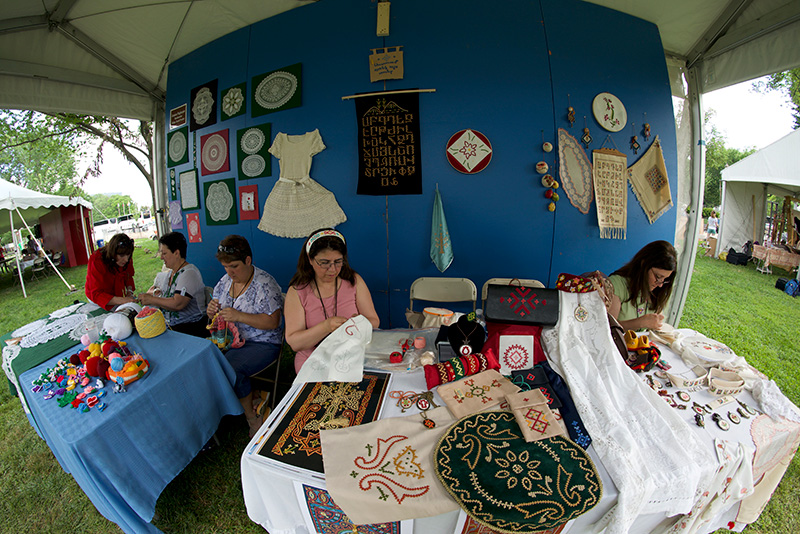
Maral Shohmahlian-Berberian works at far right. Photo by Narek Harutyunyan, Ralph Rinzler Folklife Archives -

Maral discusses her work with a visitor. Photo by Gregory Gottlieb, Ralph Rinzler Folklife Archives -
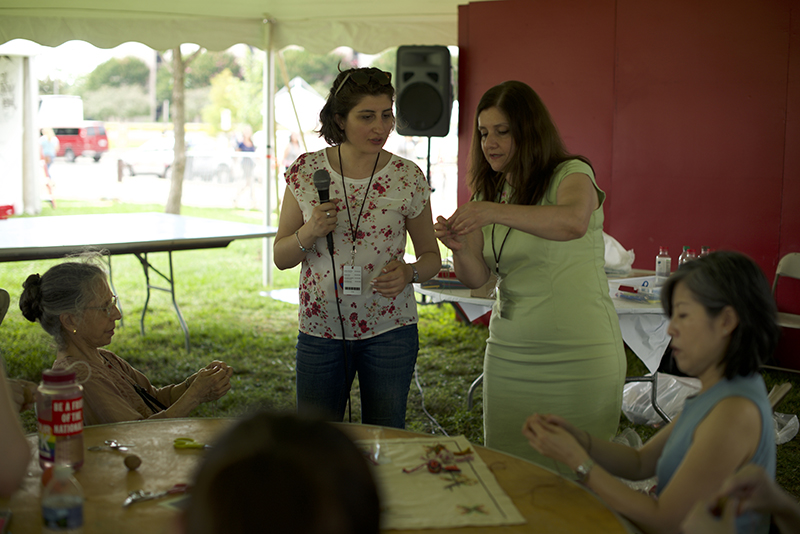
Maral leads a workshop demonstration. Photo by Stanley Turk, Ralph Rinzler Folklife Archives
Shohmahlian-Berberian was one of six needleworkers at the 2018 Festival’s Armenia program, and her booth caught the eyes of many visitors who stopped to admire the precision of her work and the subtle beauty of the colors she chose. Armenian embroidery traditions vary widely by region, and Shohmahlian-Berberian is skilled in multiple styles. Examples may be seen on the table and wall behind her, pictured above. Her personal craft reflects both the styles that she inherited from her ancestors and her own creativity.
-
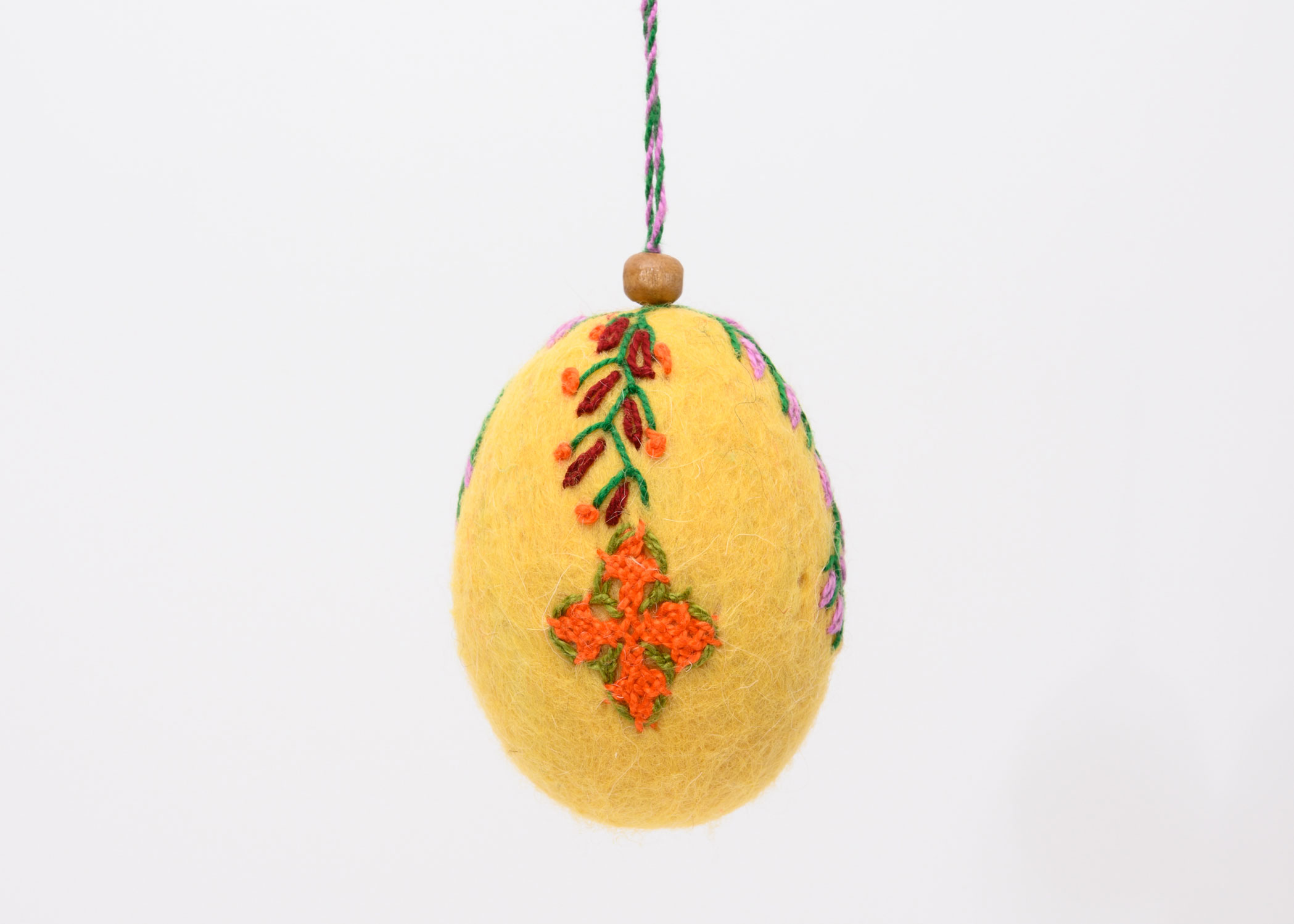 Photo by Sonya Pencheva, Ralph Rinzler Folklife Archives
 -
 Photo by Sonya Pencheva, Ralph Rinzler Folklife Archives
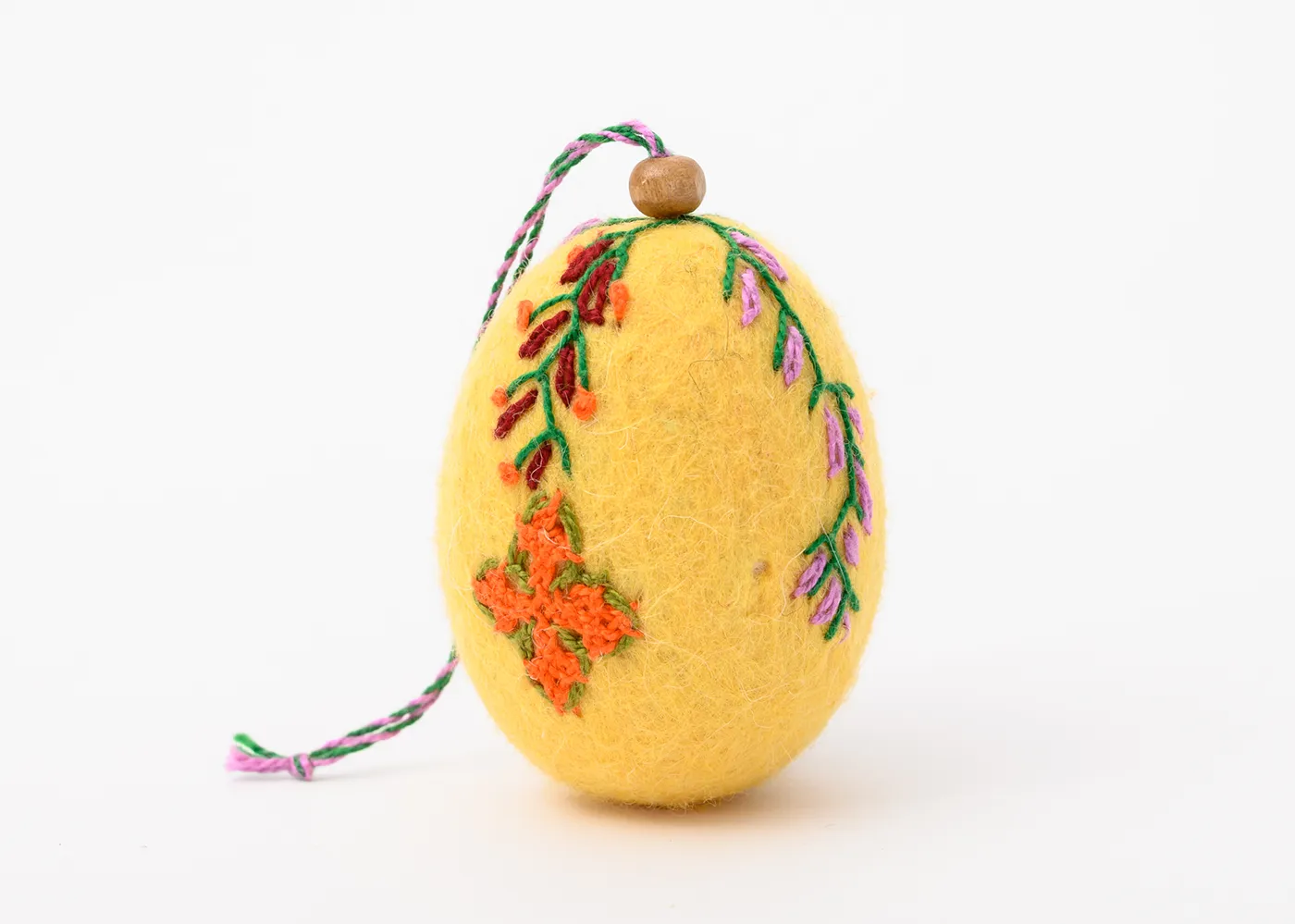
The orange cross on this yellow egg is made in the marash stitch, named after its city of origin. The style is distinguished by thick, interlaced designs that appear almost braided on the surface, attached with only small dots of thread visible on the back of the fabric. The vines that cascade from the top create an aura of fertility and rebirth related to the cross, making this small object an expression of the Armenian religious tradition of Christianity, with the egg symbolizing salvation and the triumph of life over death.
-
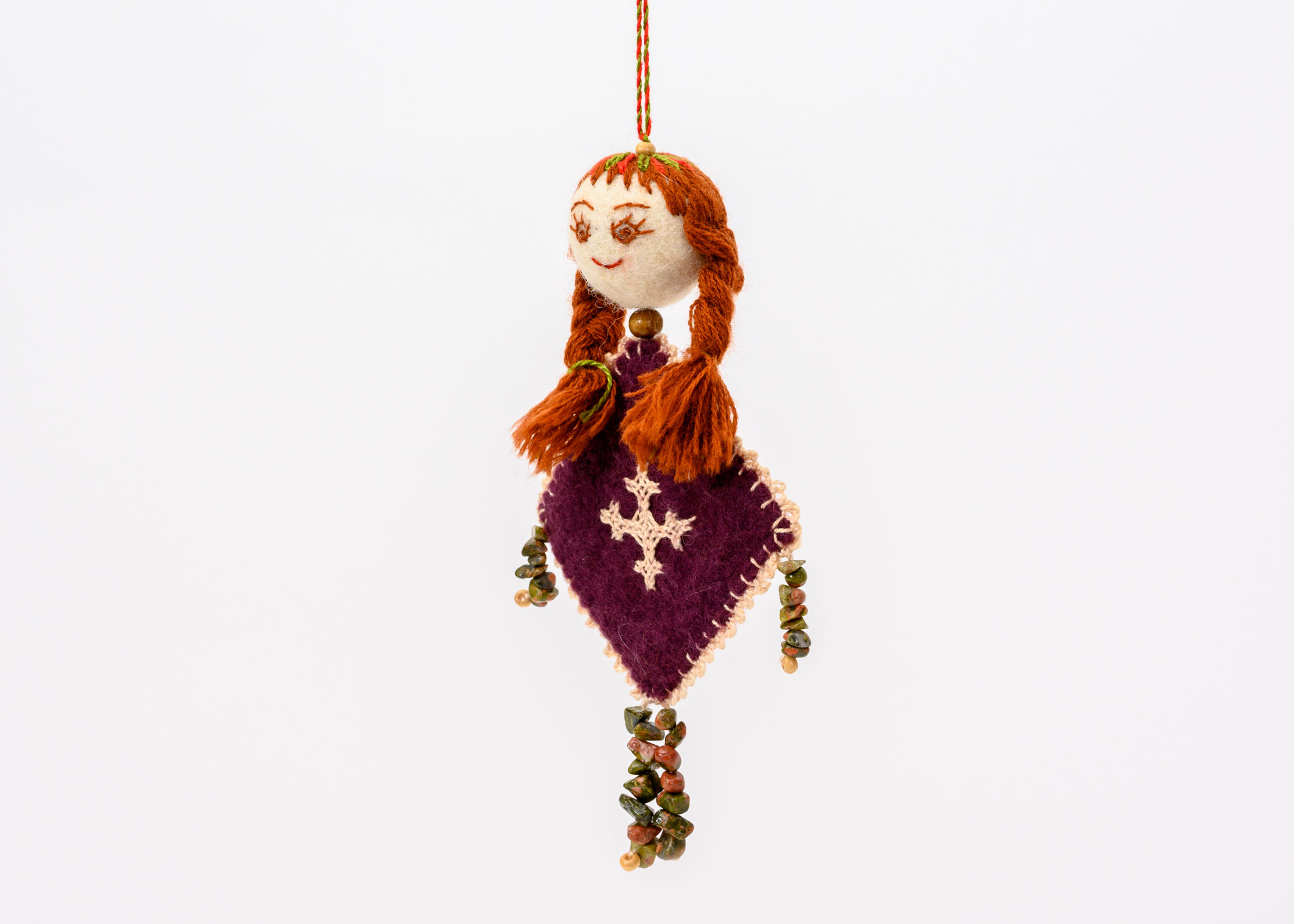 Photo by Sonya Pencheva, Ralph Rinzler Folklife Archives
 -
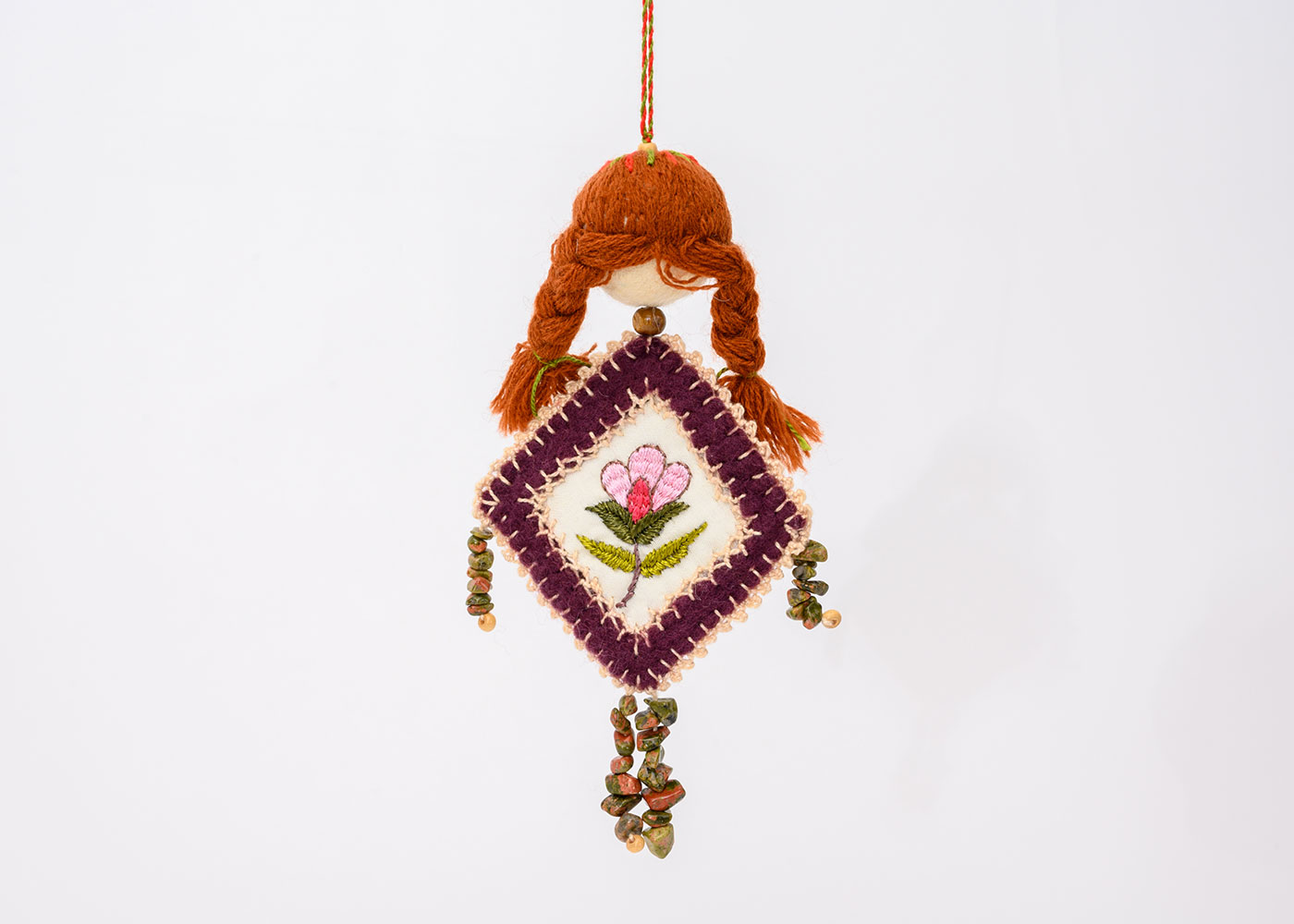 Photo by Sonya Pencheva, Ralph Rinzler Folklife Archives
The doll ornament features two styles of embroidery: the cross in the marash stitch on the front of the doll, and the flower in the delicate ourfa stitch on the back (also named for its city of origin). The flower’s petals softly unfold, and the leaves are distinctly dimensional. The doll is intended to bring good luck to its owner. As Shohmahlian-Berberian paid homage to her ancestors through her art, Festival visitors learned that embroidery represents Armenian identity and steadfastness.
