


Festival Drawings
A Festival mainstay
Festival veterans fondly remember seeing Lily Spandorf on the Mall every year, dragging her iconic granny cart full of art supplies and settling down on her stool to draw. She used an “easel” fashioned out of cardboard so that she could travel with it more easily—a no-nonsense solution for a prolific artist whose work consisted mostly of outdoor scenes.
The Ralph Rinzler Folklife Archives and Collections acquired 756 of her Festival drawings in 2001, shortly after her passing in 2000. While most are stored in the archives’ vault, sixteen drawings and paintings were framed and are on display in the Center’s offices. We pass them every day, and we know them almost by heart. Some are so detailed that one can identify the Festival program featured. There is an intimacy to the drawings; they are a series of moments, based on close observation over a sustained period of time. You can almost see the dancers move.
Spandorf was born in Vienna, Austria, in 1914. An honors graduate of the Vienna Academy of Arts, she left Austria in 1938 to continue her art education at London’s St. Martin’s School of Art. During World War II, she volunteered for the Red Cross in Scotland. She also worked and lived in Italy, where she became interested in painting scenes outdoors. She moved to New York City in 1959 but found the city too vast and hectic. She eventually moved to Washington, D.C., in 1960, where she settled into an apartment in Dupont Circle and lived there until her death.
-
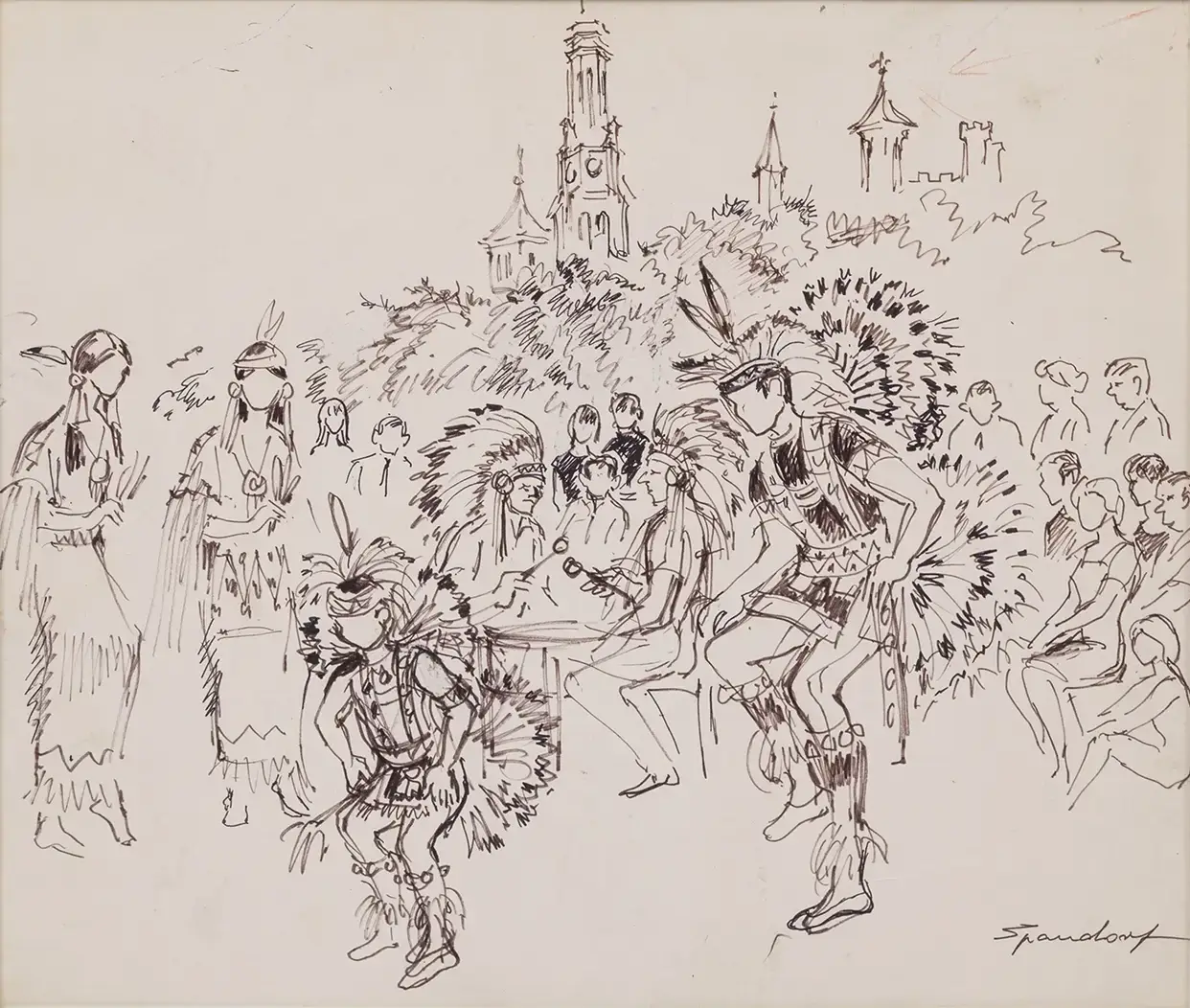 Photo by Zvonimir Bebek, Ralph Rinzler Folklife Archives
 -
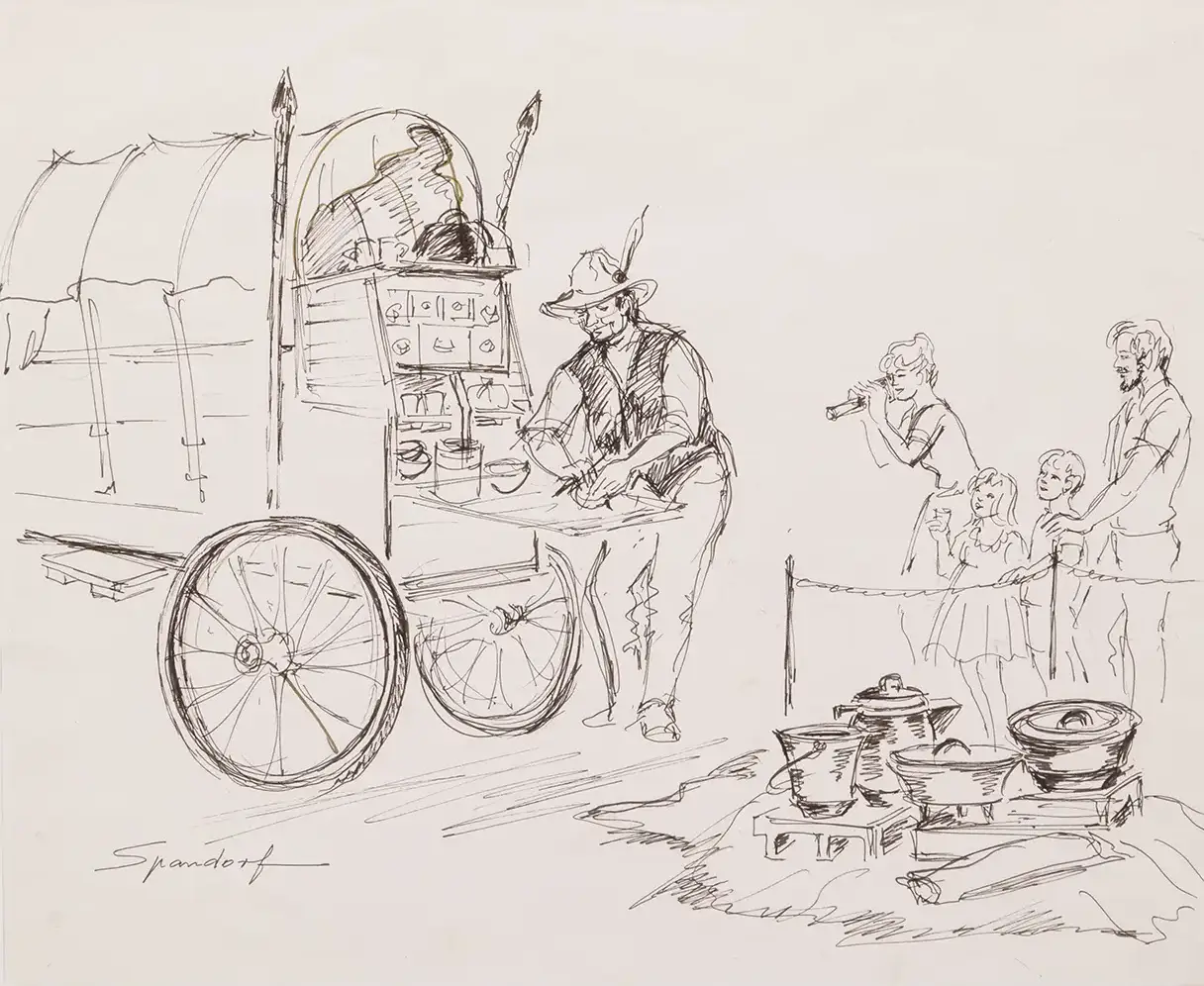 Photo by Zvonimir Bebek, Ralph Rinzler Folklife Archives
Spandorf loved Washington but was saddened when historic buildings were torn down in the name of progress. If she caught wind of an impending demolition, she would draw the buildings before they disappeared. Perhaps her attraction to the Festival was part of her desire to capture the soul of her adopted city on paper. Her deep respect for and obvious delight in culture, history, and living heritage is something we are proud to memorialize on our walls—for another fifty years, and beyond.
