

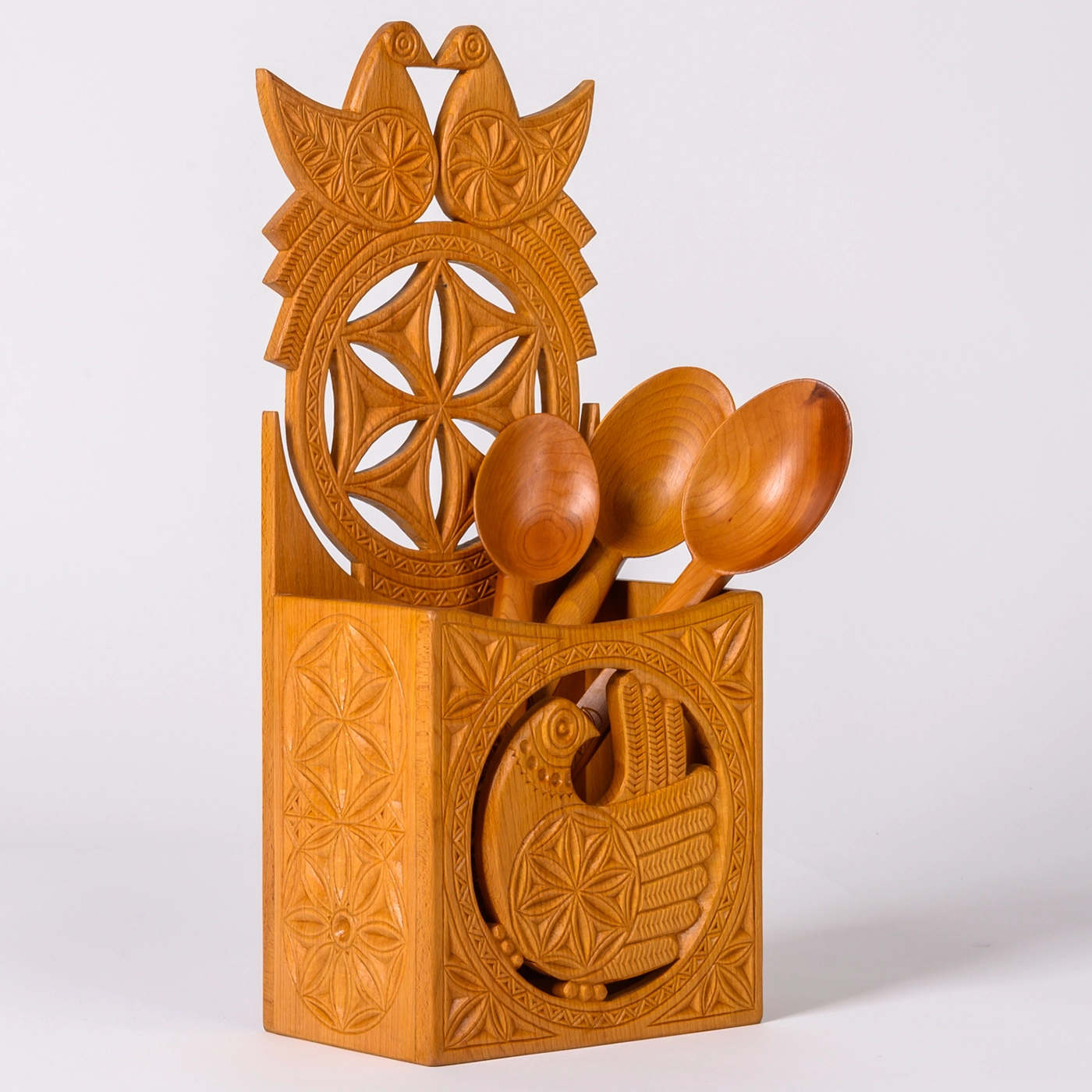
Armenian Kitchen Box
“I like wood a lot as a material: its warmth and its liveliness. The lifecycle of wood, of trees, is compatible with our life. We perceive it more like a living creature.”
Patterned and Practical: Armenian Woodcarving on the National Mall
As the coordinator for the Armenia program at the 2018 Folklife Festival, I had the privilege of traveling to the country with several others in 2017 to conduct fieldwork and participate in workshops. While there, we saw firsthand the rugged and lovely countryside and enjoyed the warm hospitality of our hosts—a skilled and knowledgeable group of cooks, artisans, academics, and researchers.
One of the sites we visited was the Yerevan Woodcarving Museum. Established in 1977, the museum displays old and not-so-old intricately carved wood pieces. Much of what is on display is functional: home structures such as pillars, columns, and doors; furniture like benches, beds, and cradles; and tools such as spoons, ladles, kitchen boxes, and gata stamps. I frequently saw impressions from these stamps on cakes, pastries, and breads throughout the country. They were almost too beautiful to eat, but to not consume them would be impolite!
-

A display of gatas in the Yerevan Woodcarving Museum shows the many patterns and designs. Photo by Arlene Reiniger, Smithsonian -
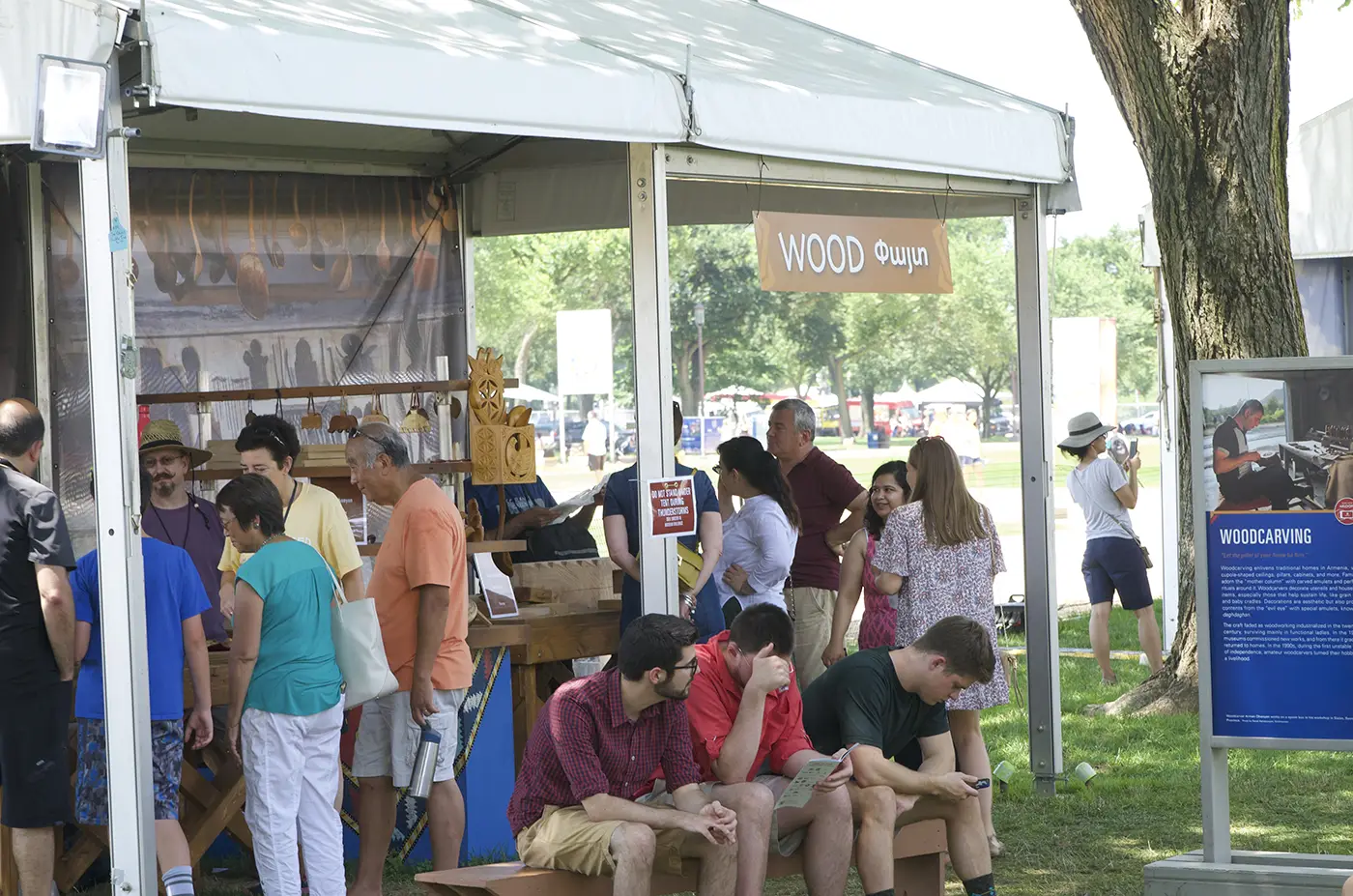
The wood tent in the Armenia Festival program includes the prominently displayed kitchen box. Photo by Josh Weilepp, Ralph Rinzler Folklife Archives -
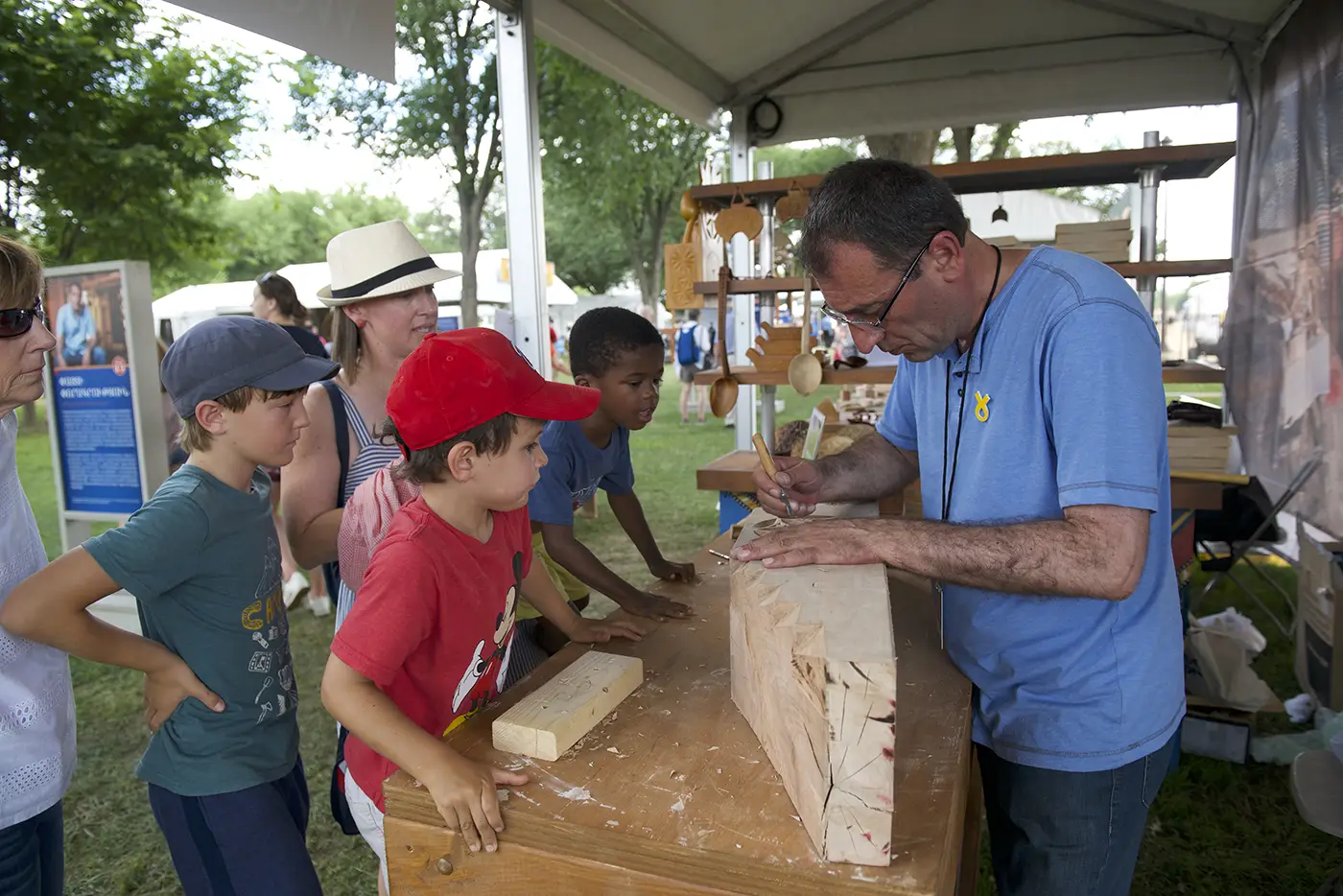
Young visitors to the Festival watch as Vahagn Amiryan carves a pillar that would be used as support in a home. Photo by Narek Harutyunyan, Ralph Rinzler Folklife Archives -
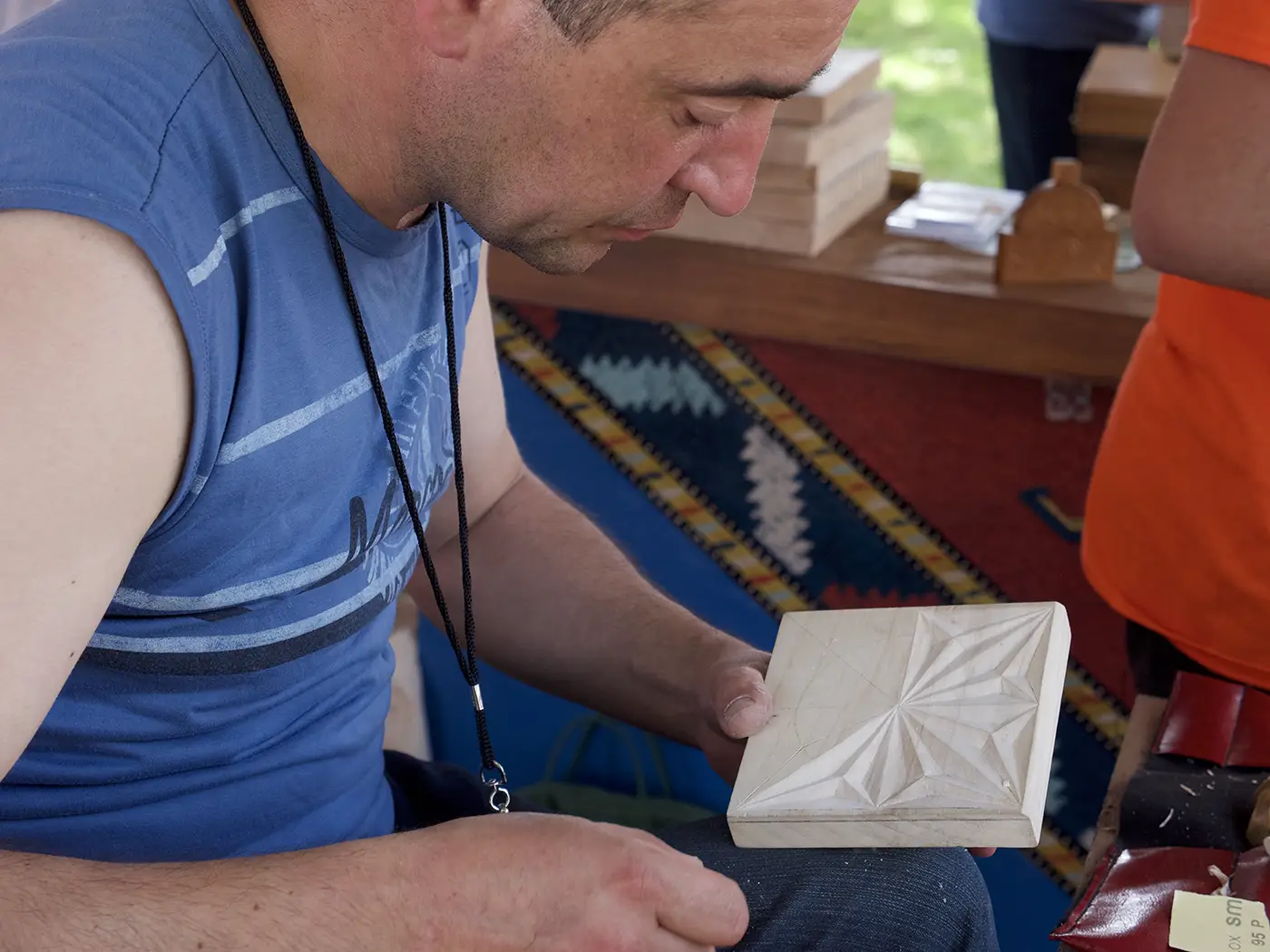
Armen Ohanyan turns a piece of wood into a gata stamp during the 2018 Festival. Photo by Gregory Gottlieb, Ralph Rinzler Folklife Archives
The Festival program was everything we anticipated and more. Coffee and lavash straight from the large, clay tonir were shared daily with visitors. Jazz, contemporary, and folk music wafted throughout the National Mall, and a troupe of participants staged a traditional wedding celebration. Important issues were publicly discussed, and visitors were transfixed by the beauty and brilliance of the crafts and their makers.
Woodcarvers Vahagn Amiryan and Armen Ohanyan demonstrated how a piece of wood can be transformed into a striking and functional item. For me, it was tremendously gratifying to see objects I had previously viewed in an Armenian museum come to life in the hands of these two accomplished craftsmen. The kitchen box and spoons featured here were displayed at the Wood tent. At the end of the Festival, they were presented to me as a gift of gratitude for my role in the program. I couldn’t have been more thankful, and it reminds me daily of my delight at getting to know a small part of Armenia from my travels and working with my Armenian colleagues on the National Mall.
