Tibetan Thangka
A beloved collection object reveals more about itself decades after its creation
One of the most beautiful objects gifted to the Center for Folklife and Cultural Heritage is this Tibetan thangka—a contemporary religious scroll created in support of the 2000 Tibetan Culture Beyond the Land of Snows program. It is one of ten commemorative thangkas commissioned for major donors by the Conservancy for Tibetan Art and Culture, a local collaborator in Washington, D.C. The program title refers to people who are ethnically Tibetan but living outside the historical and ethnographic boundaries of Tibet.
The thangka’s iconography is distinctively blended, not unlike the Festival itself. It features the central figure of Chenrezig—the embodiment of the compassion of Buddha—surrounded by multiple recognizable symbols relating to his core attributes of kindness, compassion, joy, and equanimity. Below the lotus platform are more symbols of Buddhism, and below those are clear renderings of D.C. landmarks: the Smithsonian Castle, the Supreme Court, and the U.S. Capitol.
-

Detail showing the Smithsonian Castle, Supreme Court, and U.S. Capitol at the thangka’s lower edge. Photo by Zvonimir Bebek, Ralph Rinzler Folklife Archives
Although the thangka was created before the Festival by an artist who did not participate in the program, we may read the work as a foreshadowing of the transformative event in which Tibetans from all over the world—including His Holiness the Dalai Lama—gathered on the National Mall to speak of their heritage, identity, and experiences “beyond the land of snows.”
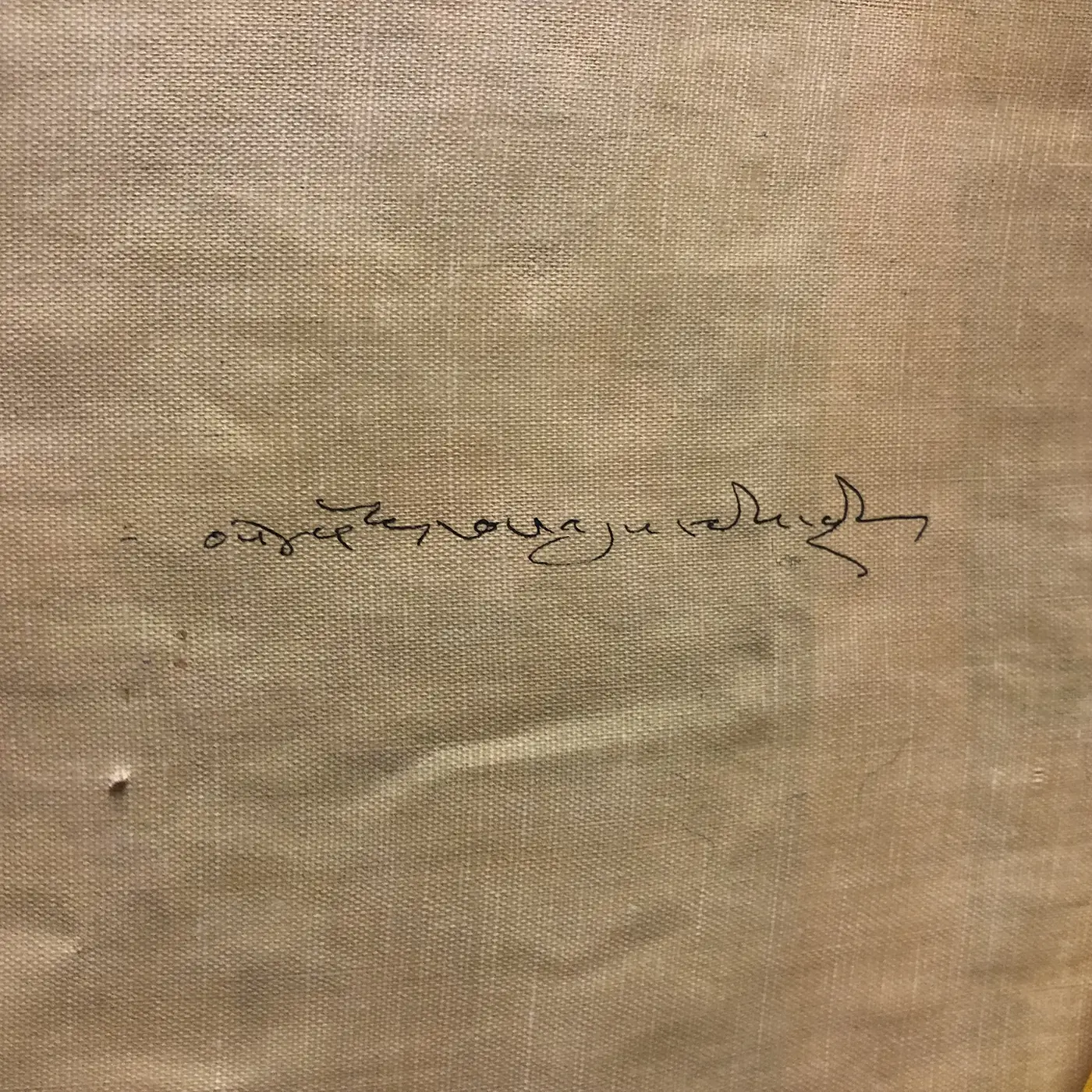
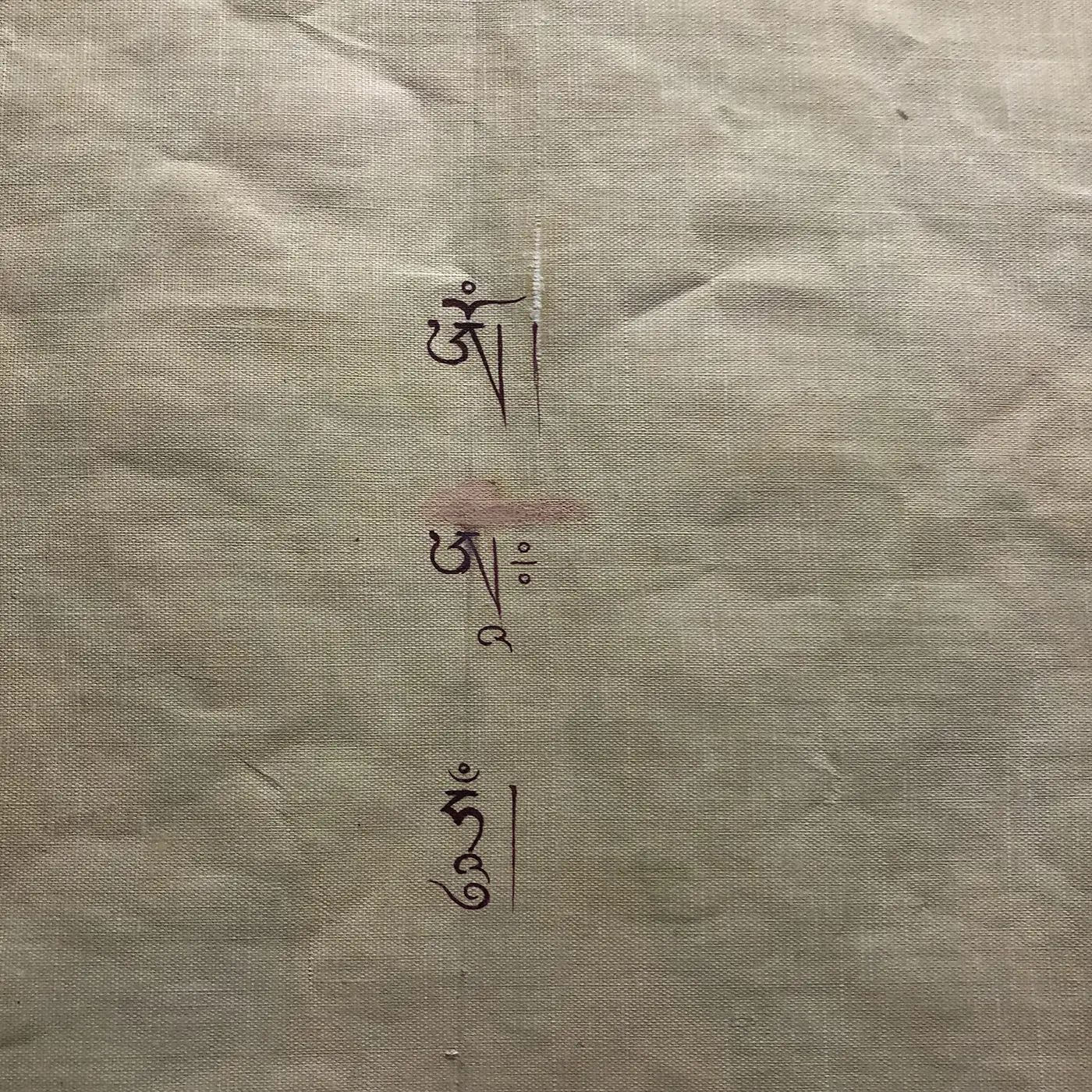
In February 2023, more than twenty years after the program, a visiting conservator removed the thangka from the wall to look for Tibetan script on the back, which painters traditionally place behind the main figures in a composition. She found what she was looking for—and also noticed a signature near the bottom right, identifying the painter as Sonäm Wangdü. We next turned to a former Tibetan colleague for help with translation. Several weeks later—after she consulted other language experts—we received her news: the syllables Om HA and Hung are Tibetan Buddhist mantras that practitioners recite to help clarify their bodies, speech, and minds when meditating.
-

Markings on the thangka’s reverse side: top row, center back, and painter’s signature. Photos by Erin Younger, Smithsonian -
-