

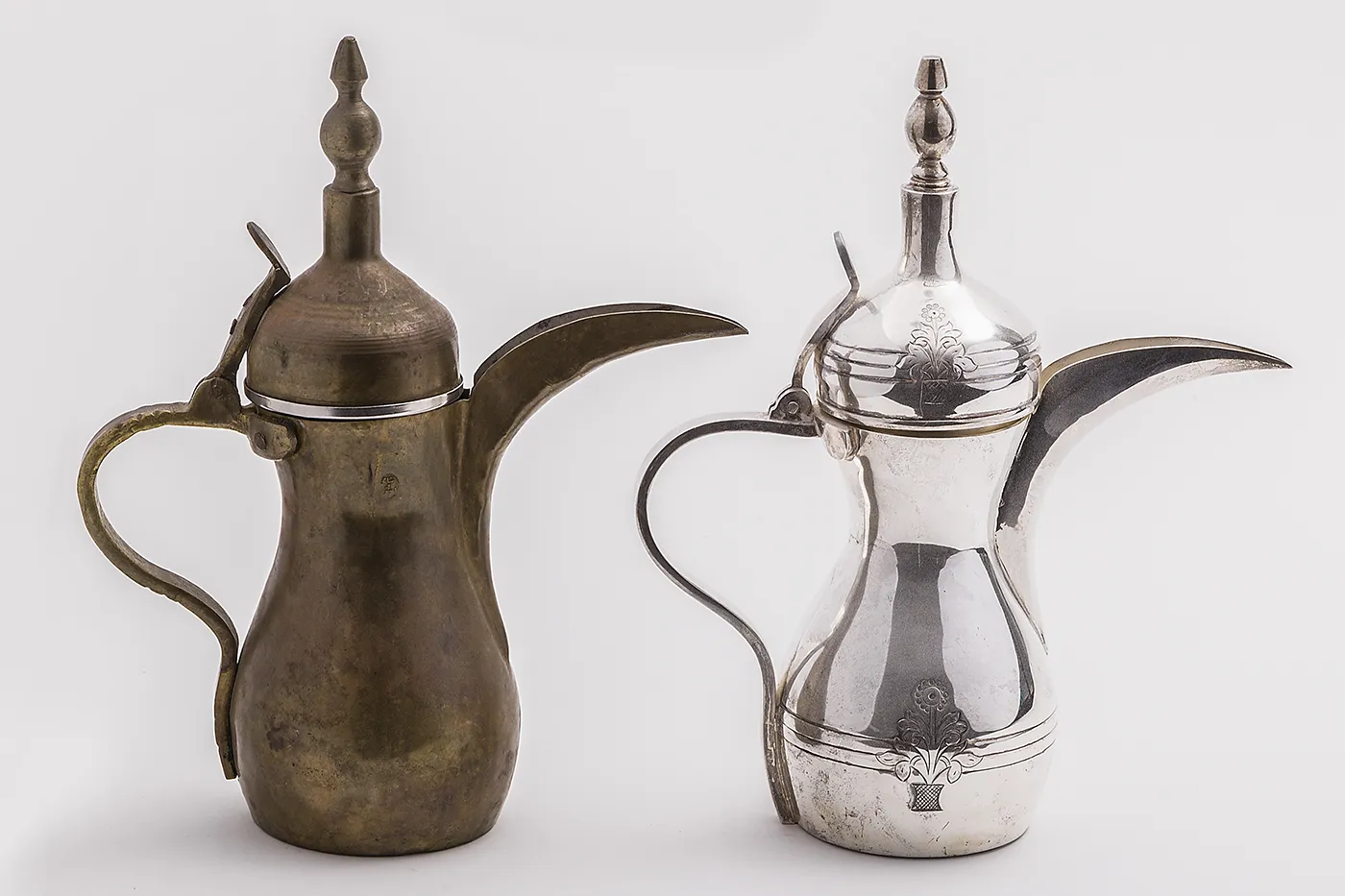
Omani Dallah
Coffee pots as symbols of Omani heritage and hospitality
The idea for Oman: Desert, Oasis and Sea grew out of what curator Richard Kennedy described as the progressive “disintegration of understanding of Muslim culture” after the events of September 11, 2001. The incoming American ambassador to Oman had seen the Festival’s Tibet program in 2000 and asked Kennedy if the Center for Folklife and Cultural Heritage might feature a Muslim country. Kennedy brought the idea forward, and the Oman program was born. In Kennedy’s memory, it was a dream program with creative collaborators, strong in-country support, and a positive experience on the National Mall.
The two hand-formed dallah—coffee pots—highlighted here were presented to the Center as gifts from the Sultanate of Oman. For those who might imagine a dark Starbucks brew being being poured from the spouts, visitors to the Folklife Festival found that Omani coffee is very different. Green coffee beans are lightly roasted in a pan over an open fire and ground into a fine powder with a mortar and pestle. The coffee powder is then mixed with boiling water in the dallah, along with cardamom, rosewater, and saffron. The host then uses the dallah to pour the brewed coffee into small cups called finjan. The resulting beverage is tea-colored and served to guests along with dates and other sweets. No polite guest declines coffee when offered.
-
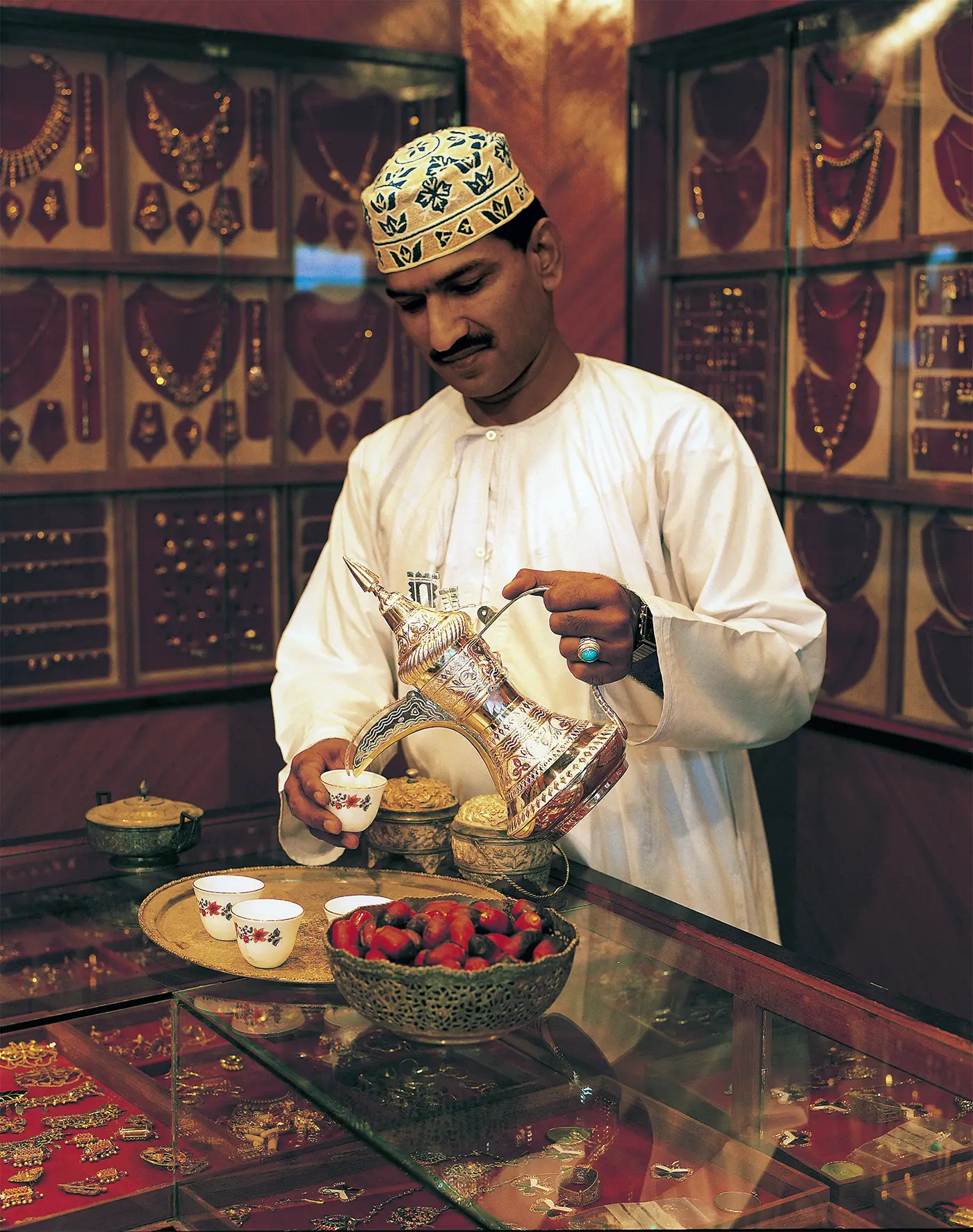
Coffee is poured by a shop owner in Oman. Photo courtesy of the Sultanate of Oman -
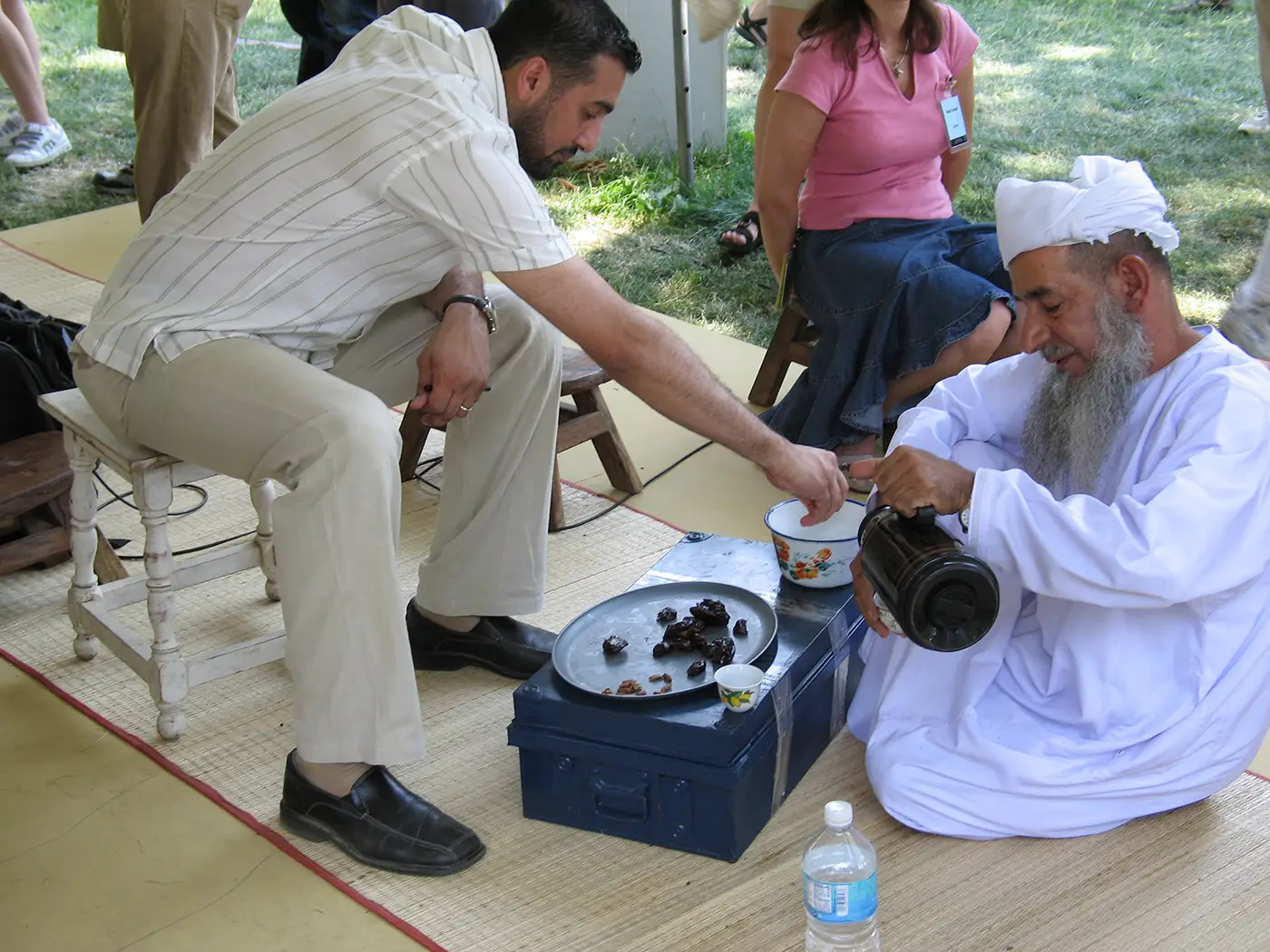
Dates and coffee are served at the Festival, illustrating Omani hospitality. Photo by Rebecca Summerour, Ralph Rinzler Folklife Archives
Beyond their function, these pots also represent the rich heritage of Omani metalwork. Crafts have long played an important role in Oman’s economy, and the souks (marketplaces) of the oasis towns house permanent workshops where artisans practice and sell their wares. There is a rich interplay between these production centers and the port capitals that have long functioned as gateways for new ideas, materials, and peoples throughout the region. The resulting craft culture in Oman is a lively synthesis of tradition and change, with discernible Arab, Indian, and East African influences. For the Center, these pots embody the value of direct cultural exchange that created a spirit of friendship, welcome, and collaboration.
