

Hariko Dolls
A centuries-old doll-making technique endures
-
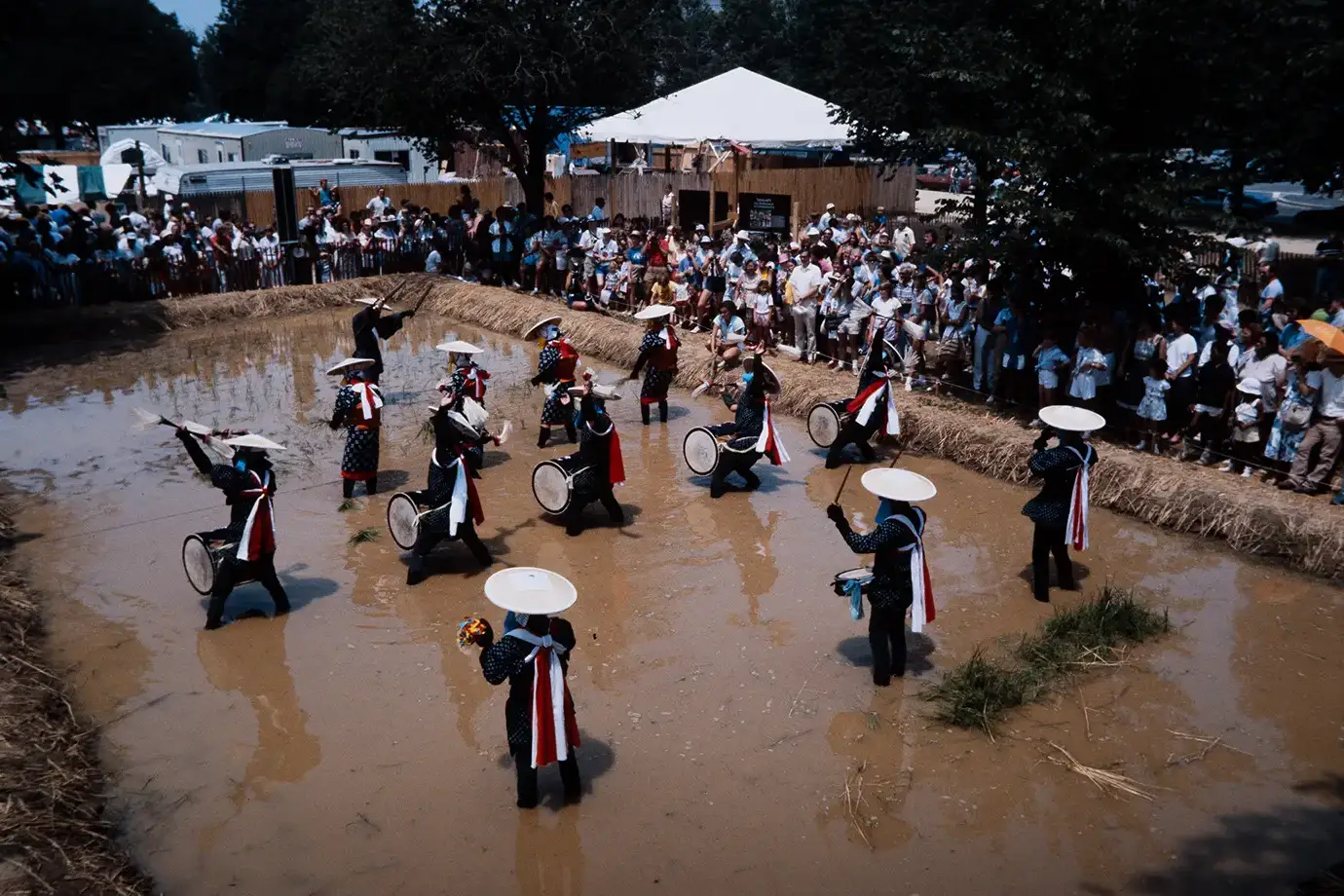
Japan program participants demonstrated rice-planting ceremonies and traditional craft production. Photos by Daphne Shuttleworth, Ralph Rinzler Folklife Archives -

The year 1986 marked the twentieth anniversary of the Festival of American Folklife (now called the Smithsonian Folklife Festival). The visual anchor of that year’s Festival design was a large, flooded rice paddy at the western edge of the Rice in Japanese Folk Culture program area. Traditional practices such as music-and-dance dramas to accompany transplanting rice by hand took place each day in the paddy. Participants discussed and highlighted the spiritual and material significance of rice at a time when technology and mechanization were reshaping rural Japanese life.
Beyond the paddy were pairs of raised platforms that served as open-air workshops. Each day, artisans transformed rice straw into slippers and storage containers, made sake casks and umbrellas, dyed and wove fabric, and turned sheets of mulberry paper into paper-mâché masks and figures—hariko.
-
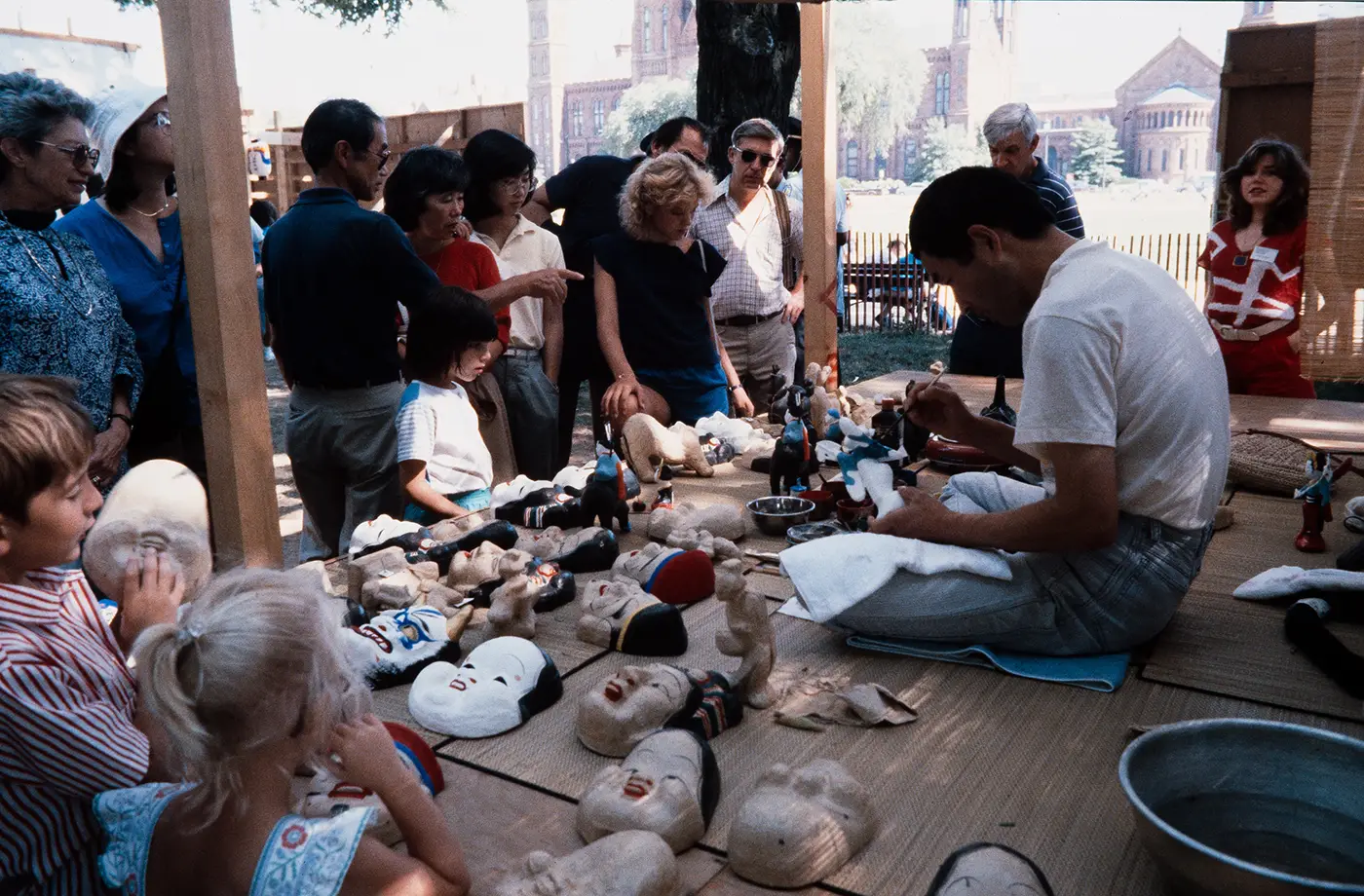
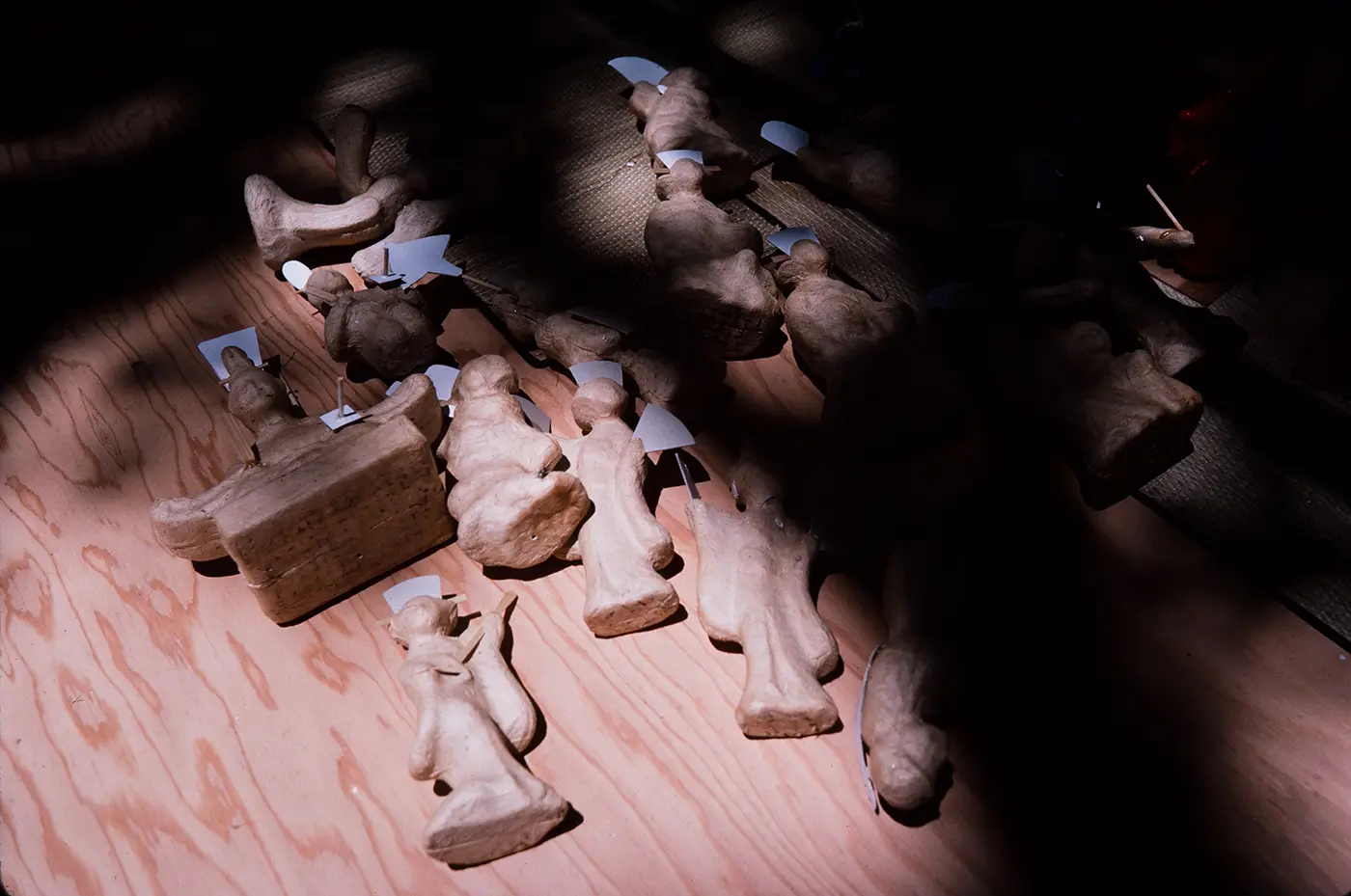
Hiroji Hashimoto’s papier-mâché figures in process and complete. Photos by Daphne Shuttleworth, Ralph Rinzler Folklife Archives -
-
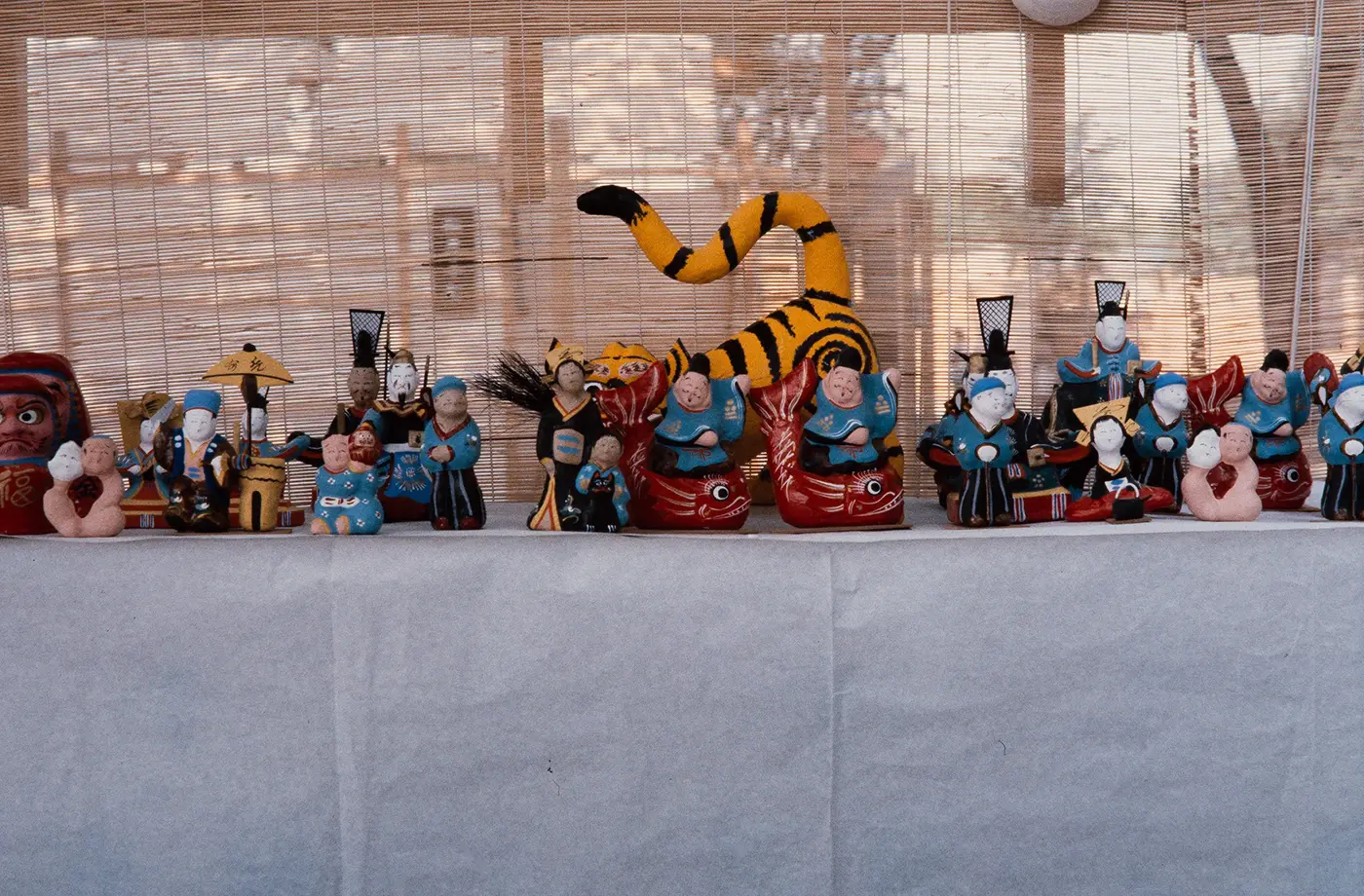
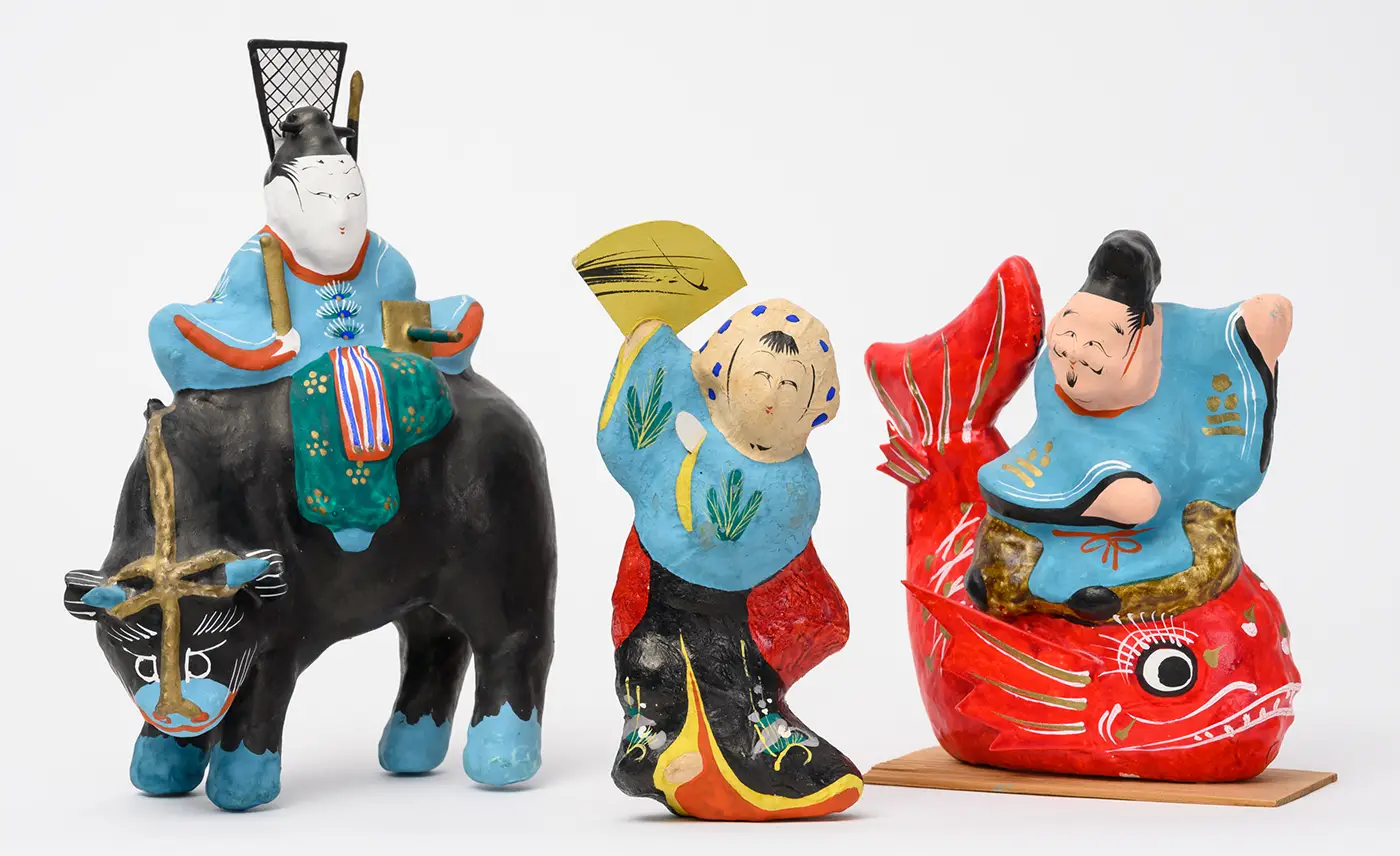
Hiroji Hashimoto was the only artist demonstrating hariko ningyō—making “human shape” dolls (ningyō) out of papier-mâché (hariko). Such dolls were once used as playthings but are more widely appreciated as collectables today. They are part of a long line of Japanese dolls made of everything from elegant, fired-clay figures dressed in beautiful fabrics to painted wood and form-molded dolls such as these.
Each figure begins with damp sheets of washi (mulberry paper) pressed in layers onto carved wooden forms. Once dried, the hollow shapes are cut off the forms, resealed, and painted to represent a large cast of recognizable characters. The wood forms—reused for years—are oiled for preservation and to make it easier to remove the dried washi. Each figure is unique despite their similar shapes, due to subtle variation in the base forms and the varied flourishes applied by the painter. The delicate features on the faces take particular skill.
-
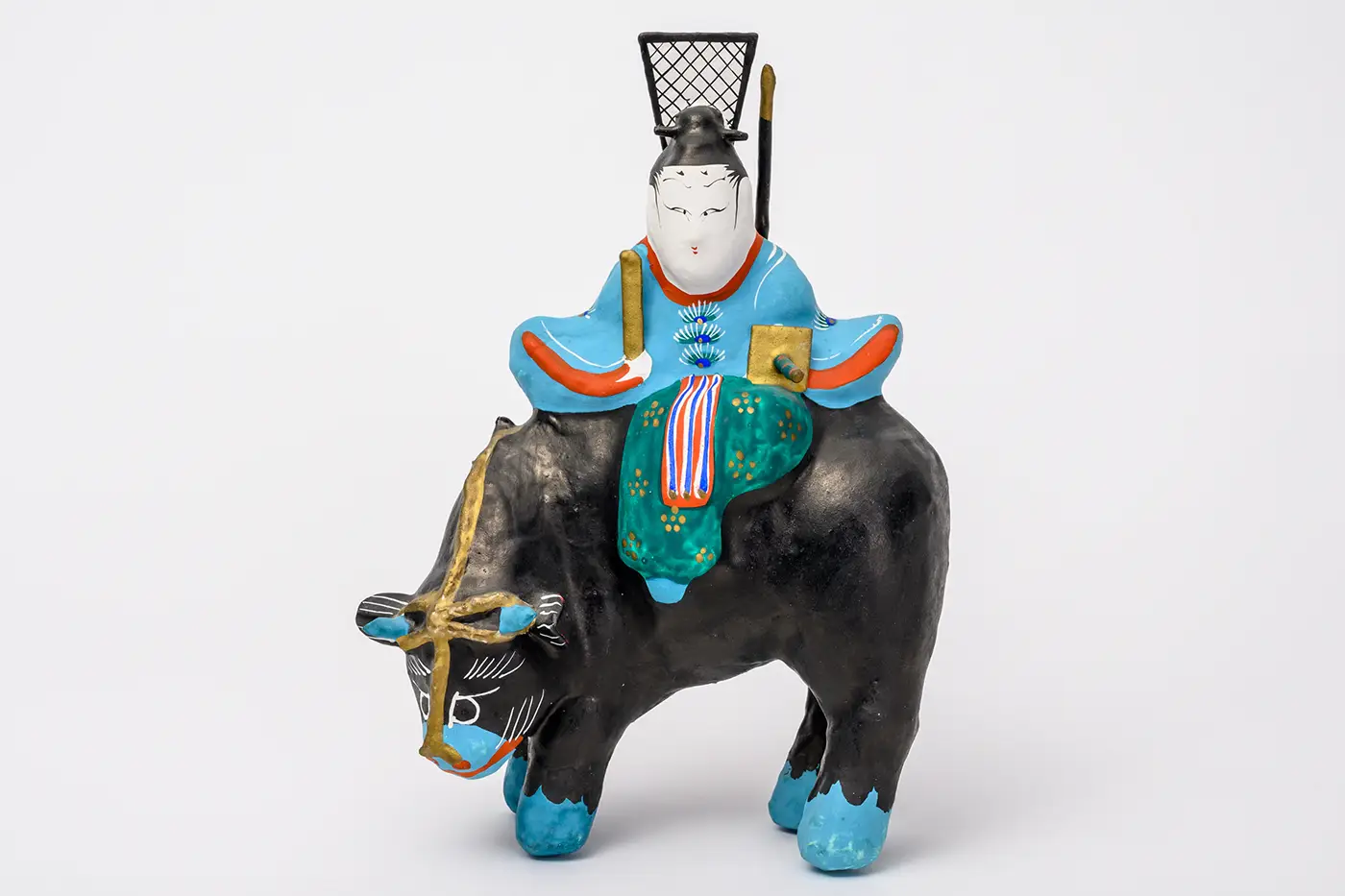
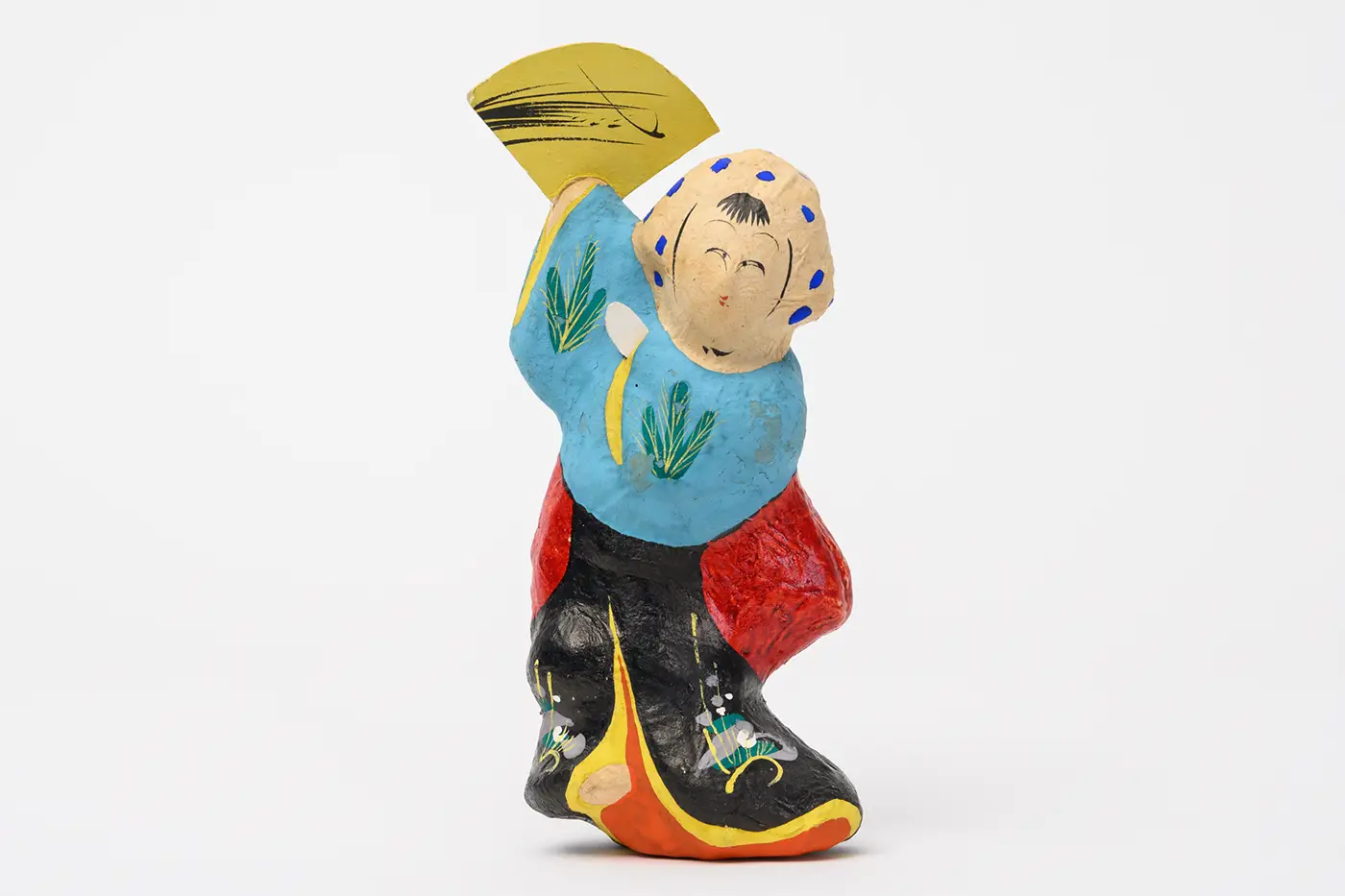
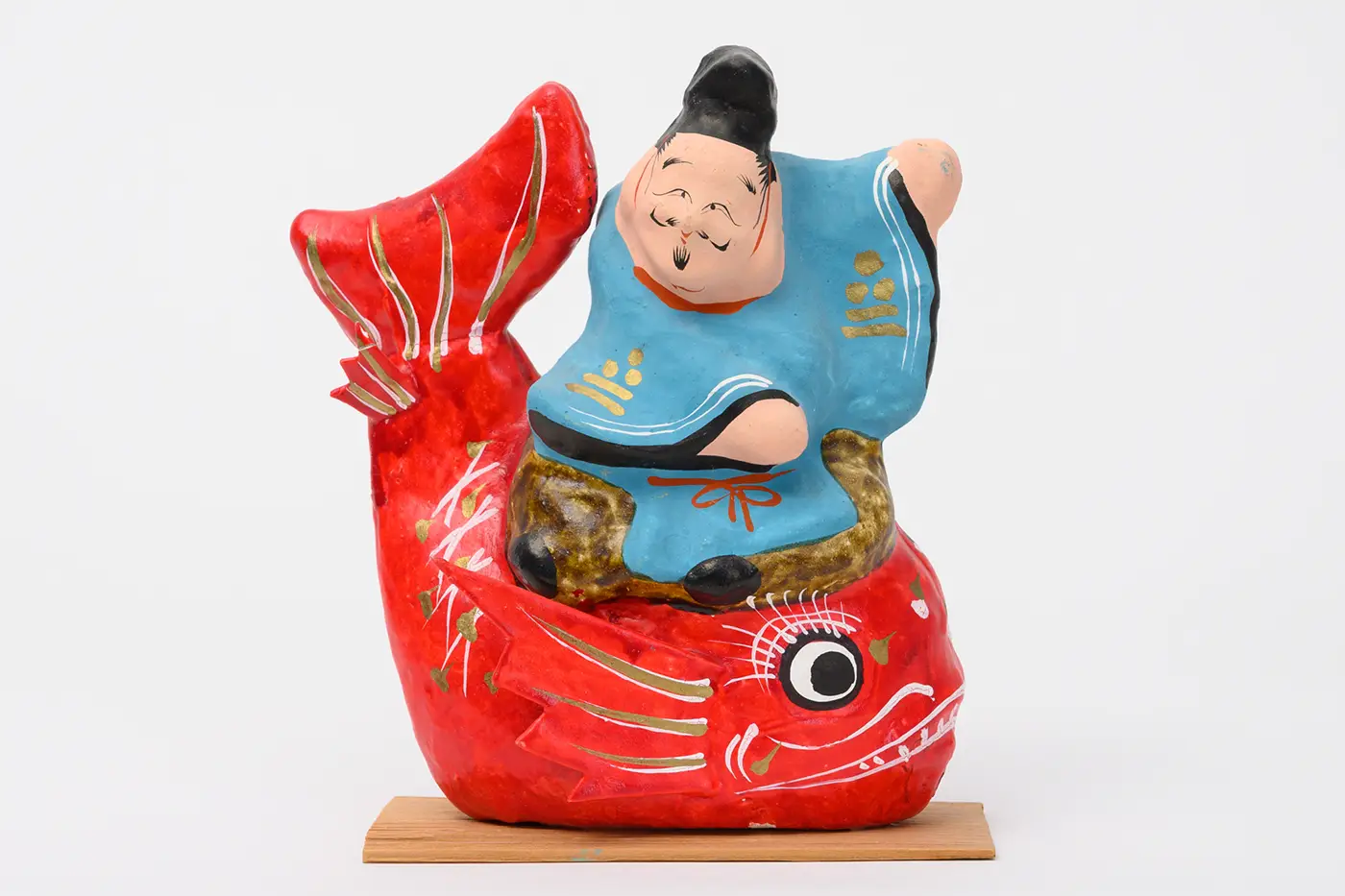
Samurai on water buffalo, dancer with fan, dancer on red fish. Photos by Sonya Pencheva, Ralph Rinzler Folklife Archives -
-
Generations of the Hashimoto family have made hariko since the Edo period (~1603-1868). For a related entry—and update on the Hashimoto family—see the daruma figure in this exhibition.
