

Festival Embroidery
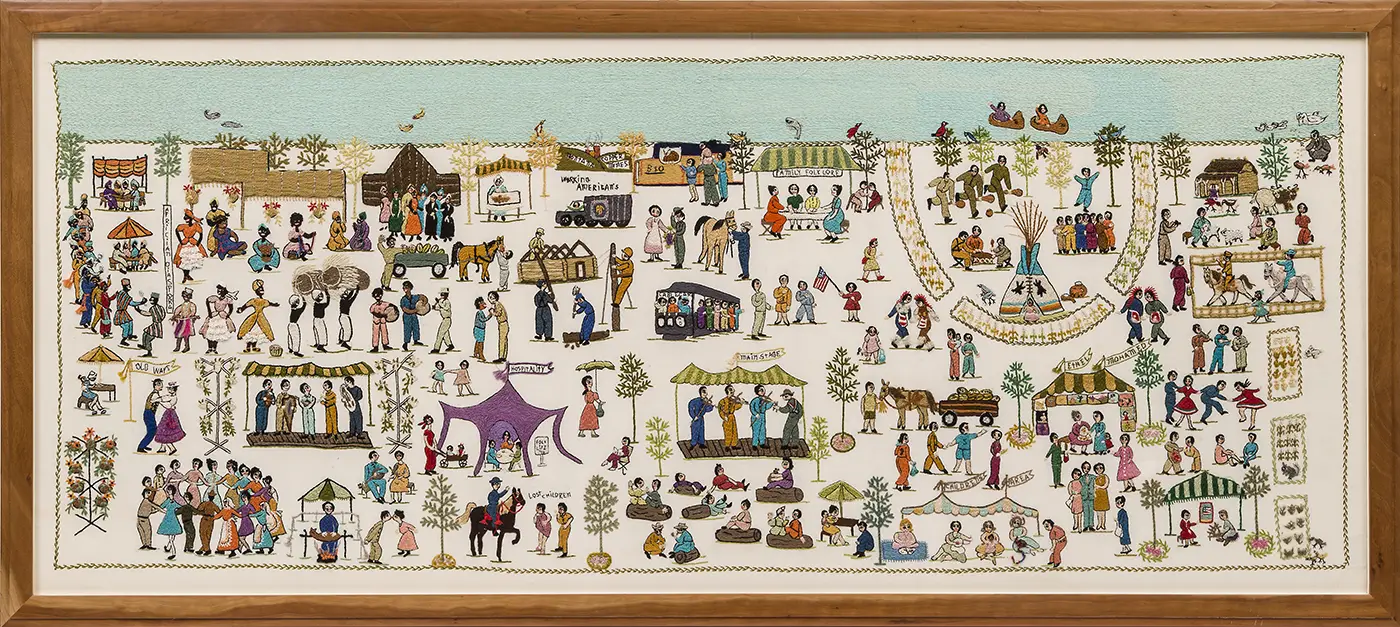
Envisioning a bird’s eye view of the 1976 Bicentennial program
“The lovely thing about this piece is that it reminds me of people. We brought in a cable car (for Working Americans) and had guys from San Francisco who rang the bells. They all had their own distinctive kind of pattern ring. I can hear those sounds again when I look at this…”
Working with the Folklife Festival designer to plot the layout of the 1976 Bicentennial program, Ethel Mohamed sketched and then stitched a remarkable prediction of the great American celebration set to unfold on the National Mall. The Festival spanned three months and included a large roster of participants who cycled in and out of Washington every week for twelve weeks. In addition to the core Festival areas, Mohamed stitched lively tableaus throughout: children playing, a couple kissing, a rabbit sneaking lettuces. The final embroidery is five feet long and hews to the plan so well its program elements can still be easily deciphered.
-
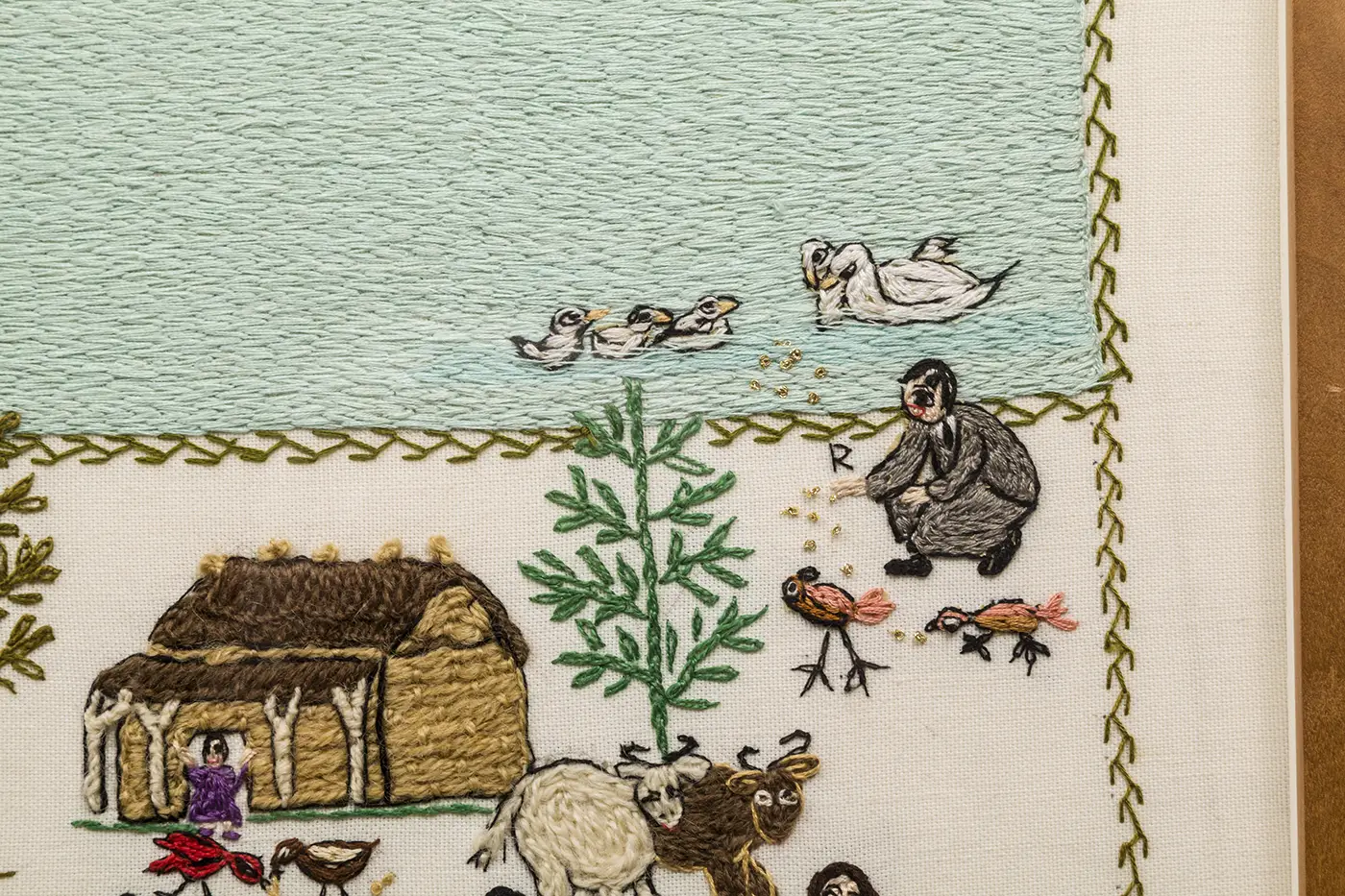
Smithsonian Secretary S. Dillon Ripley feeds ducks at the Reflecting Pond. Photo by Zvonimir Bebek, Ralph Rinzler Folklife Archives -
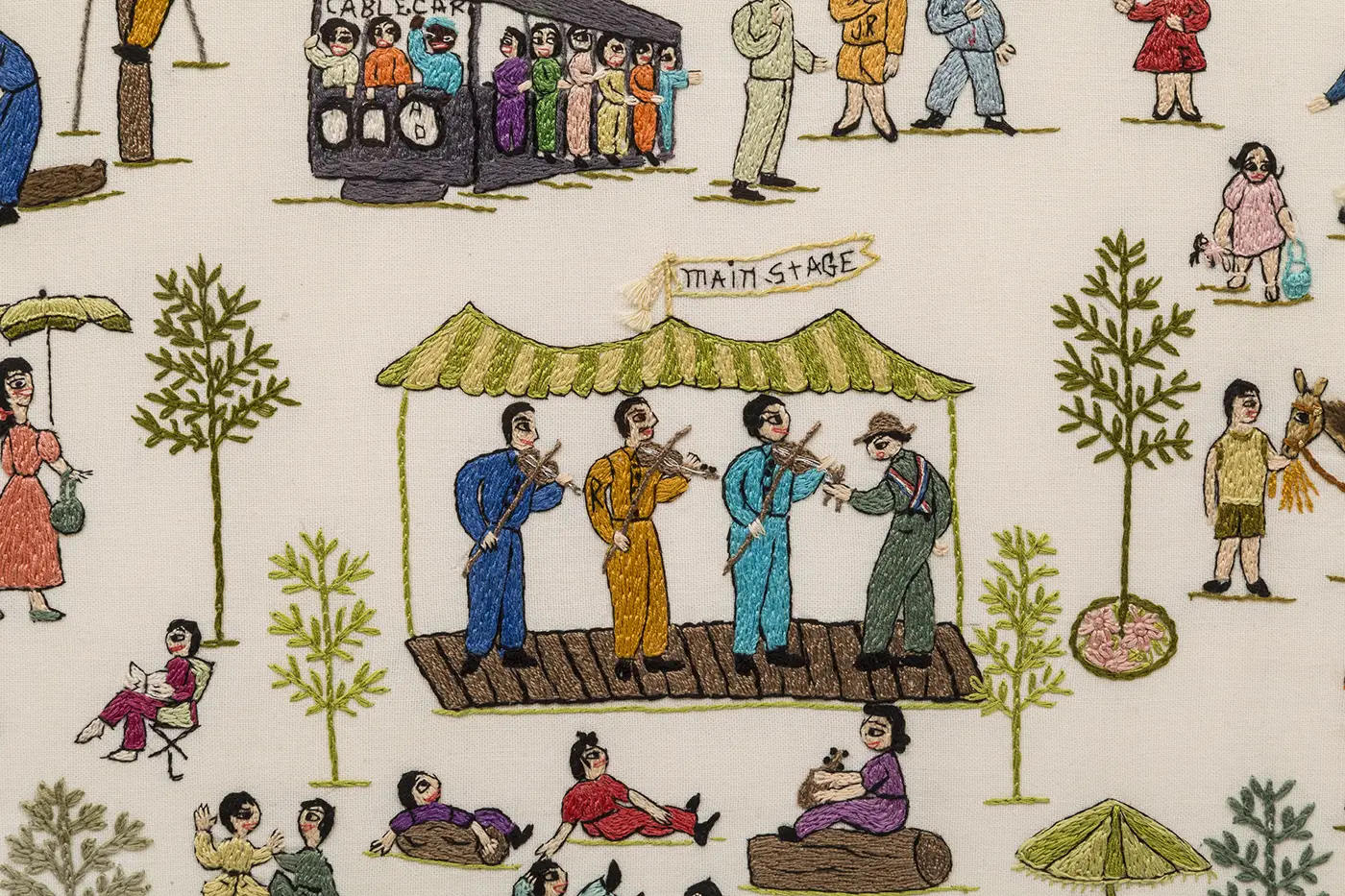
Ralph Rinzler plays on the Main Stage second from left. Photo by Zvonimir Bebek, Ralph Rinzler Folklife Archives -
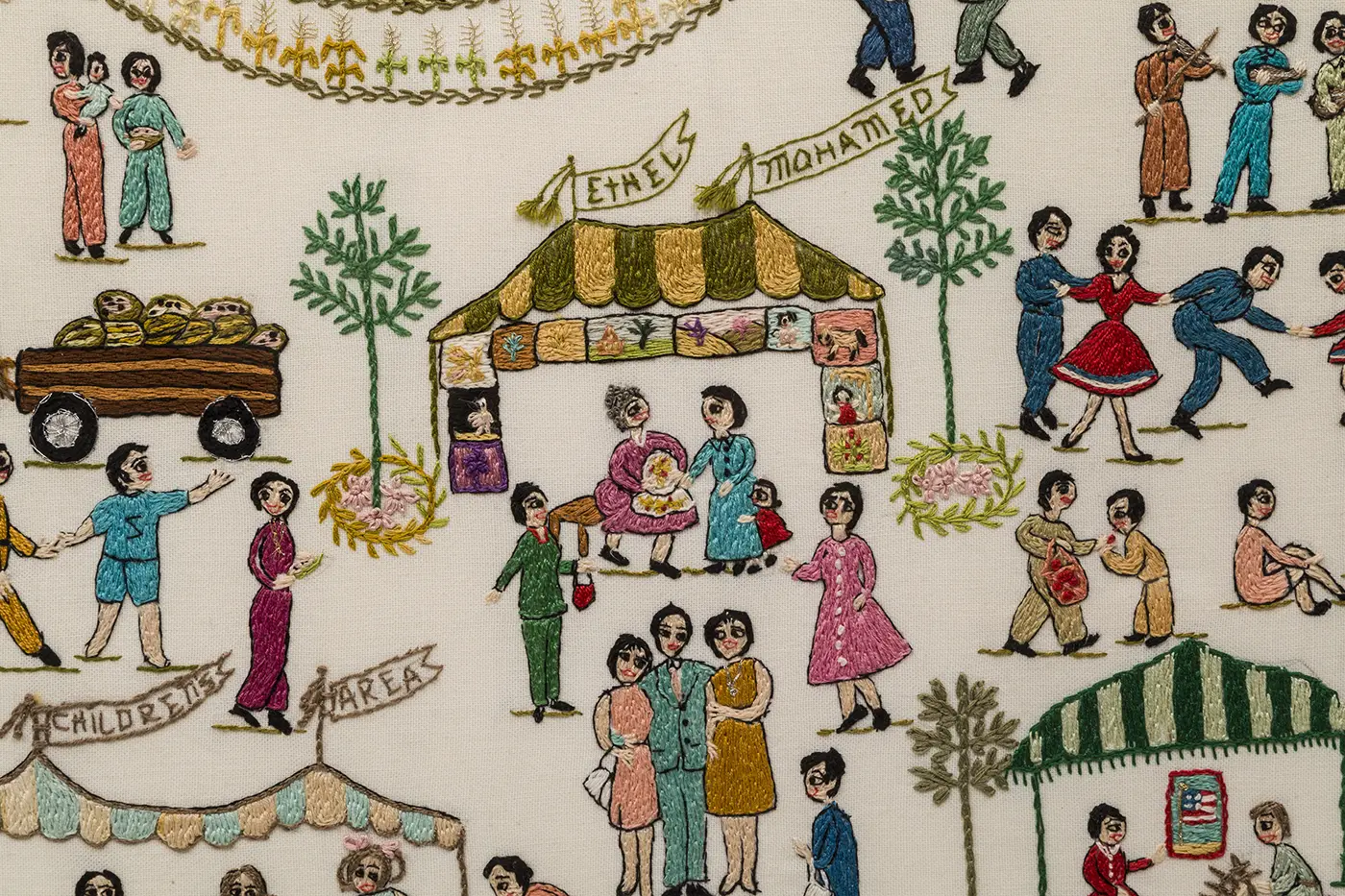
Ethel Mohamed works on an embroidery in her tent. Photo by Zvonimir Bebek, Ralph Rinzler Folklife Archives
As a creative endeavor, Mohamed’s memory picture is a beloved object at the Center for Folklife and Cultural Heritage and new details are noticed on almost every viewing. Two figures central to the Festival’s history are included: Smithsonian Secretary S. Dillon Ripley—who enthusiastically supported founding director Ralph Rinzler’s plans to create an event to give voice to the country’s traditional artists—kneels in the upper right corner to feed some hungry ducks. It is a clever nod to his academic field of ornithology. Down front and center, Rinzler plays a fiddle on the mainstage, identified by an “R” on his right sleeve. Mohamed herself sits under a tent, stitching yet another memory picture. This engaging piece is a tour de force of narrative embroidery that not only reflects Mohamed’s special talents but conveys her love of the Festival community that embraced her so warmly each time she came to Washington.
