Turkish Çini
-

The 2002 Silk Road program occupied the entire Festival site and attracted upward of one million people over ten days. Ralph Rinzler Folklife Archives
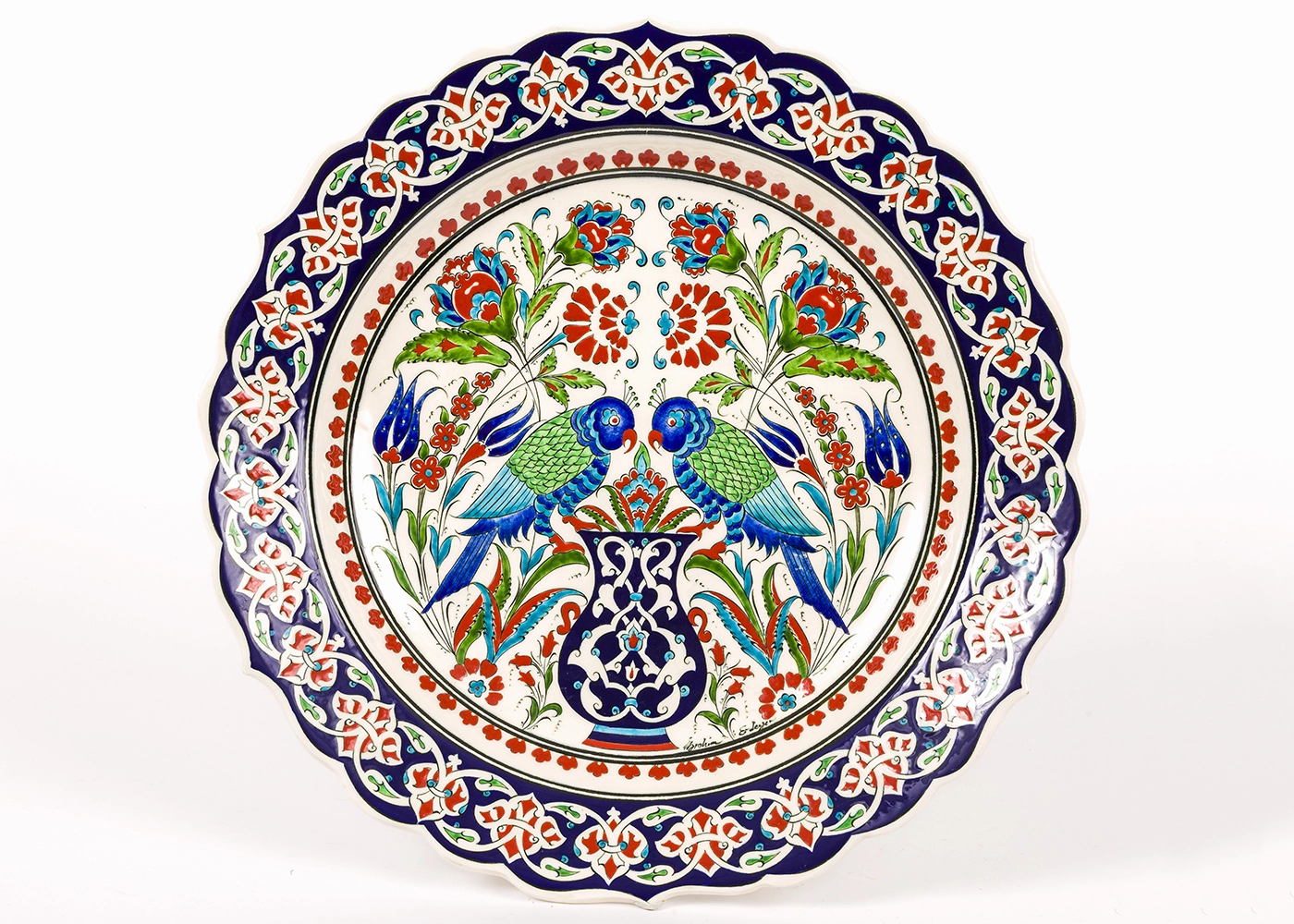
Turkish çini —a white-bodied ceramic ware—continues to flourish in Kütahya today
Renowned folklorist and scholar of material culture, Henry Glassie, has written extensively on Turkish ceramics, and served as an advisor to several Folklife Festival programs, including The Silk Road in 2002. He spent years visiting and living in Türkiye beginning in 1982, and in 1993 published the definitive Turkish Traditional Art Today. As an advisor to the 1986 Festival program on “cultural conservation,” he contributed “A Lesson on Turkish ceramics” to the program book.
In that he notes that Turkish potters initially emulated the blue-and-white porcelain of Jingdezhen, China some 500 years prior, “they made it their own, adding new colors… and pushing the designs toward natural form and Islamic reference.” Further, “Each piece has absorbed the effort of eight to 20 people, of boys who mix mud, masters who turn the plates, mind the kiln, who mix and apply the lead glaze, women who paint, men who sell.”
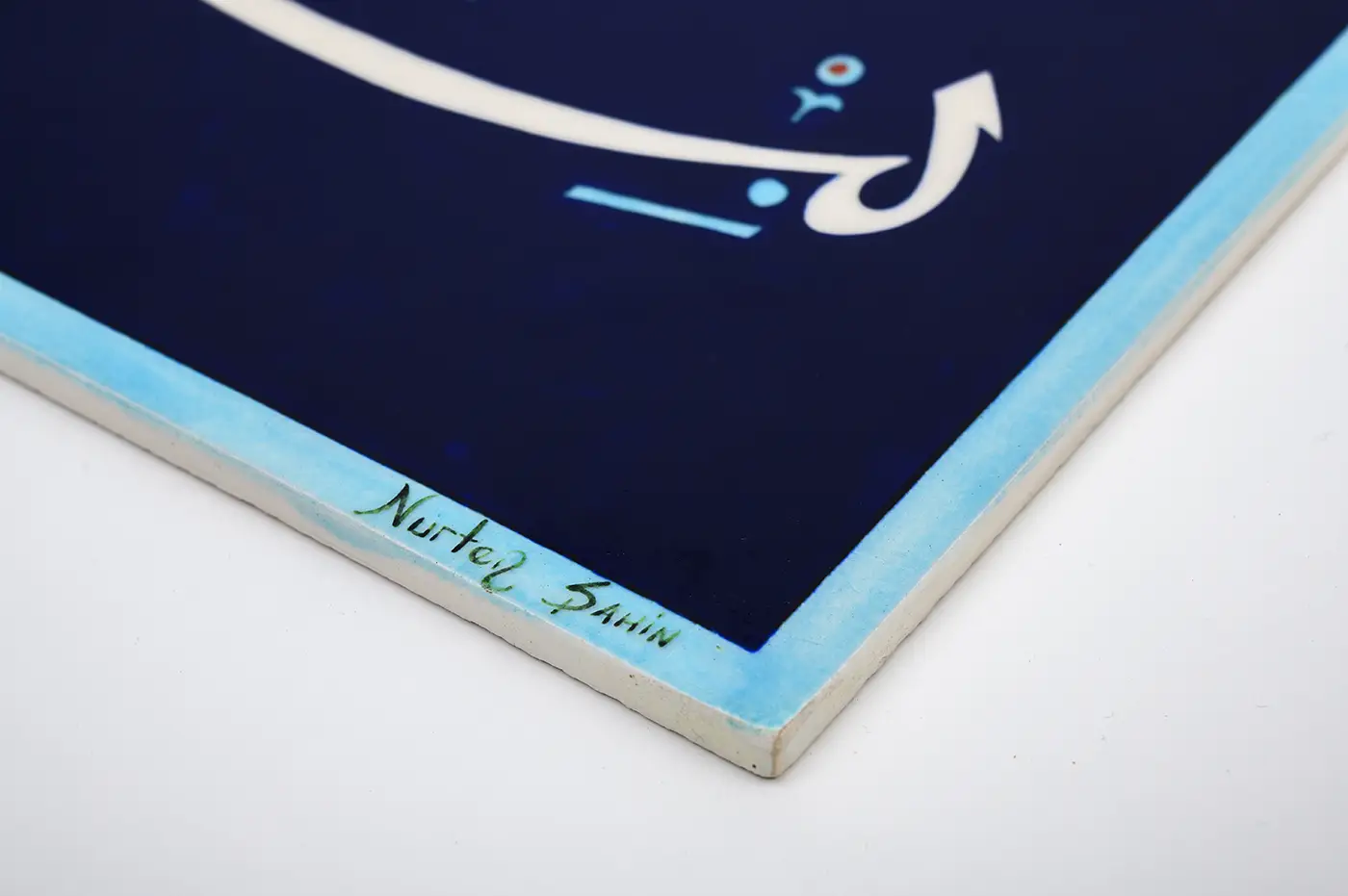
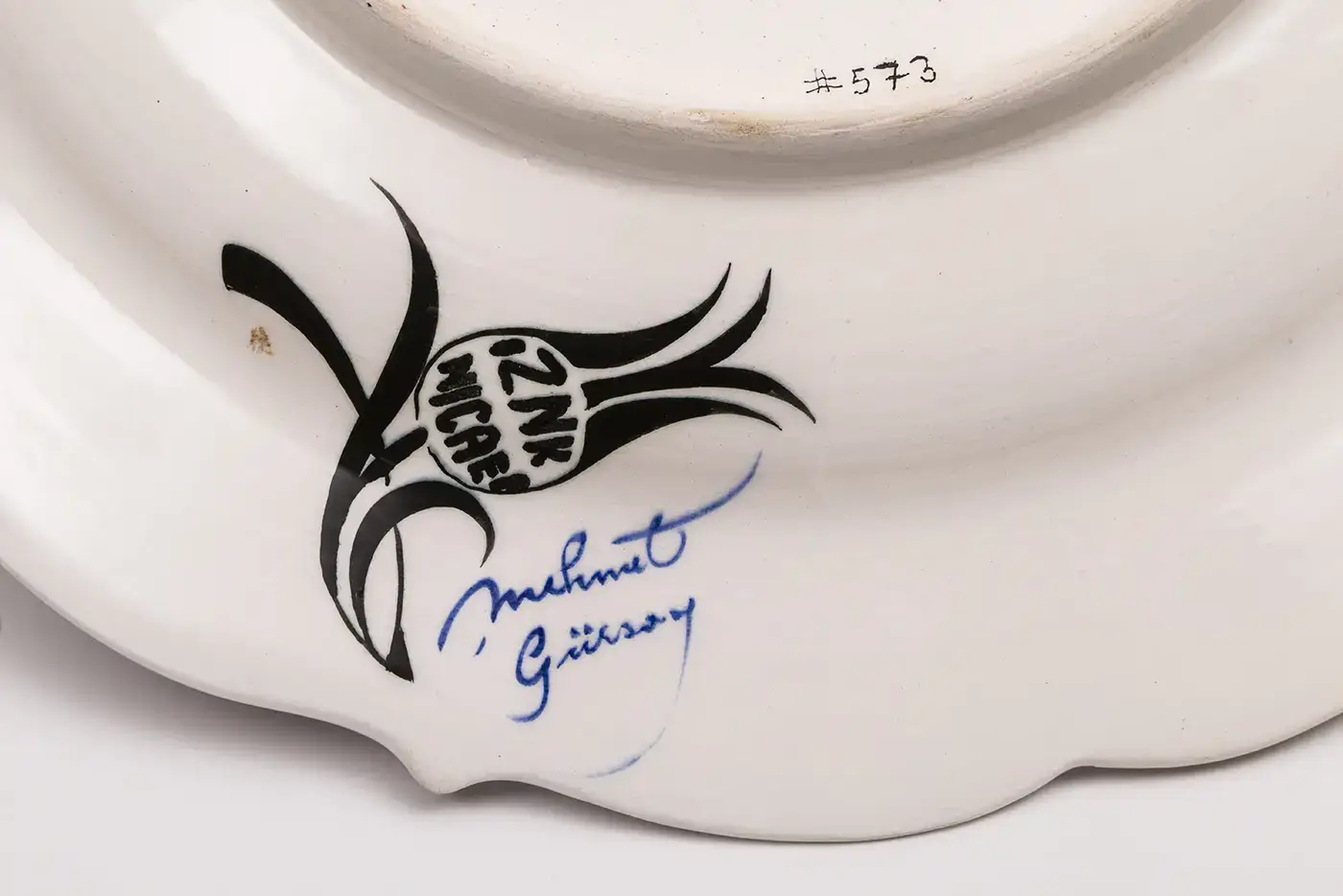
Three of the master artisans Glassie engaged with in the mid-1980s participated in the 2002 Silk Road program: İbrahim Erdeyer, Mehmet Gürsoy, and Nurten Şahin—all of whose work is included in this exhibition. İbrahim Erdeyer, whose white plate is featured here, was born in 1960 and trained at the side of his father, İhsan Erdeyer, master of Süsler Çini. He went on to become head of production and sales and continues to create and sell new designs.
-
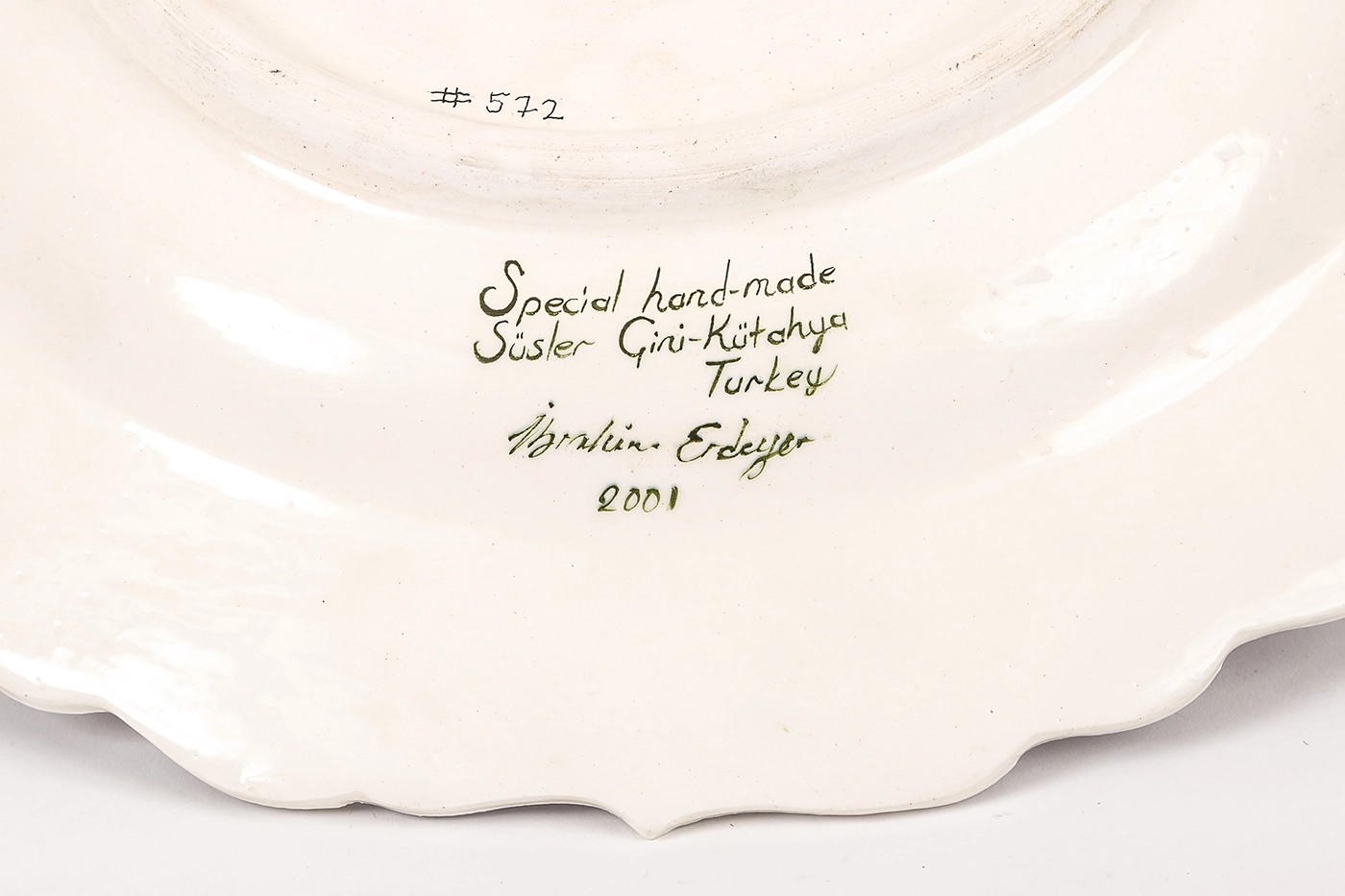
Signatures Photos by Zvonimir Bebek and Sonya Pencheva, Ralph Rinzler Folklife Archives -
-