

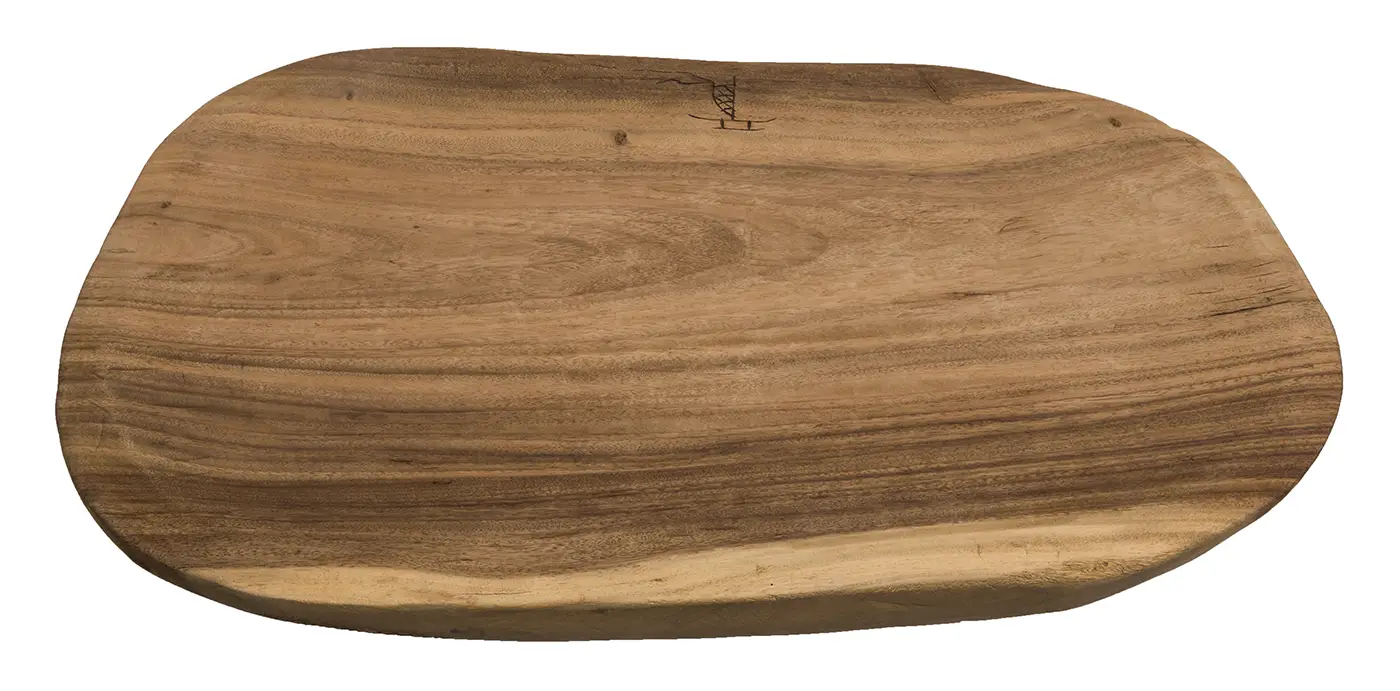
Poi Pounding Board
The language is how we communicate to our universe
The 2013 Festival’s One World, Many Voices program highlighted endangered languages and cultural heritages. Language embodies nothing less than what program curators called the “human knowledge base”—everything people know about themselves and the world. The program put a human face to the prediction that, without intervention, up to half of the world’s 7,000 languages spoken today may disappear this century.
The recovery of the Hawaiian language is one of the success stories: there are now over 10,000 speakers of Hawaiian, five times more than in the 1970s. As curator K. David Harrison noted, “This was done with great effort, and through the introduction of immersion schools that raised a new generation in the language and traditional arts: celestial navigation, kalo pounding, canoe building, storytelling, and hula.”
Making poi involves mashing boiled taro root (kalo) into a paste, using a stone pounder. For cultural educator Earl Kawa‘a, the process is much more than making food: it involves Hawaiian deities, taking care of the land, and learning to live a responsible life. He teaches students how to plant and tend the taro, prepare the tools, make the kalo, and honor the ancestors—in Hawaiian. At the Festival, he and other participants engaged many visitors in helping to carve the stone pounder and kalo pounding board.
-

Making the tools. Photo by Michele Arbeit -
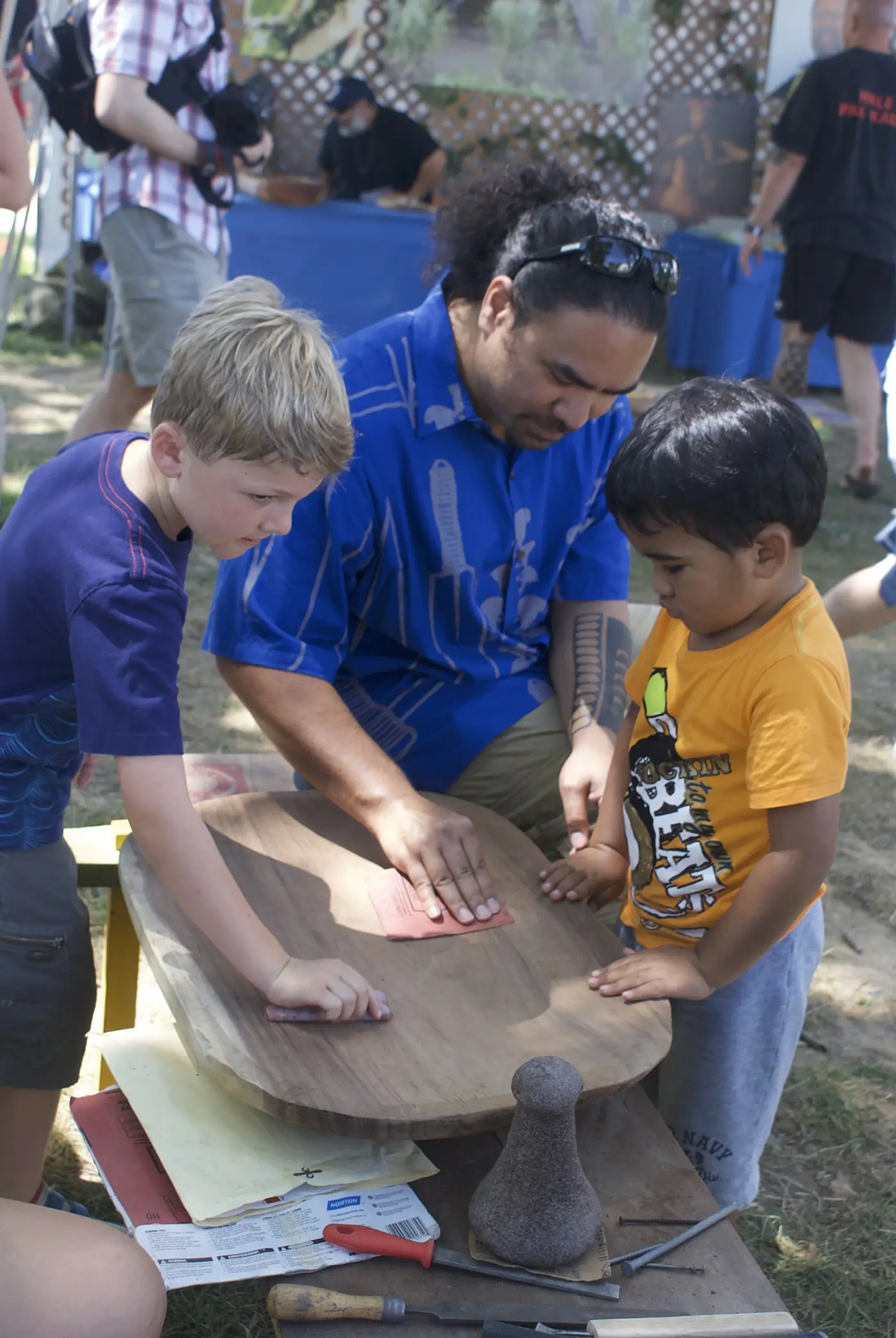 Photo by Caroline Angelo, Ralph Rinzler Folklife Archives
 -
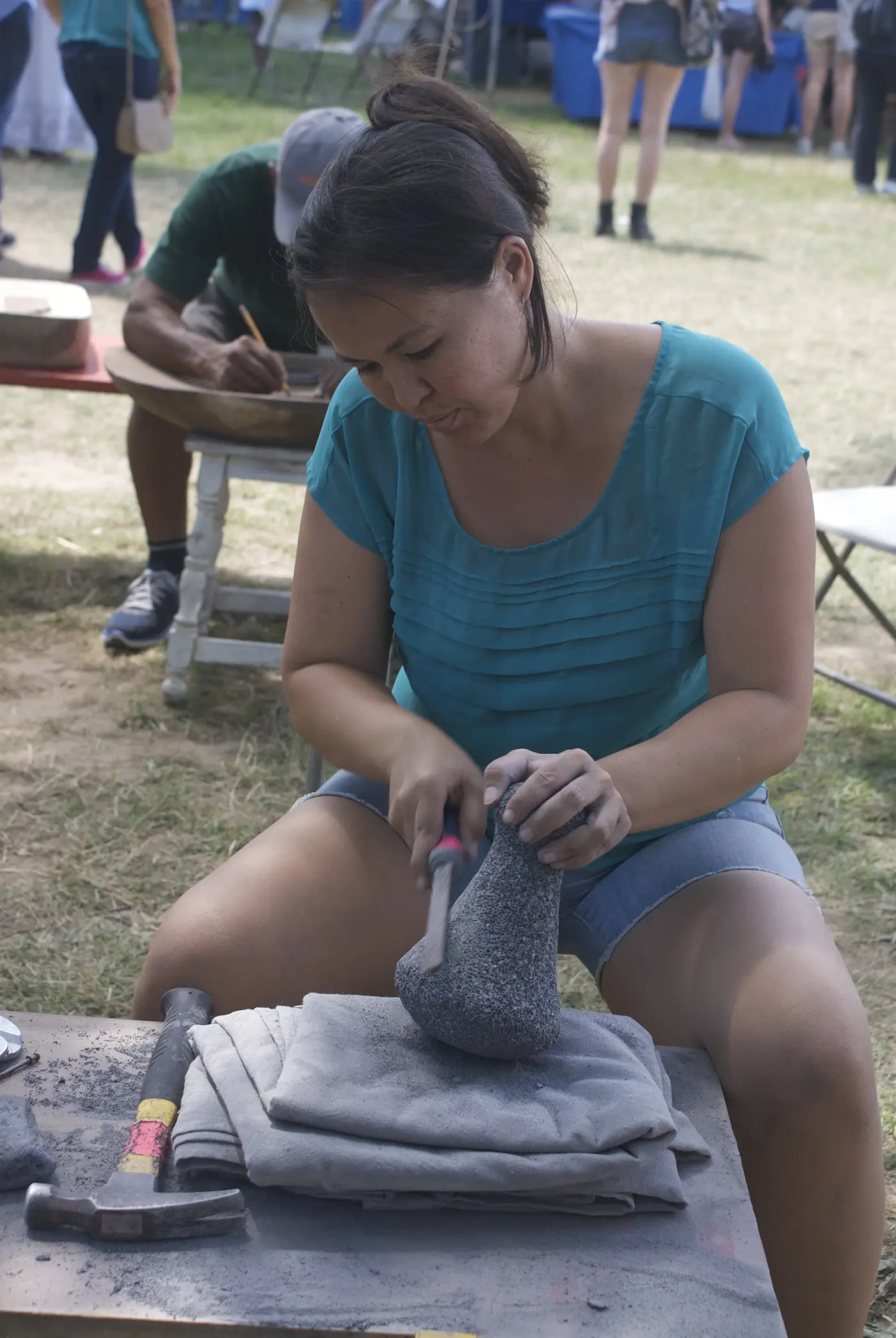 Photo by Caroline Angelo, Ralph Rinzler Folklife Archives
-
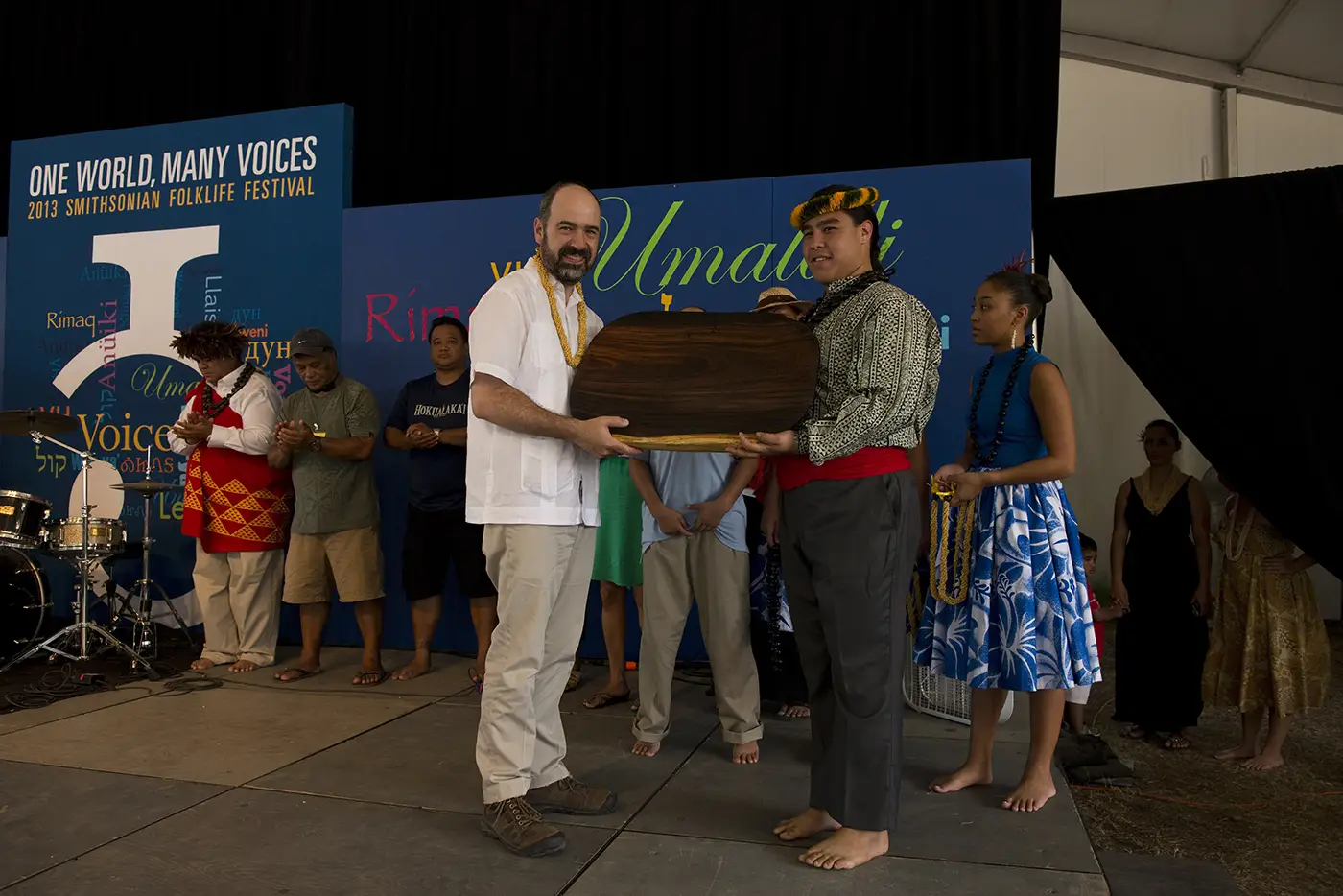
Presentation of the poi pounding board to the Center for Folklife and Cultural Heritage. Photo by Walter Larrimore, Ralph Rinzler Folklife Archives
As Michael Mason was called up on stage by the Hawaiian delegation, a shell lei was placed around his neck, and he was presented with the finished poi pounding board. He recalled:
“Earl made an elegant speech about the fact that the poi pounding board is the foundation of Hawaiian culture. It’s the base of their culture because poi is the most fundamental food that people have. He then spoke about how language and culture tell people where they come from—and that they need to know this to know where they are going.”
-
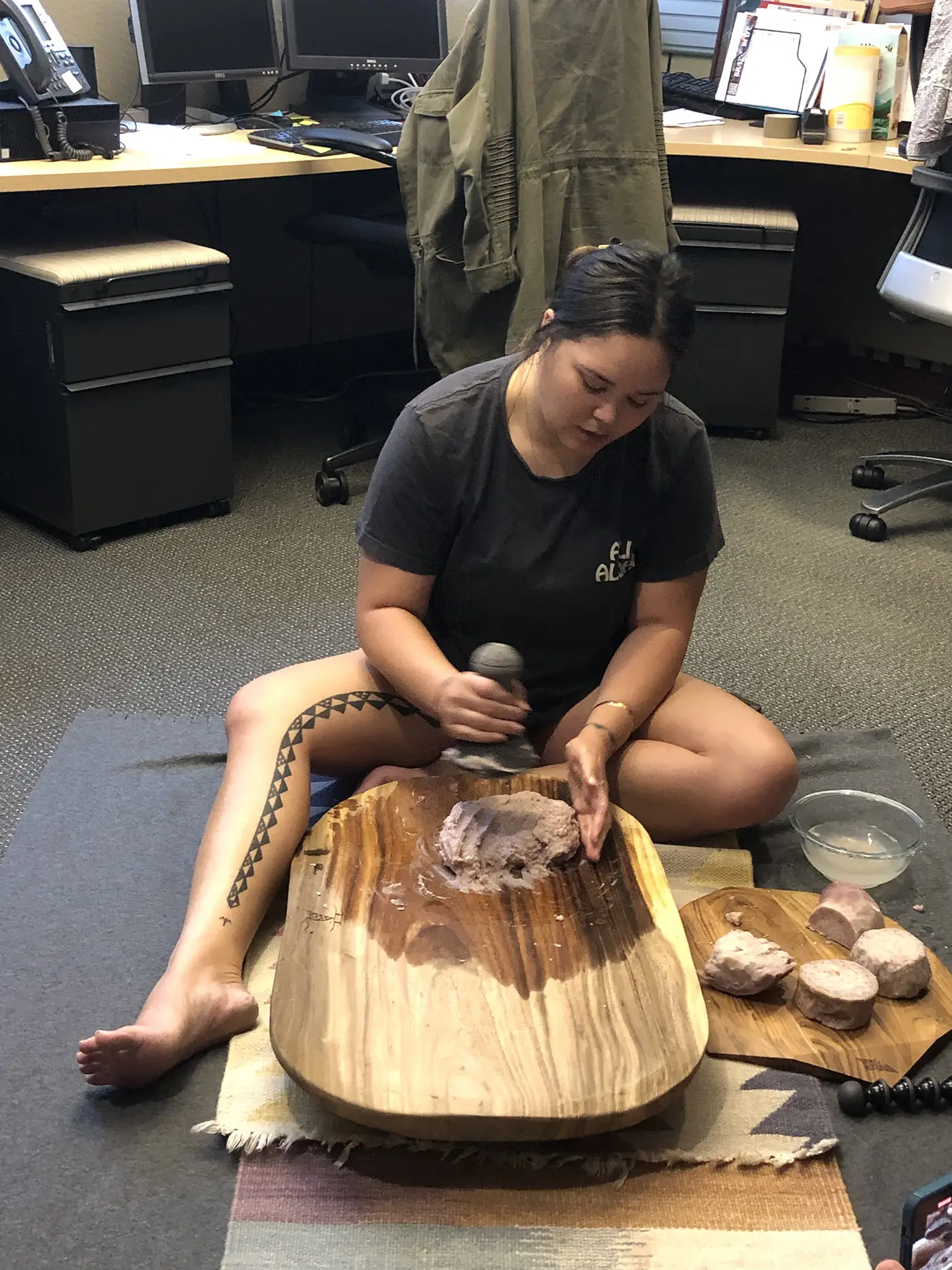 Photo by Erin Younger
In 2023, the poi pounding board was again used at the Festival, this time by summer intern, La‘akea Ai, who demonstrated to staff how to mash cooked taro root in advance of the Creative Encounters: Living Religions in the U.S. program.
