

Patachitra
Washington, D.C., through the eyes of a Bengali artist
In 2018, the Center for Folklife and Cultural Heritage participated in a State Department-funded cultural exchange program called Communities Connecting Heritage. The project paired young Americans with artists and cultural workers around the world. Our project connected us with BanglanatakDotCom in Kolkata for a two week visit to West Bengal, a virtual exchange, and a three-week visit to Washington for three Bengali artists and two staff to overlap with the Smithsonian Folklife Festival.
-
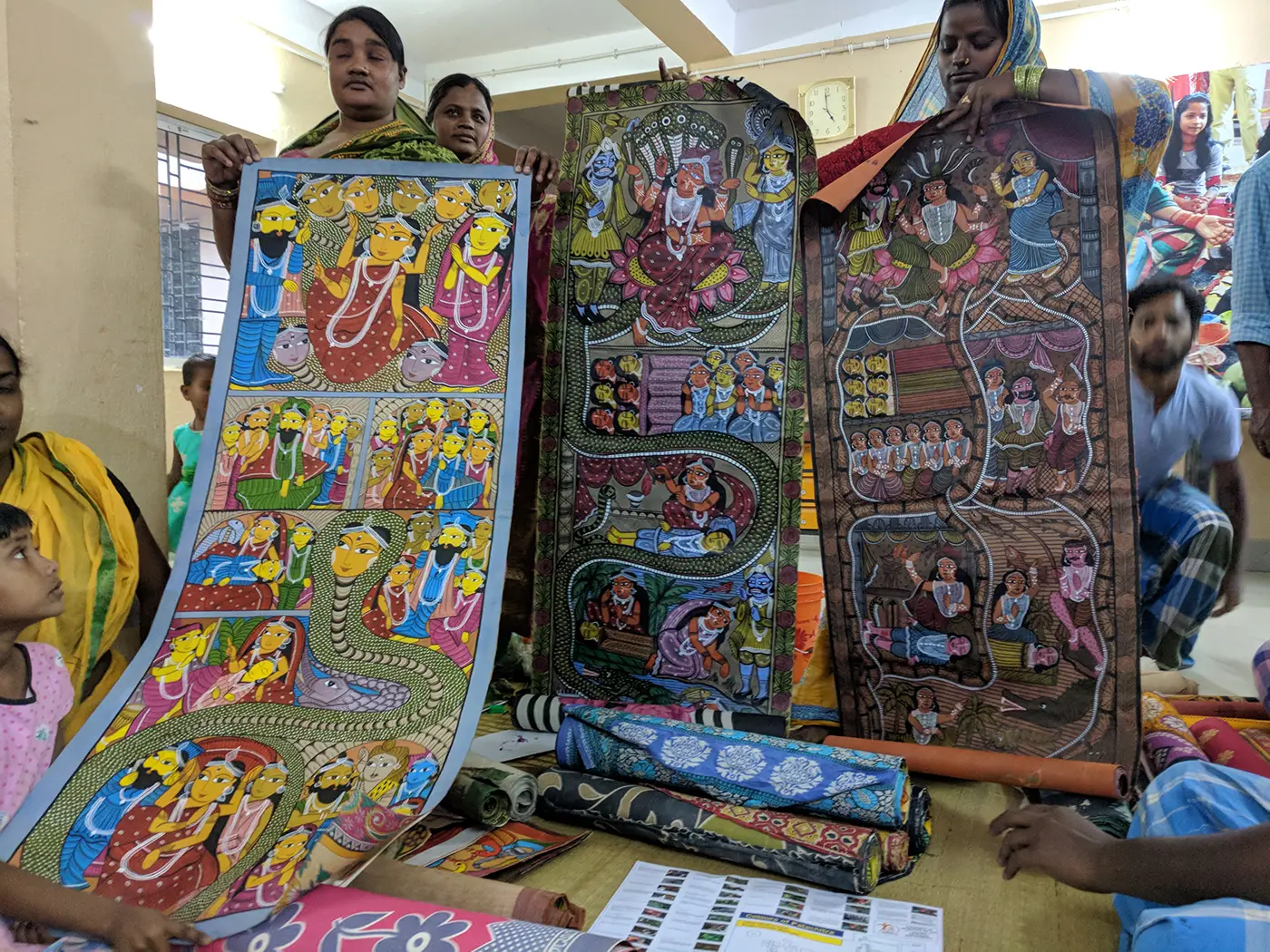
Artists unfurl their scrolls at Naya Village, 2018. Photo by Betty J. Belanus, Smithsonian
During our visit to India, one of the first stops was the scroll-painting village of Naya, about sixty miles outside of Kolkata. There we met with artists and singers who have carried on the centuries-old tradition of patachitra—making long cloth-backed paintings of religious stories and composing songs to describe each scene. Such scrolls and their songs are still used as a form of street theater, though new content from world events and social commentary have been added to the repertoire. In 2018, the National Mall in Washington, D.C., became another subject.
-
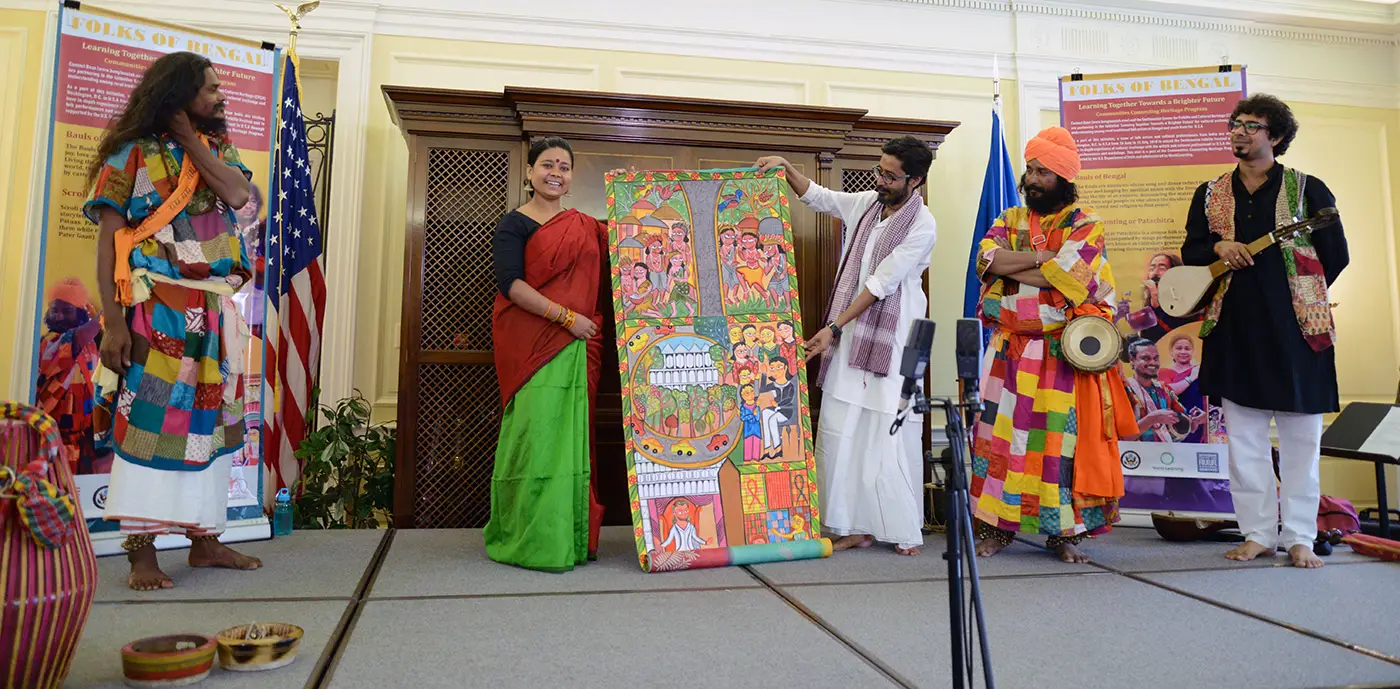
Mamoni Chitrakar and the rest of the Bengali team at the Library of Congress. Photos by Betty J. Belanus, Smithsonian -
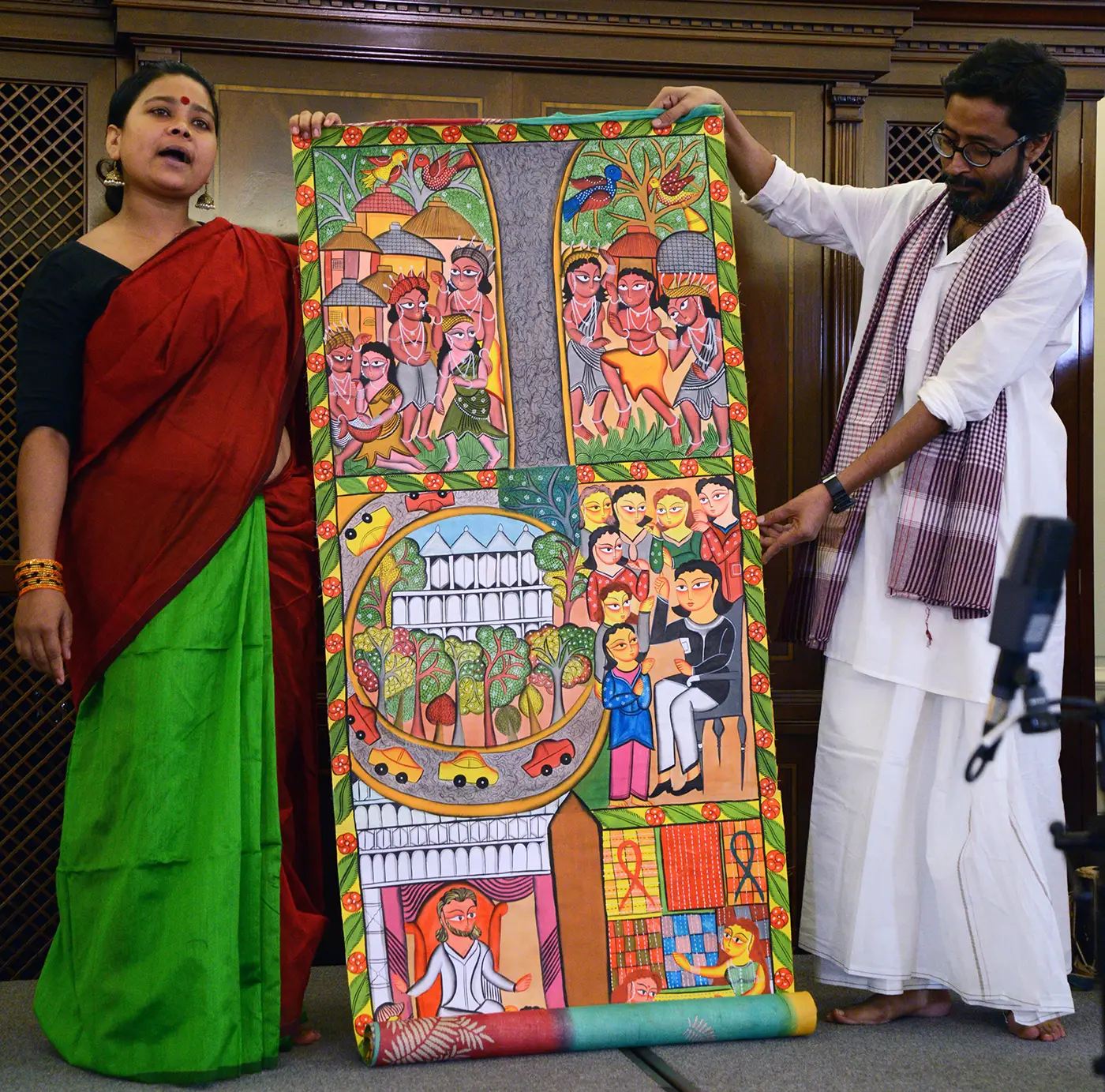
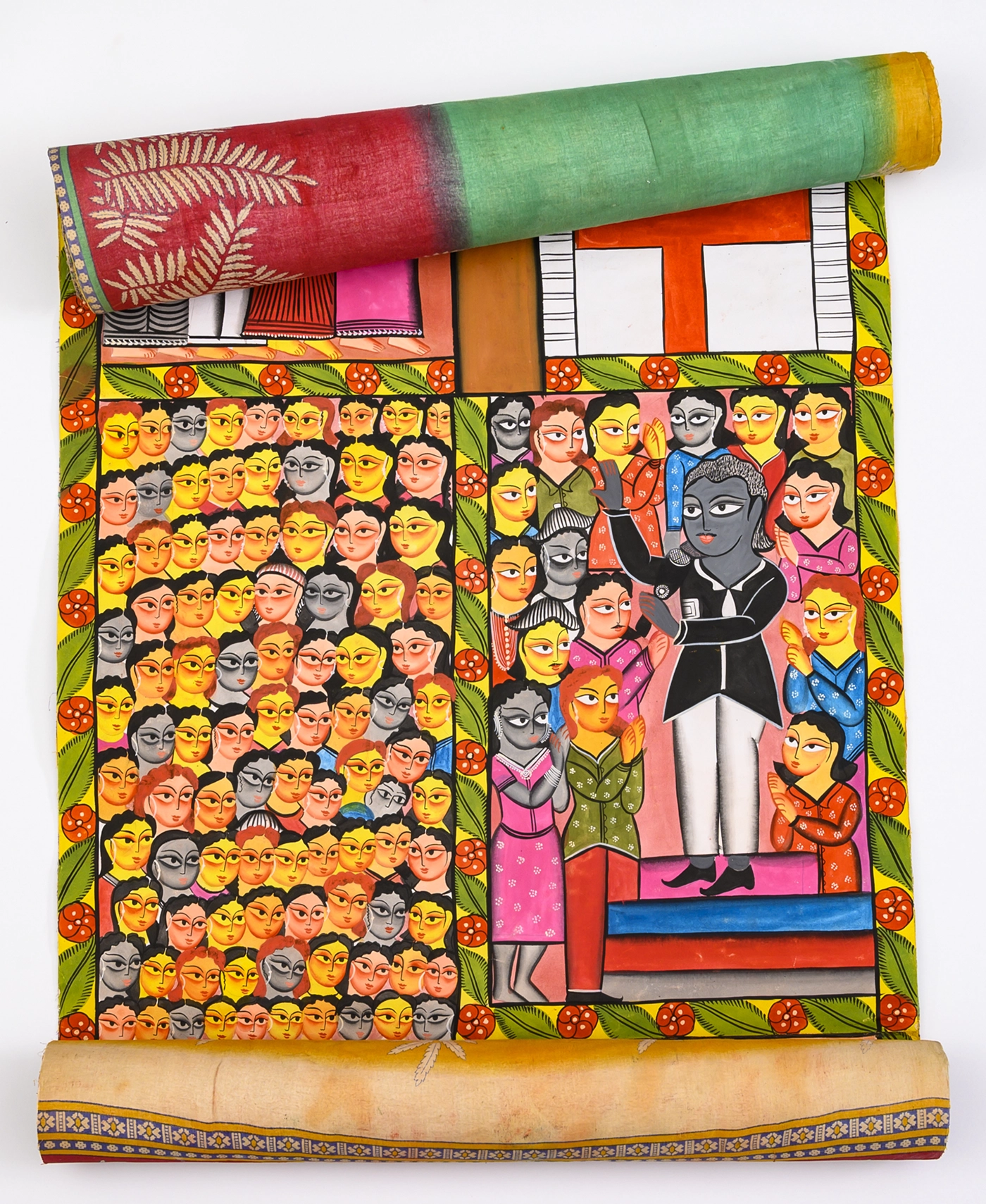
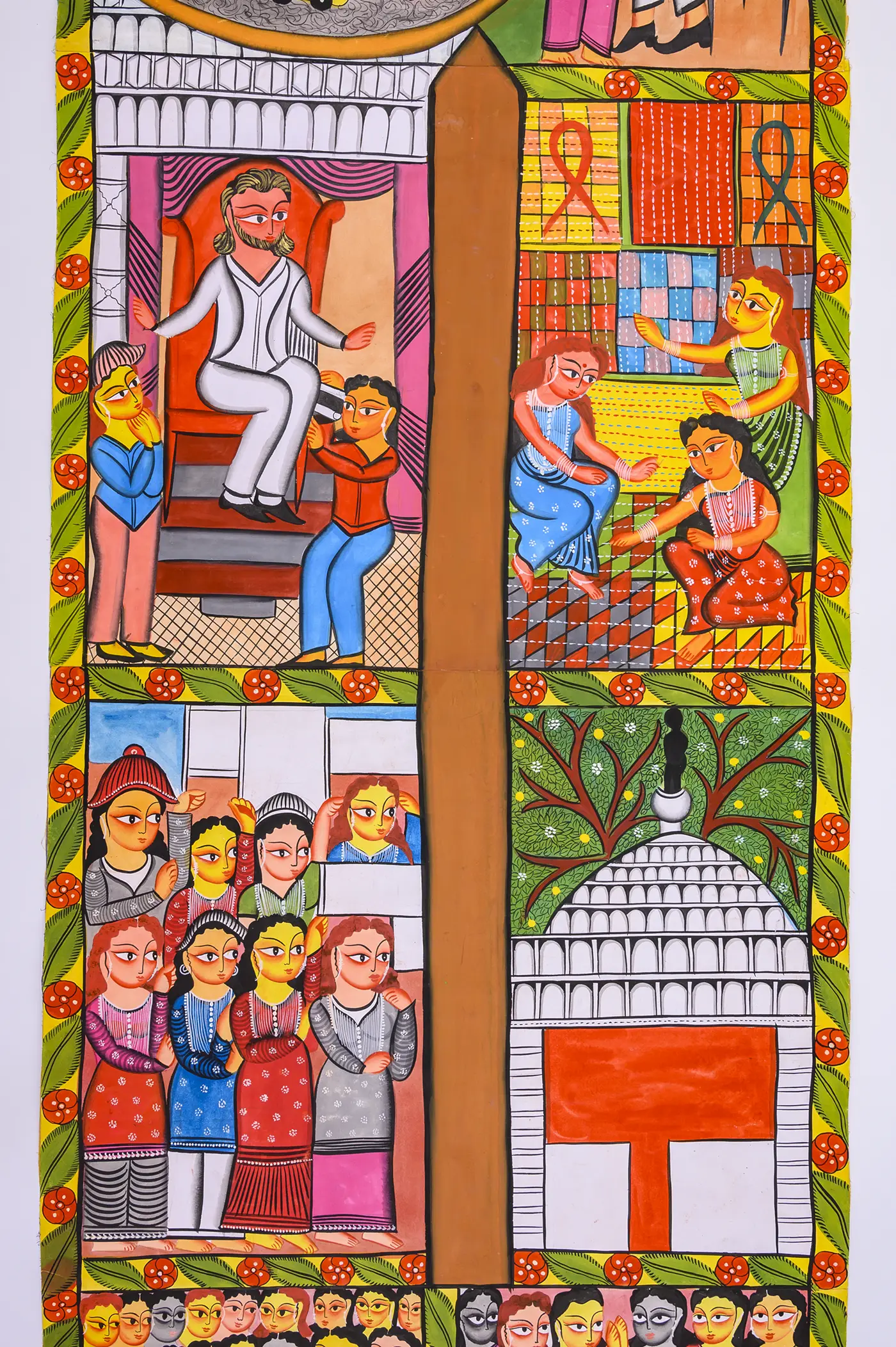
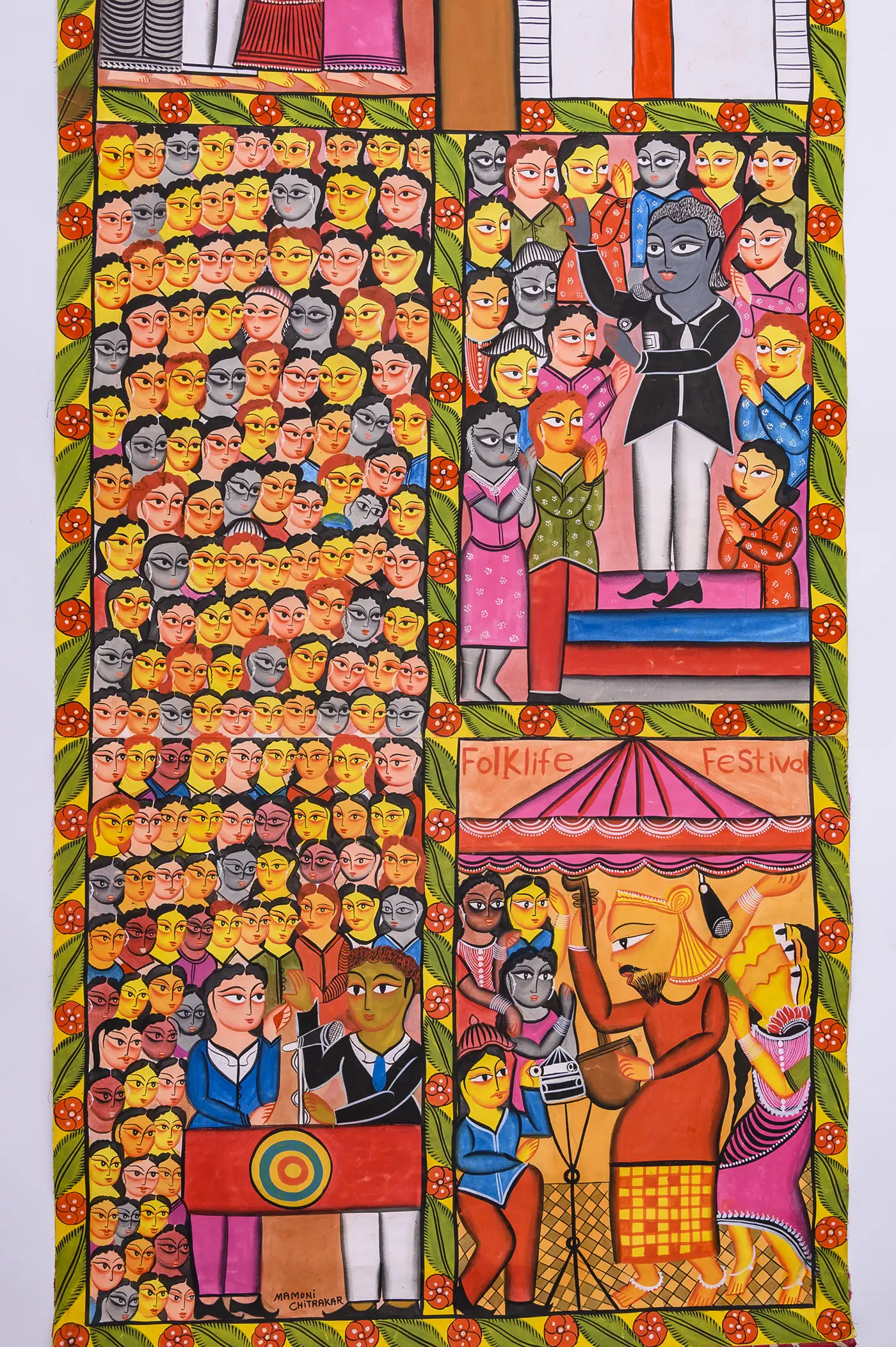
One of the young painters we met in Naya—Mamoni Chitrakar—would become the emissary of a special scroll created during the cultural exchange, “a story about Washington, D.C.” We were very excited to see the result when the Bengali group arrived in June. Chitrakar, whose mother is a world-renowned scroll painter and singer, really came into her own presenting the scroll around the area—including in the beautiful Whittall Pavillion of the Library of Congress. The scroll depicts the history of the National Mall through a lens of vividly colored scenes and stylized monuments. In English translation, it reads like an epic poem of American history, inviting people of the world to meet “and get to know one another better” on the National Mall—and at the Smithsonian Folklife Festival.
-
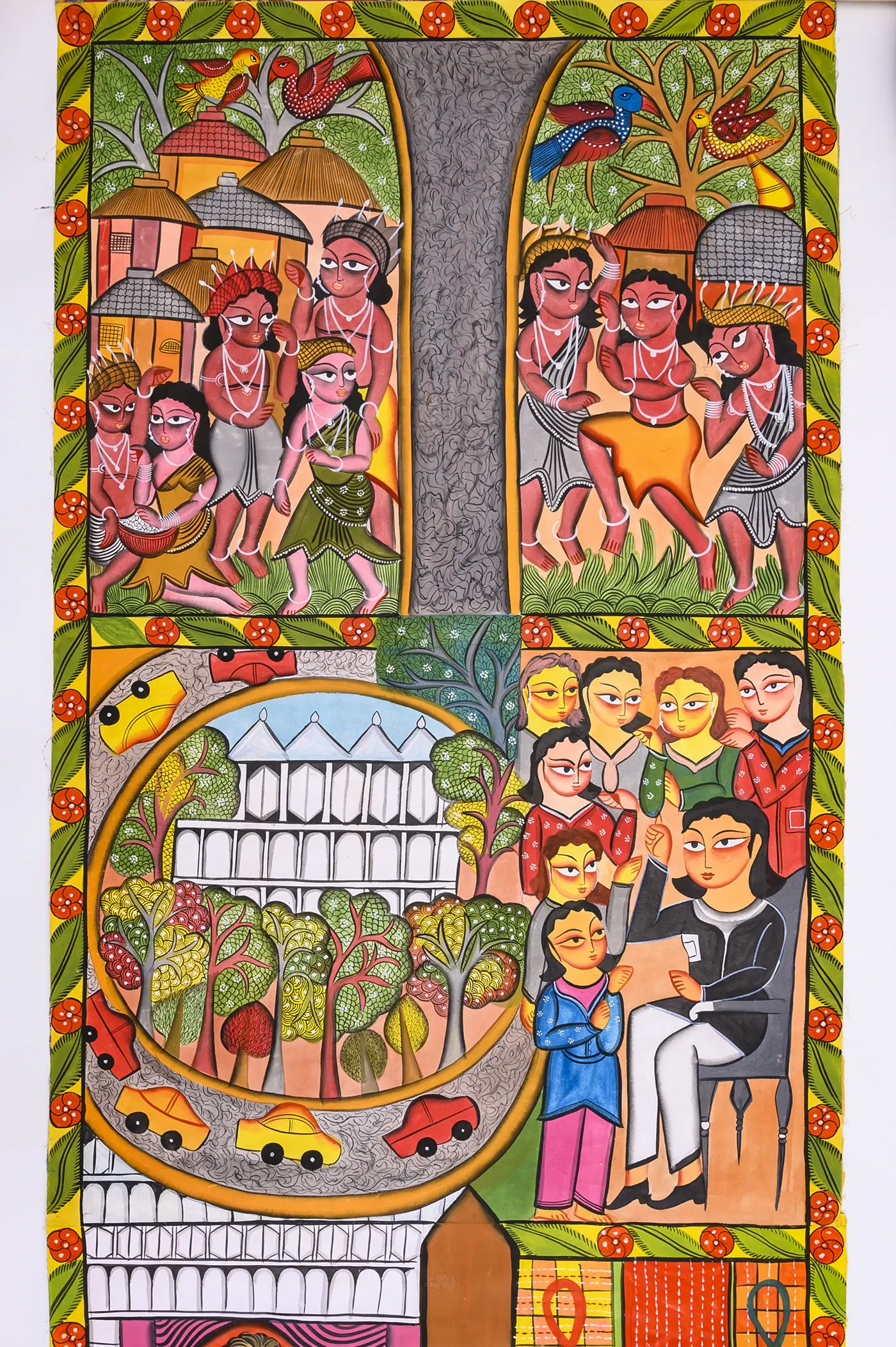
The scroll from top to bottom (left to right). Photos by Sonya Pencheva, Ralph Rinzler Folklife Archives -
-
Come one, come all
Let us tell you the story of the Washington Mall
Oh! Listen one, listen all
This place was once home to the Natives
Native American folks, dear all,
But then came the whites, the Europeans,
And they soon captured all the land,
Dear all, oh! Listen one, listen all
Oh! Listen one, listen all,
Three kilometers in all is the distance
Covered by the Mall
And to the east is the Capitol Building
And to the west is the Lincoln Memorial
With a string of trees in between
With their long shades
It is a beauty to behold
And cherish forever, dear all!
Yes, we are talking about the
Washington, D.C., Mall!
And it was here in 1900
That women first raised their voice
To have the right to vote, dear friends, dear all,
And the women never wavered from their call
It was here dear friends
All here in the Washington, D.C., Mall
In the year 1963
It was here that the famous rights leader
Martin Luther King Jr. gave the call
To end racism and build a world of
Peace and harmony for once and for all
Oh! Listen dear friends, listen one, listen all
Let us cherish and remember this history
Dear friends, oh! Listen one, listen all
National Mall patachitra
And it was here in 2008
That America’s first black president, Barack Obama,
Put in his weight and gave the nation his call
With teeming crowds of people all over to listen
Oh! It was here, dear friends, oh! Listen one, listen all!
And today, it is here
That we see and discover so many cultures
Like in a melting pot
Right here in this Washington Mall
With artists from Armenia and Catalonia
And crafts from Africa
And with people from so many places
From around the world,
Getting to know each other better
After all, it is such a pleasure to be here
At the Smithsonian Folklife Festival!
So come one, come all,
Let us tell you the story of the wonder
That is the Washington Mall!
