

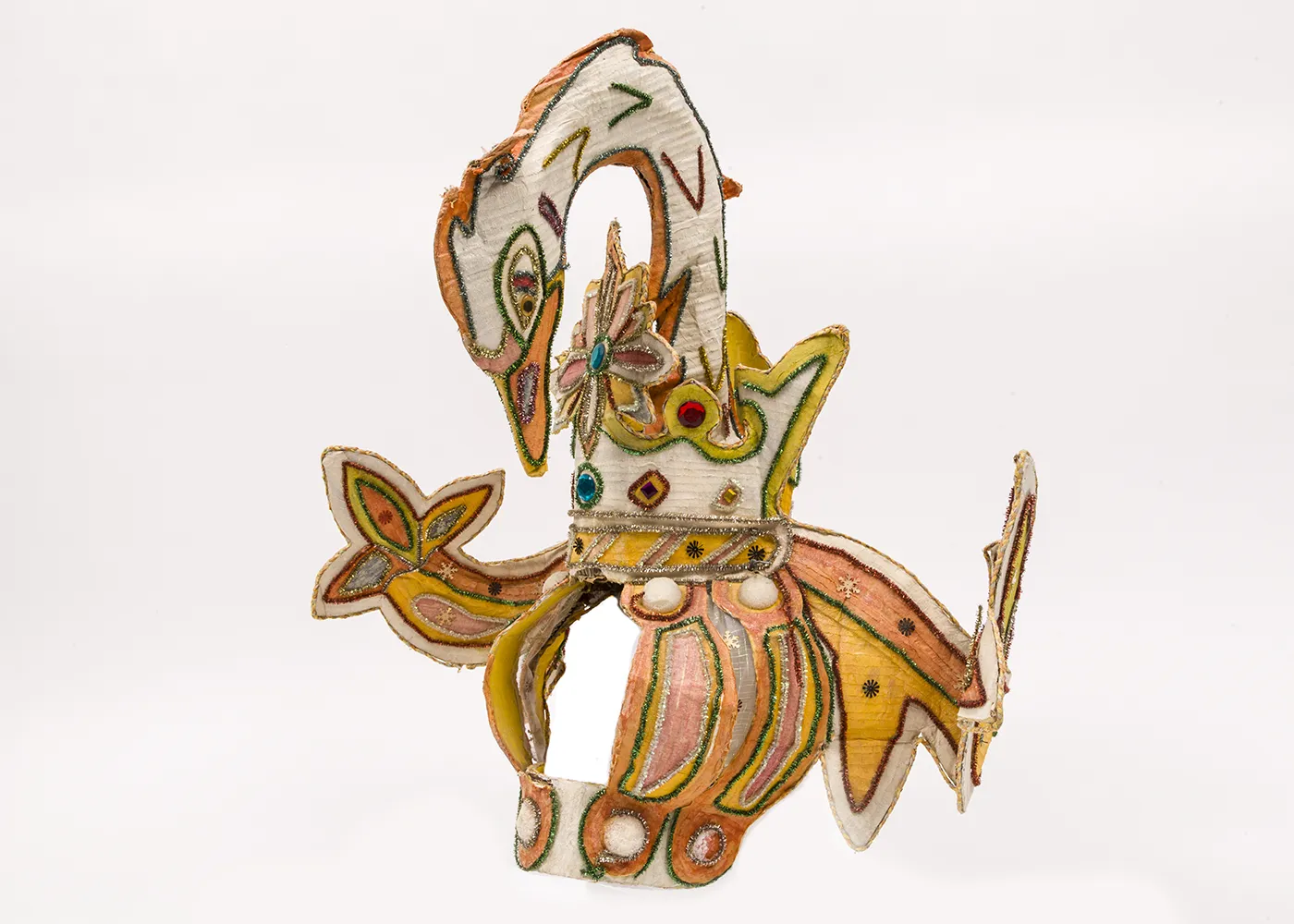
Junkanoo Headdress
From an island culture shaped by centuries of migration
Program curator John Franklin opened his Festival essay by challenging the touristic view of the Bahamas as a warm, sunny, winter getaway from the United States. His overview calls up the four centuries of migration that have defined the Bahamas’ past and continue to shape its future. It’s a complex story of outsiders coming and going—Spanish, English, enslaved and freed Africans, American tourists, and more recently Chinese, Syrian, and Greek immigrants. Throughout it all have been the traditions of festival arts and performance, known to many outside the Caribbean as Carnival, and in the Bahamas as the Christmas masquerade of Junkanoo. The roots of these public celebrations of freedom are tied to West Africa and have been transformed by generations of Afro Bahamians dreaming of and finally experiencing liberation from enslavement.
-
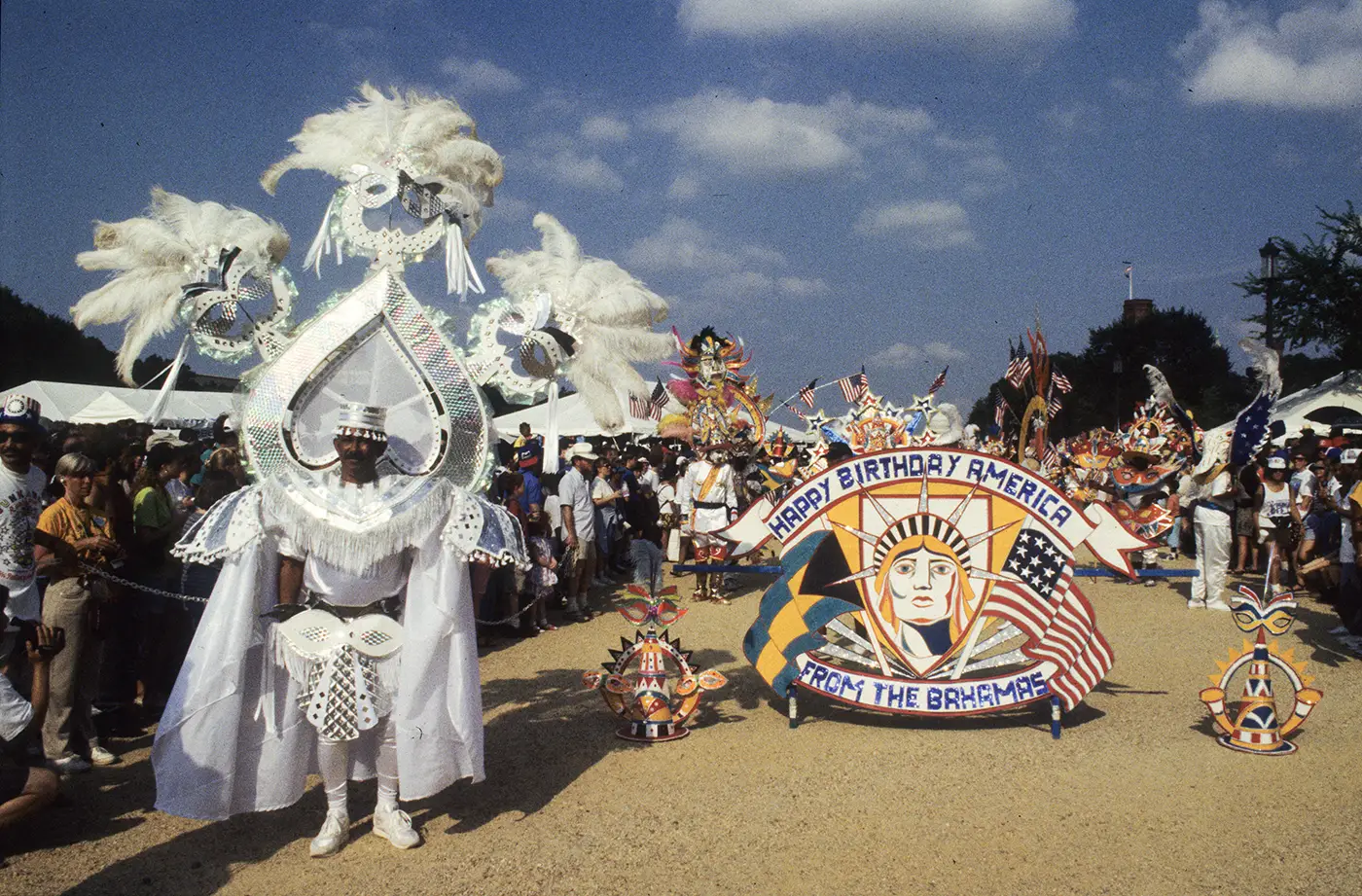
Junkanoo parade at the Festival, including a Fourth of July float. Photo by Nicolas Parrella, Ralph Rinzler Folklife Archives
Today’s elaborate masquerades combine music, dance, costume, and drama in stunning performances that sustain their participants throughout the year. In the Bahamas, Junkanoo is celebrated in parades that begin in the early mornings on December 26 and January 1 and last for hours. People prepare nearly all year for these judged, thematic performances. During the parades, men and women of all backgrounds coexist in a kind of “time out of time” where satire, protest, and affirmation are safely expressed and acted out.
“It’s a leveler,” curator Diana N’Diaye says. “You may be dancing next to the next prime minister who might be dancing next to a janitor. It’s like, ‘We’re all Bahamian; we’re all here.’” It’s a creative way for individuals to express shared values related to freedom, heritage, and different forms of expressive culture.
-
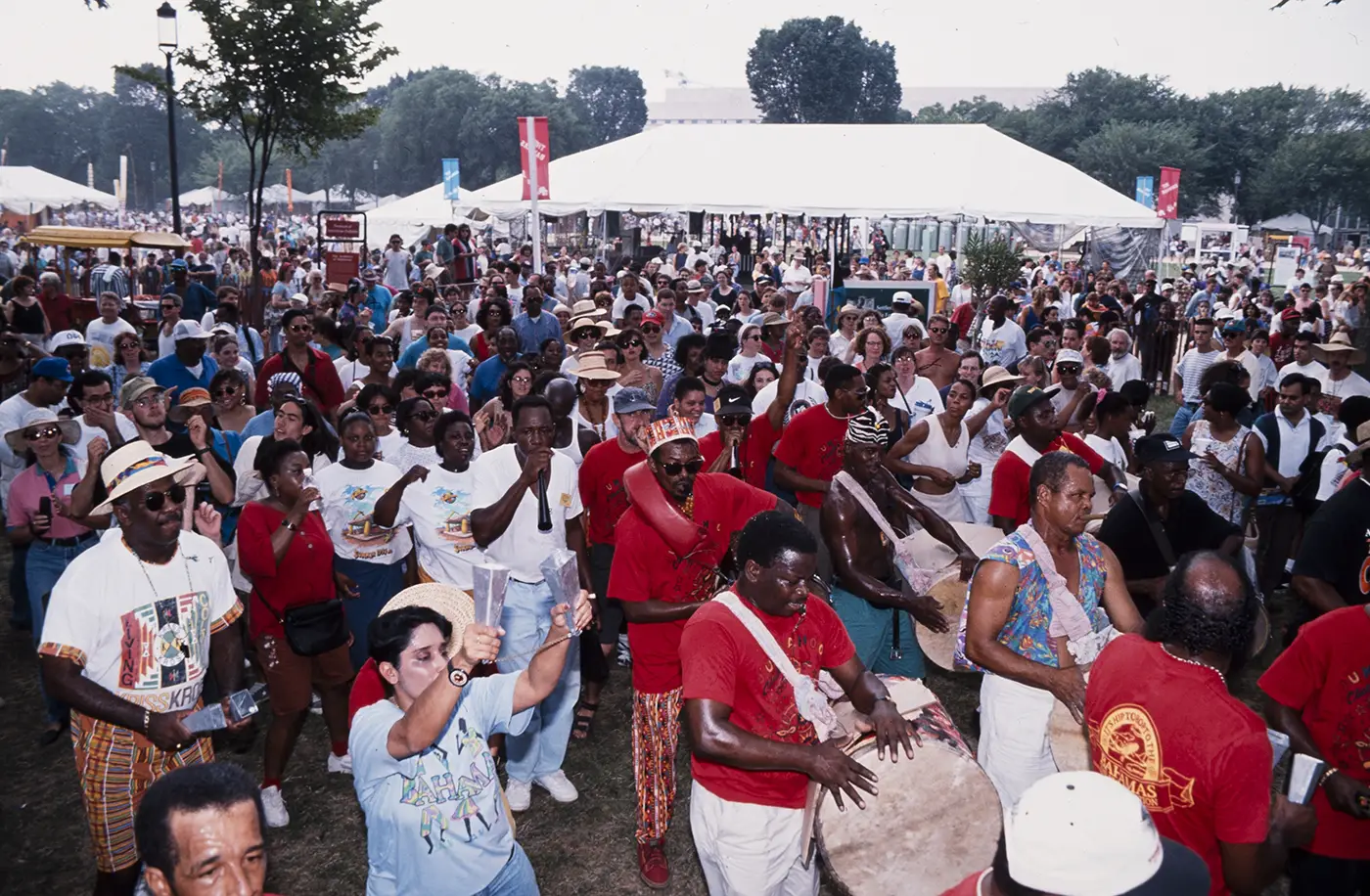
Festival “Rush Out.” Photo by Jeff Tinsley, Ralph Rinzler Folklife Archives
The 1994 Bahamas program included more than a hundred participants from seventeen Junkanoo groups. As in the Bahamas, they staged a “rush out” at the end of the Festival and everyone joined in. While thousands may join the parade in the Bahamas, hundreds did on the National Mall—giving Festival visitors a small taste of the transporting experience of Junkanoo.
