Festival Painting
Serendipity brought a Pakistani truck painter back to the Festival—and his new painting found a home
The Festival’s 2002 Silk Road program was unparalleled in its size and conceptual breadth. Two weeks of music and art transported the large crowds that attended the first Festival after September 11 to the historic trade route between Europe and East Asia. One of the visual highlights was a large Pakistani truck, vividly painted top to bottom by twenty-two-year-old Haider Ali, a truck painter who apprenticed to his father at age eight and painted his first truck at sixteen. Six years later, he was on his way to Washington, D.C., to participate in the Silk Road program.
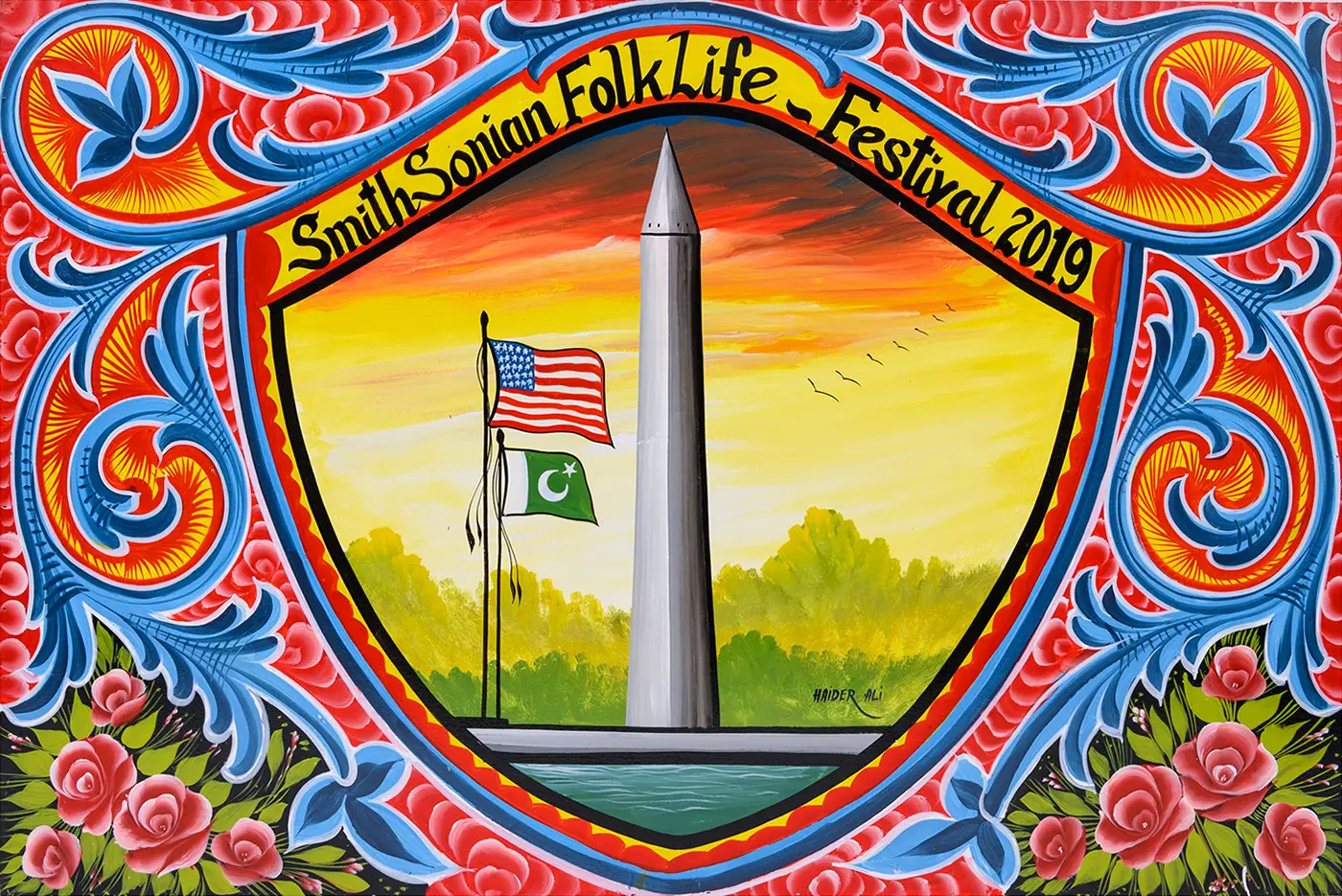
Fast forward to 2019, when Haider Ali traveled to Virginia to paint a truck on commission. After those plans unexpectedly fell through, he contacted Festival director Sabrina Motley to see if there was something he could do at that summer’s short, two-day Festival. She found him a large panel to paint and asked only that he include “Smithsonian Folklife Festival” and an image from the National Mall. The result was the Washington Monument piercing a bright, yellow-red sky, with the U.S. and Pakistani flags flying side by side.
-
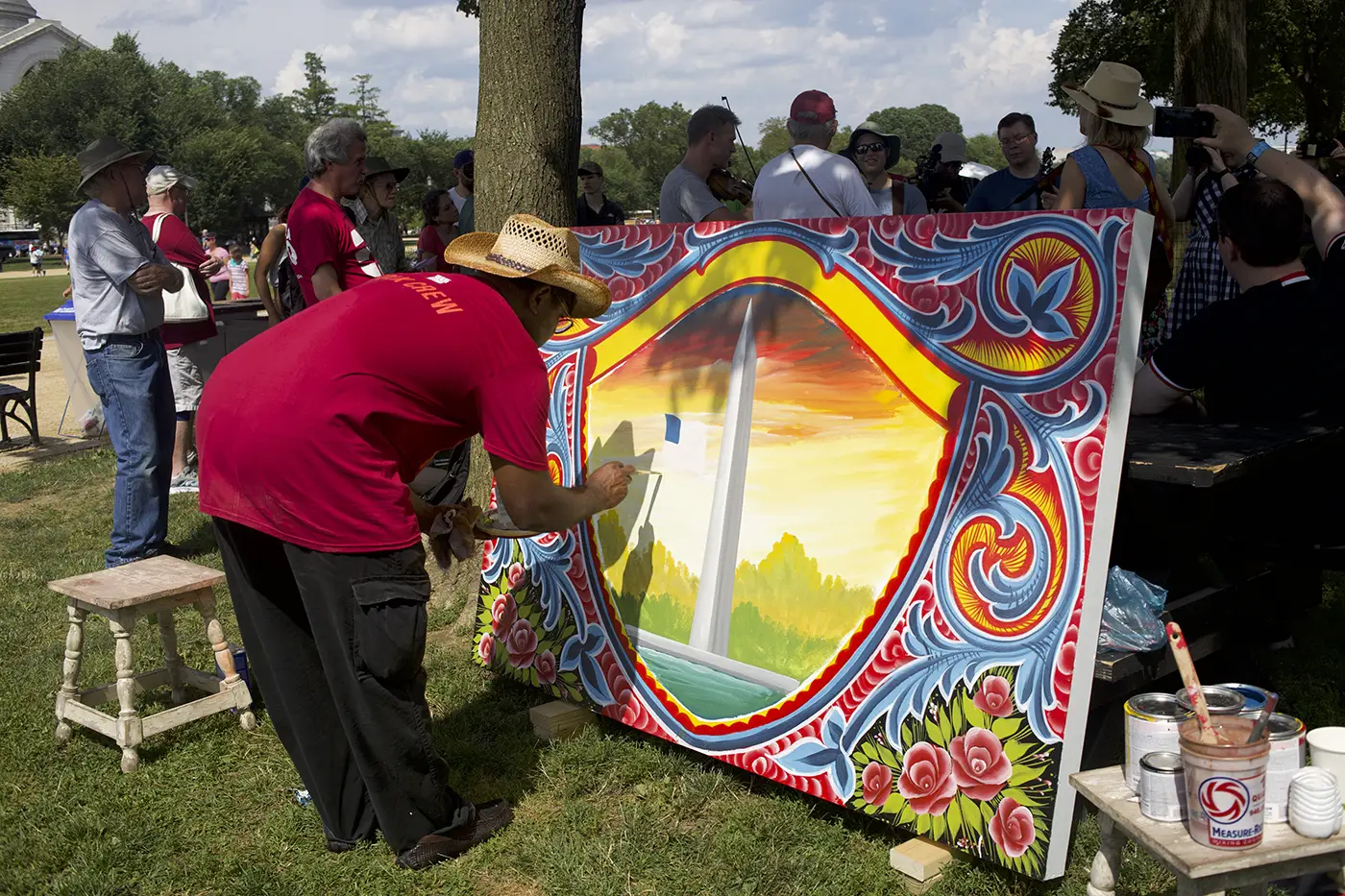
Haider Ali paints at the 2019 Festival. Photo by Kerri Reading, Ralph Rinzler Folklife Archives -
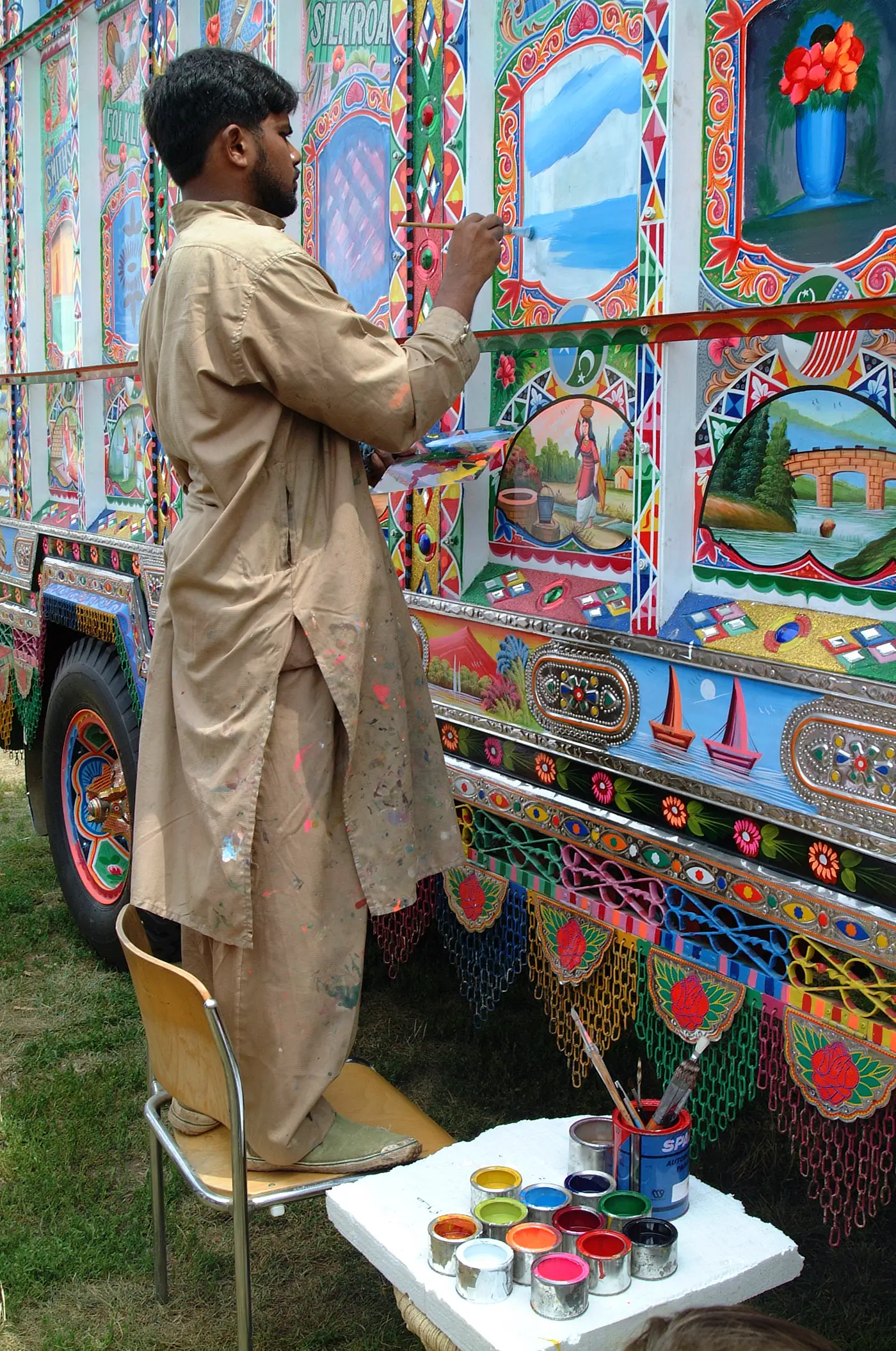
A younger Haider Ali paints scenes on the Pakistani truck in 2002. Photo by Harold Dorwin, Ralph Rinzler Folklife Archives -

Jamil Uddin, who carved the teak decorations and cut-metal ornaments for the truck, observes Haider Ali painting trim around a wheel well in 2002. Photo by Harold Dorwin, Ralph Rinzler Folklife Archives
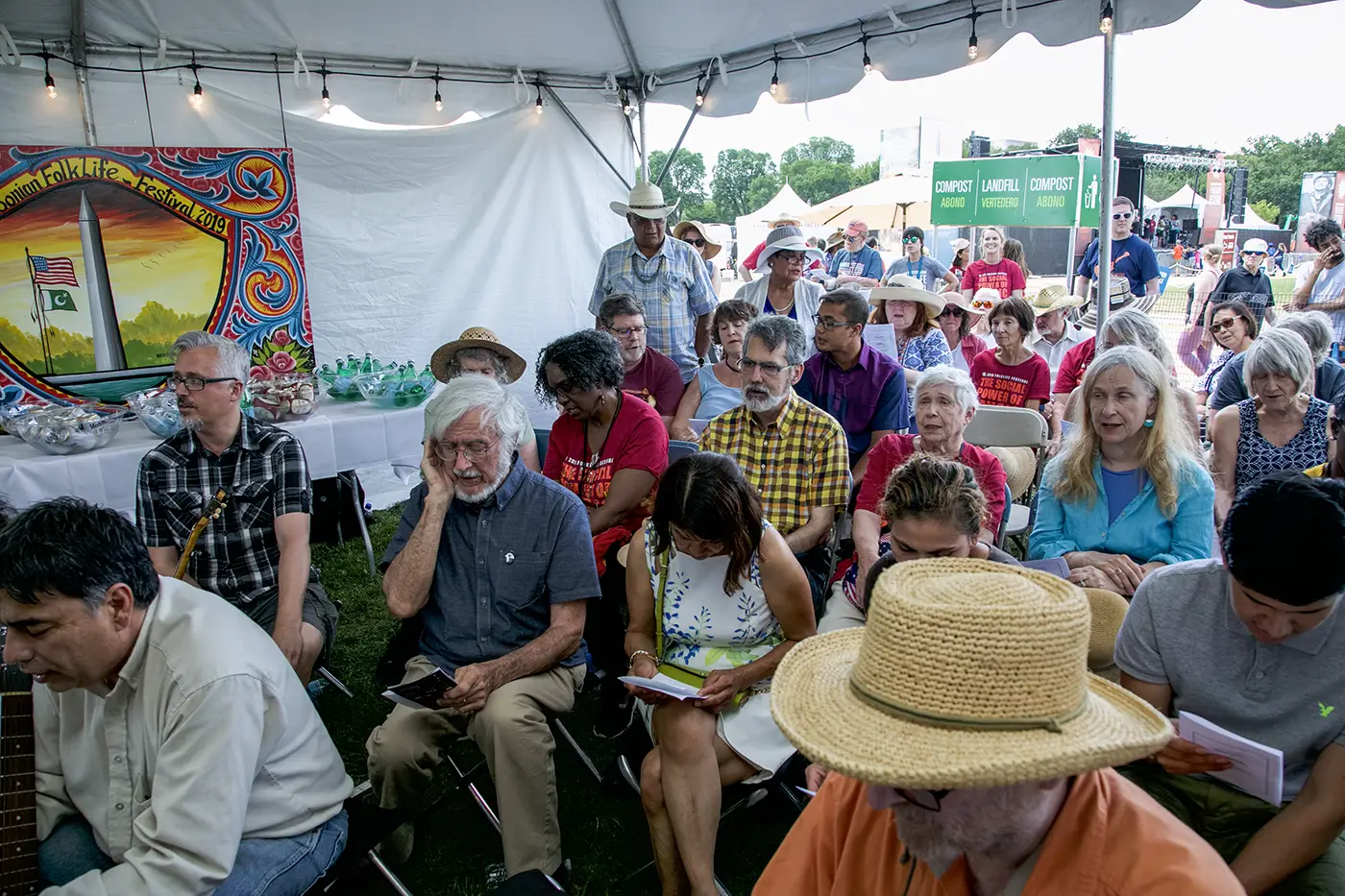
I somehow missed everything to do with Haider Ali’s visit that weekend and was surprised to find his large painting resting against a wall when I returned to the office the following week. When I looked for a record of his visit in the Ralph Rinzler Folklife Archives, I found a few images of him painting outside on the National Mall, not far from the Smithsonian Metro entrance. Images from the following day—after he was gone—show his painting hung on a tent wall, above two banjo players tuning up. Later in the sequence, a crowd filled the small space—all singing and all with strong Festival ties. Staff, volunteers, and close friends had privately gathered to participate in a celebration of life for a person dear to the Festival family. Unintentionally but perfectly, the painting was a backdrop for the “social power of music” to help heal and restore.
-
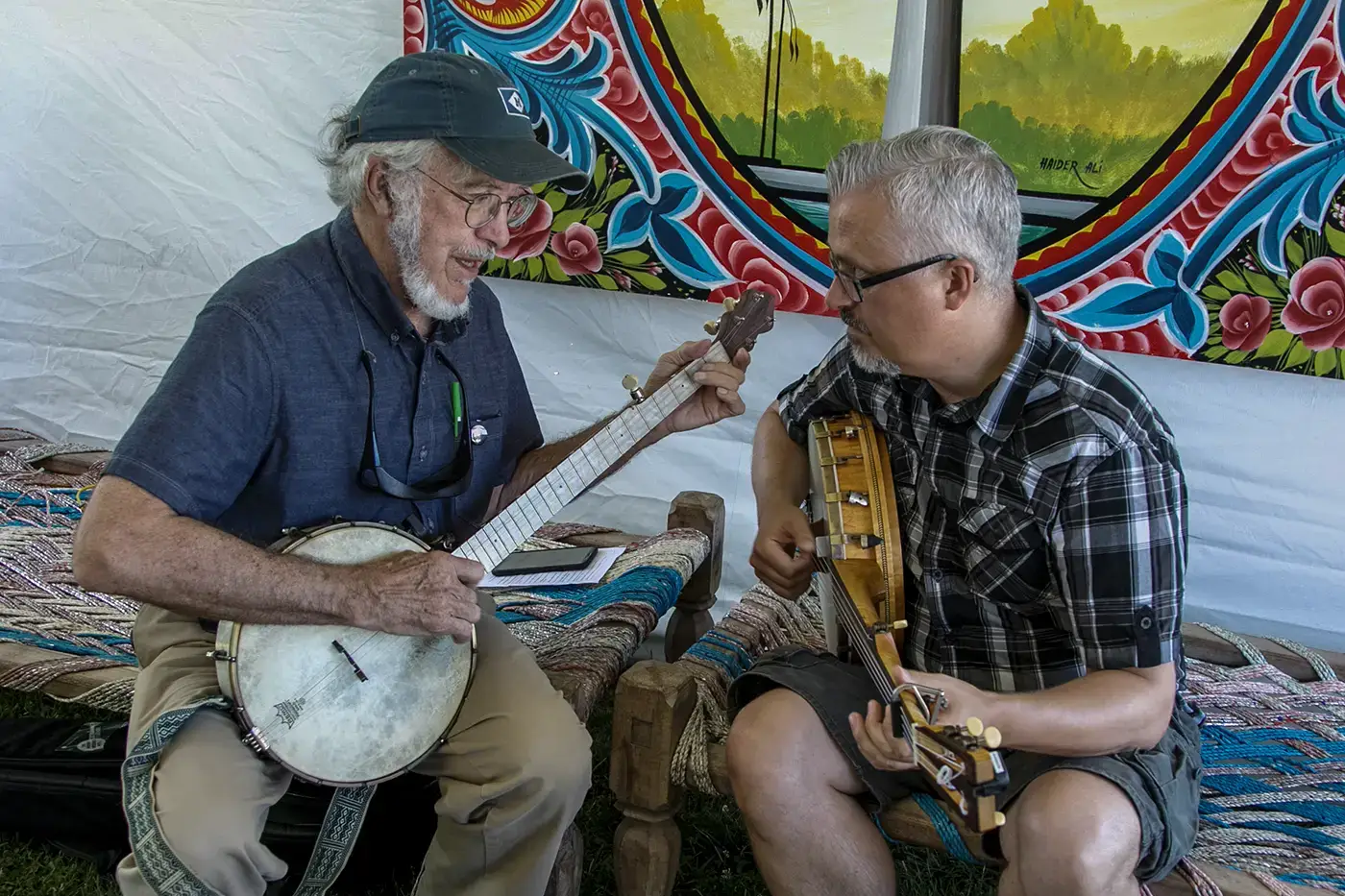
Archivist Greg Adams (right) tunes up with Scott Odell (a fellow banjo player and close friend of the Rinzler family) prior to the celebration of life for Marni Hoyt. Her stepfather, Ralph Rinzler, cofounded the Smithsonian Folklife Festival, and her mother, Kate Rinzler, curated children’s programs as a longtime Festival associate. Photos by Michael Barnes, Ralph Rinzler Folklife Archives -