

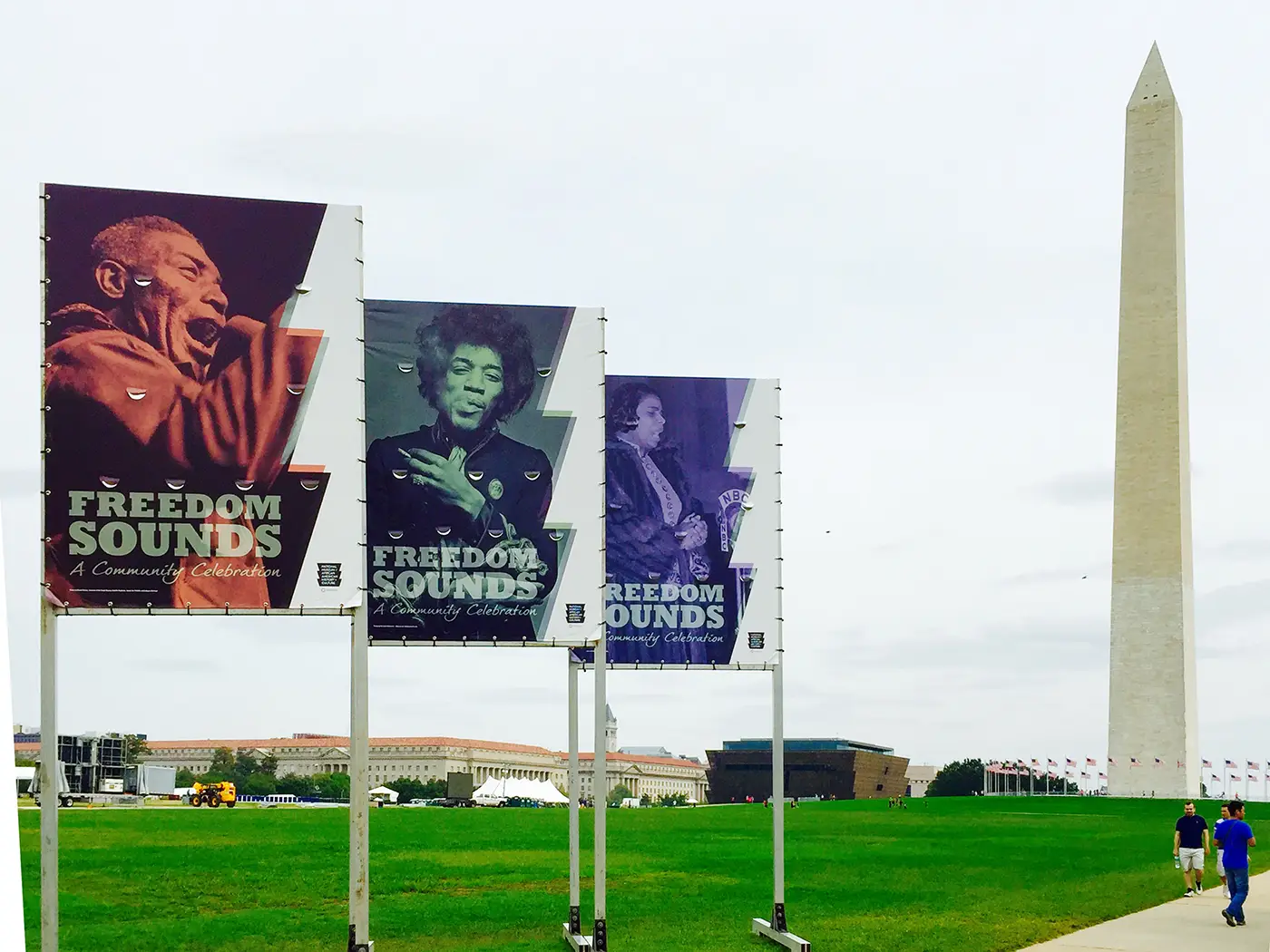
Festival Markers
The social power of music brings people together
On the morning of Saturday, September 25, 2016, amid the peel of ringing bells and thunderous applause, the National Museum of African American History and Culture (NMAAHC) opened its doors to the public. While the broadcast media focused on the presidents, civic leaders, and entertainment giants who gathered on the museum grounds, another story—stories to be exact—was unfolding across the street.
Tens of thousands made their way through closed streets and security checks to witness the museum’s opening and participate in Freedom Sounds. Co-produced by the Smithsonian Folklife Festival and the museum, the three-day event drew upon the social power of music to explore an enduring paradox: this nation was built on the ideals of freedom and equity, yet for generations it denied African Americans inalienable rights to life, liberty, and the pursuit of happiness. Through story and song, Freedom Sounds responded by paying homage to the resistance and creativity of a people as well as those who stood in solidarity with them.
“A clear-eyed view of history can make us uncomfortable and shake us out of familiar narratives. But it is precisely because of that discomfort that we learn and grow and harness our collective power to make this nation more perfect. That’s the American story that this museum tells—one of suffering and delight; one of fear but also of hope; of wandering in the wilderness and then seeing out on the horizon a glimmer of the Promised Land.”
The museum’s founding director, Lonnie G. Bunch III, frequently reminds visitors that NMAAHC is a place of joy as well as a site for reflecting upon this country’s painful past. Its exhibitions and programs bear witness to the many ways that African Americans stood with strength, integrity, and, yes, joy, even as others tried to bend and break their bodies and spirits. Visitors to Freedom Sounds found this sentiment woven throughout the opening weekend as they listened to diverse sounds of resilience from each of the festival’s five stages. From students and emerging artists to master musicians and superstars, performers shared music of sustenance and inspiration.
-

An evening concert stretched across the National Mall. Photo by Walter Larrimore, Smithsonian Center for Folklife and Cultural Heritage / National Museum of African American History and Culture
It is fitting that those who work on the Folklife Festival would oversee NMAAHC’s public celebration on the National Mall of the United States, a place we have called home since 1967. Against a backdrop of civic unrest and the clarion call of justice and liberty for all, the very Festival presented similar stories and music. Then, as now, our mission, vision, and values are in deep alignment with the words Dr. Martin Luther King Jr. shared on the National Mall four years prior to the Festival’s founding. He spoke of creating “the beloved community” as the culmination of diligent and hard work: “The end is reconciliation; the end is redemption; the end is the creation of the beloved community. It is this type of spirit and this type of love that can transform opposers into friends.”
The graphics used on the towering event markers were designed by Festival art director Josué Castilleja, and represent the commitment of staff, volunteers, and interns—past and present—to demand the best of ourselves as we join others in building a just and creative world. Like our colleagues across the Smithsonian, we hope that our efforts contribute toward healing still present wounds and bringing change where it is still so desperately needed.
